
The eclectic voices of the North
Northern art does not just sit in one place. I keep thinking it is more like moving through land and memory and making, piece by piece, as you go along with what you have to keep creative.
For me, being Inuvialuk and growing up carving natural materials, that is always in the back of my mind when I look at works like these. I learned early by watching: hands before words. Stone, bone, antler—whatever was being worked on—you just watch it first. That kind of learning never really leaves you.
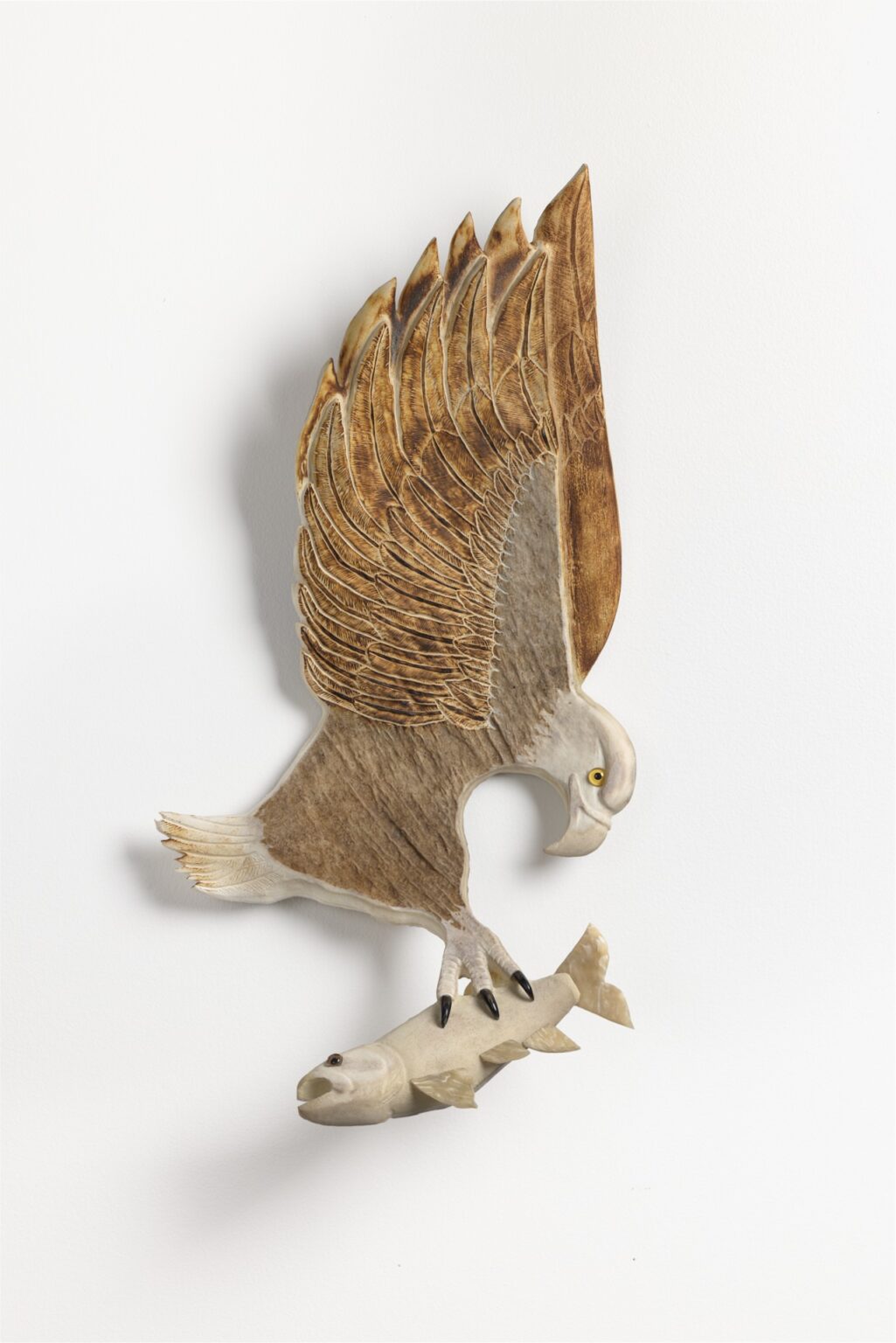
Starting with Levi MacDonald’s Eagle Fishing, crafted with moose antler, muskox and bison horn. That one feels like movement held still. I think about carving here a lot; how you do not really control the material. You work with it; you listen to it and let it guide you to what it wants to be.
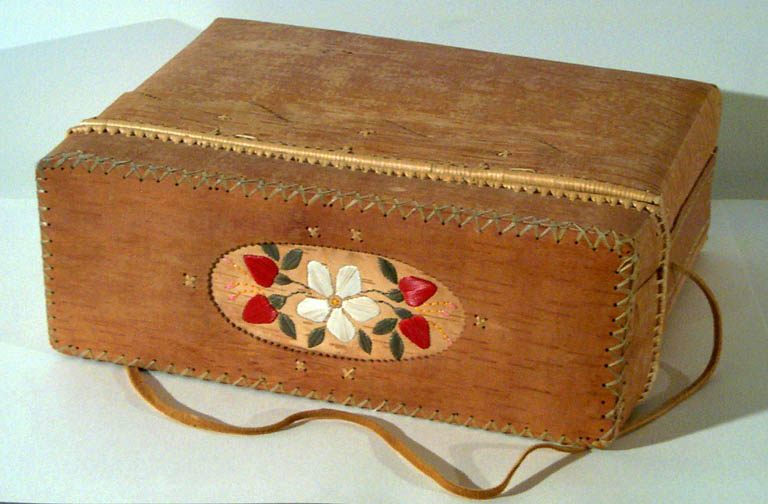
Martine Kotchea’s birch bark basket brings me back to how things are in our culture. Objects are not just “art” or “not art.” A basket is something purposefully used, but it also holds sacred knowledge. Birch bark, quills, materials from the land—everything has a purpose with a memory in it.
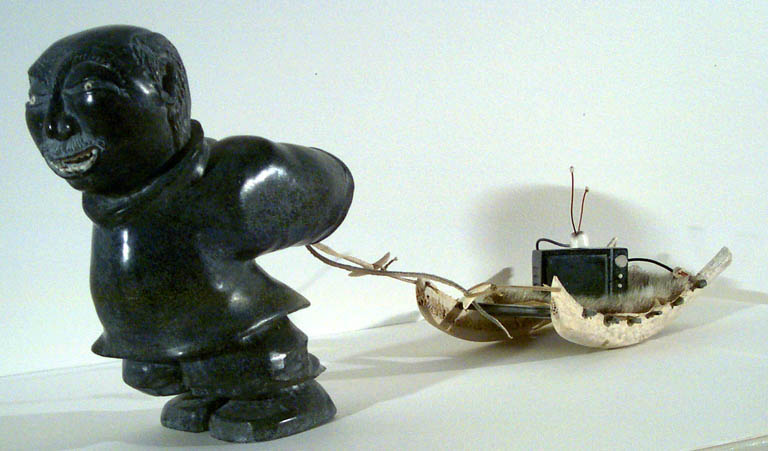
Stone, beluga ribs, sealskin, copper wire and antlers all come together in one piece, Robert Kussy’s Judas and the first TV in Gjoa Haven. It looks heavy at first, but also really layered when you sit with it. Different pieces all holding their own place but still part of one, telling you a story passed down from generations, how it is never just one meaning. It changes depending on how you hear it, who is telling it and what you carry with you when you listen.
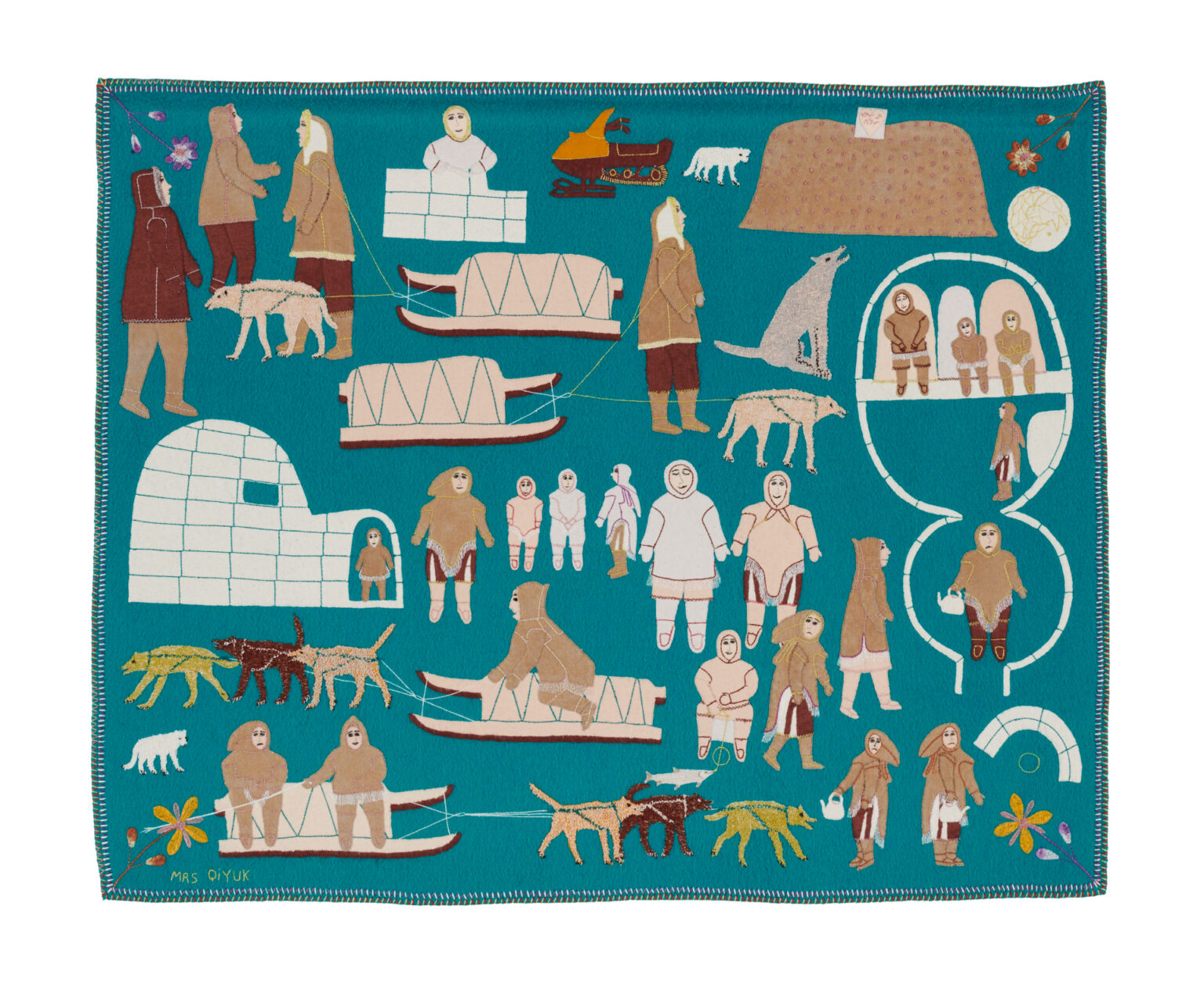
Woman’s Courage, by Miriam (Nanurluk) Qiyuk, is a fibre work made with cotton and felt on wool. It carries strength, but in a quiet way, more steady than loud. It makes me think about women in the North and the kind of strength that does not always get noticed but is always there, holding things together in the background, day after day.
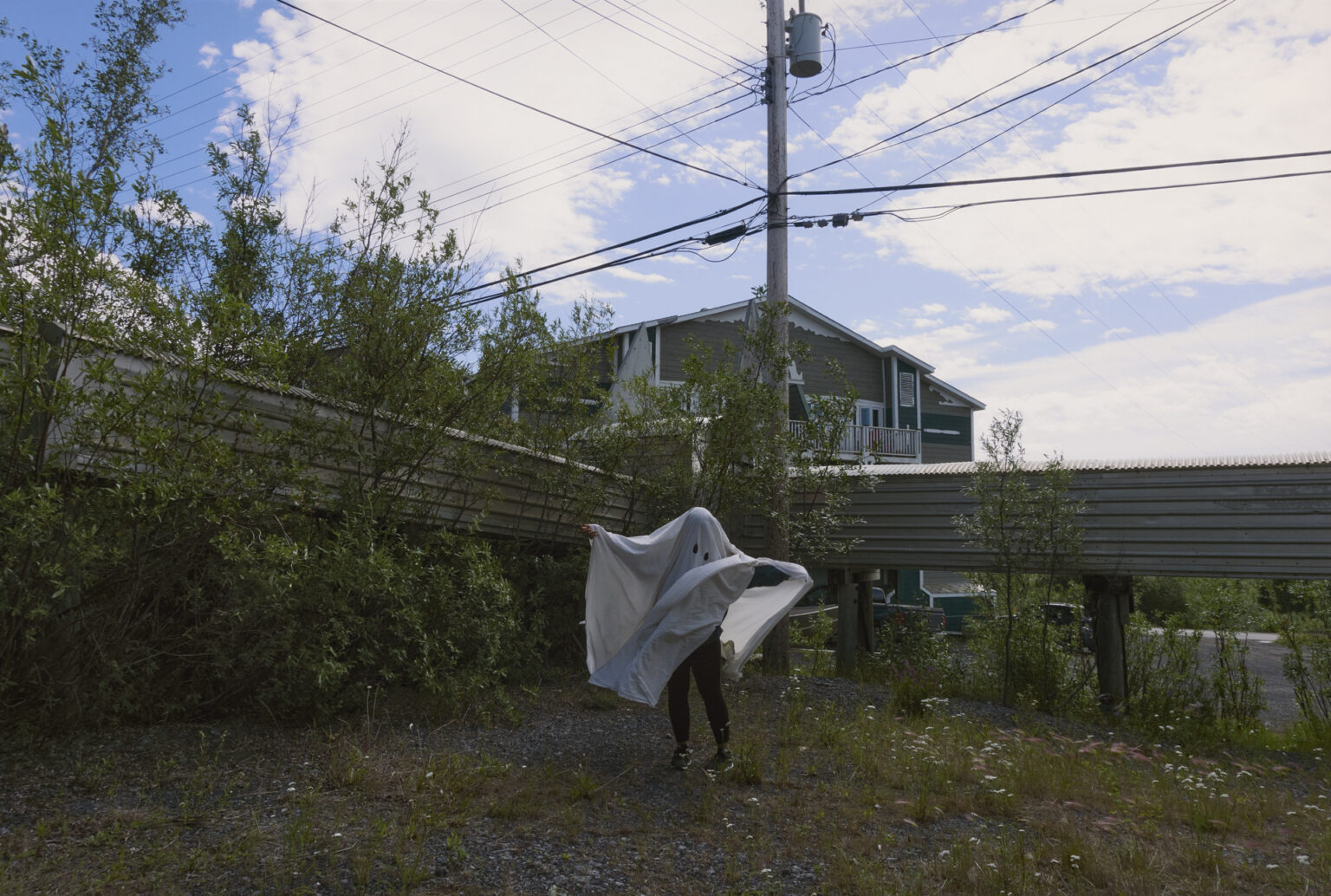
Kablusiak’s akunnirun kuupak: Duck Lake Street photograph already shifts what people expect when it comes to northern art—not carved, no traditional materials, but still in a peaceful place, still northern, in a way. It makes me think about how our culture is not stuck in one material or one way of doing things. It moves with us.
I keep coming back to the same thing when I look at all of these works together. The North is not one voice or one style; it never was. It is different ways of carrying the same life together, the same land, the same teachings, just coming out in different hands, materials and memories.
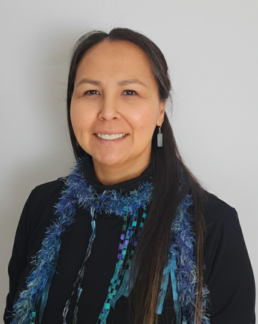
About the author: Priscilla Boulay
Priscilla Boulay was born and raised in Tuktoyaktuk, Northwest Territories. Her passion for art started at three, when her uncle, Derrald, gave her a carving to sand and polish. Despite her limited access to traditional tools, she started creating jewellery using leftover antlers, ivory and musk ox horn.
Priscilla’s carving style is unique, informed by her experience of Inuvialuit traditions. Inuvialuit, being from the western part of the Canadian Arctic, have different traditions and art styles from many other Indigenous communities. The firstborn daughter of artist Maryanne Taylor, Priscilla believes her talent was passed down from her late daduck (grandfather), Bobby Taylor Pokiak.
Priscilla is adapting to an urban Inuvialuk life while keeping her traditions alive for her three daughters.
