
Art in the land of the midnight sun
The Yukon has been described by bards, adventurers and explorers as the ‘land of the midnight sun’—a mysterious and wondrous place. Many people come to the Yukon in search of adventure or solitude from the busy ‘southern’ ways of life. Some of us call the mountainous and river valley lands home. As Yukon First Nations, we live with a deep-rooted sense of belonging to the places we come from. We often find ourselves being tethered to place, always wanting to find a way to represent our home in the work we do.
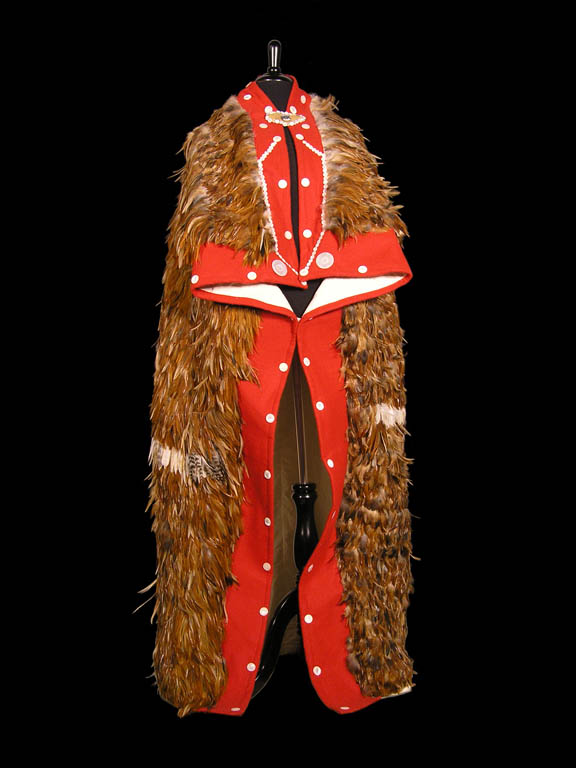
I first met Teslin Tlingit artist Doug Smarch, Jr., twelve years ago, while I was working as a visual arts coordinator at the Adäka Cultural Festival, in Whitehorse, Yukon. Smarch was described to me as a friendly, engaging artist with lots of ideas. He is looked up to by peers as a Yukon First Nations artist who has excelled in his craft and his ability to redefine what contemporary Tlingit art is through his practice in fibre and installation art. His work, Homage to Chamber Maid (2002), is a breathtaking representation of his mother and other hard-working Indigenous women supporting their families. This robe references older Tlingit blanket styles but, instead of using traditionally gathered materials, Smarch took apart feather dusters and incorporated them into the work.
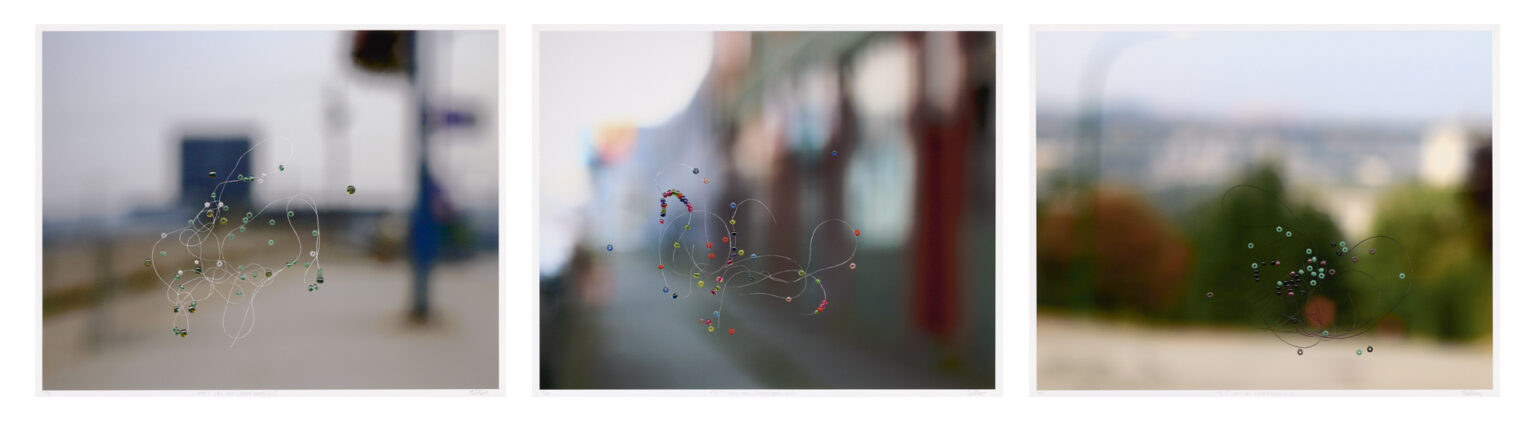
I remember learning about Krystle Silverfox and her work from Mary Bradshaw at the Yukon Arts Centre. Silverfox was living in Vancouver, British Columbia, at the time, but continuously referenced the North and her family in the work she was creating. A few years later, I had the opportunity to work with her, when I curated Emerging North, in 2020. Silverfox created Ets’edegél’ (Spear Game) (2020), which became one of her most recognizable pieces, alongside tth’í’ yáw nan (thread beads land) (2018). Housed in the Canada Council Art Bank, tth’í’ yáw nan (thread beads land) is a series of urban landscapes overlaid with cut threads and beads. Silverfox visually represents the experience of disconnection and loss through this work. Her point of view, voice and artwork have gained an incredibly meaningful presence in contemporary Indigenous art today.
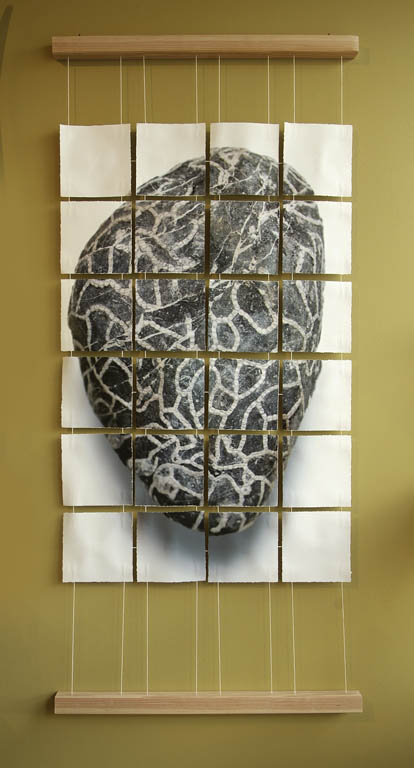
The Art Bank also includes works by other notable Yukon artists, including Marten Berkman and Nicole Bauberger. Marten Berkman, originally from Quebec, has called the Yukon home for many decades. His passion for the natural environment and our relationships with the land has made him one of Yukon’s most recognizable artists. As an avid outdoor enthusiast, Berkman has been inspired by northern landscapes, including Snake River, which is located on the Peel Watershed and slithers its way along the border between Yukon and Northwest Territories. Protect the Peel is an ongoing campaign to promote the protection of the vulnerable Peel Watershed. Berkman’s work, Snake River Stone (2005), highlights not only the beauty of our natural world but also its fragility.
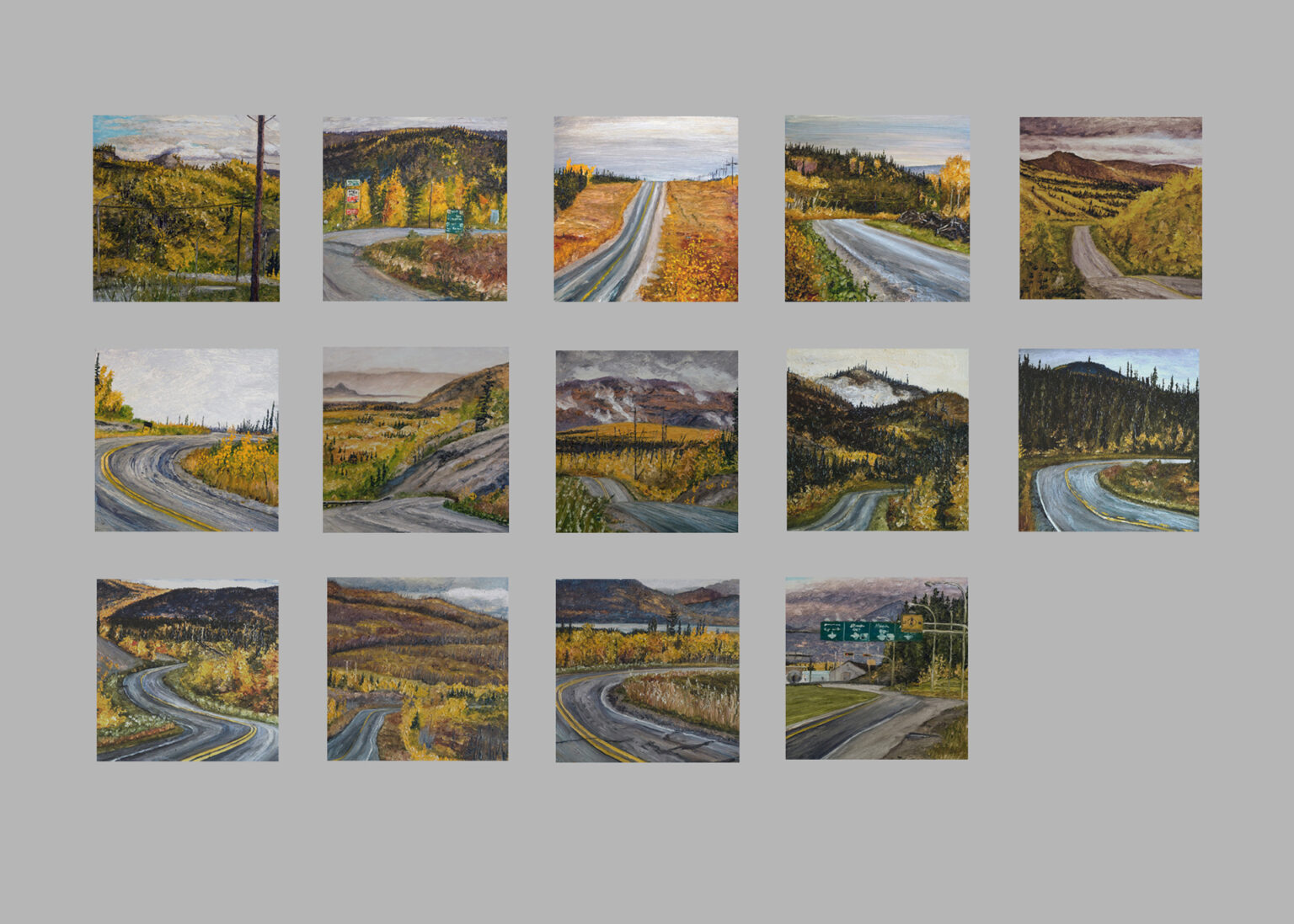
Similar to Berkman, Nicole Bauberger found her way north after spending much of her younger years in Ontario. Bauberger has adapted to the North as though she has always been there—a true Yukoner. She has pushed the envelope on what art can be. Coming from a disciplined painting practice, Bauberger broke free from the confines of the easel and began to explore her own way of viewing and representing the world. She and I worked on a series in 2018 called Scavenging for the Many Faces of Raven, which coincided with her series, Get There From Here. Bauberger’s fascination with the road and its ability to both connect Canadians with one another and yet disrupt and inflict adversity can be read in Dawson to Whitehorse, September 2008 (2008). The solitude depicted in Bauberger’s work is both peaceful and disturbing, considering that the road was one of the driving forces behind the colonization of northern Indigenous communities.
The Yukon may have beautiful landscapes and a magical quality to its charm, but it is the people who have called it home for thousands of years that really make it special. The collective feeling amongst Yukon artists is second to none, and each artist draws upon their own stories and connections to the places they call home. The abundance of artistic voices, enthusiastic embodiment and advocacy has contributed to a healthy and impactful arts community.
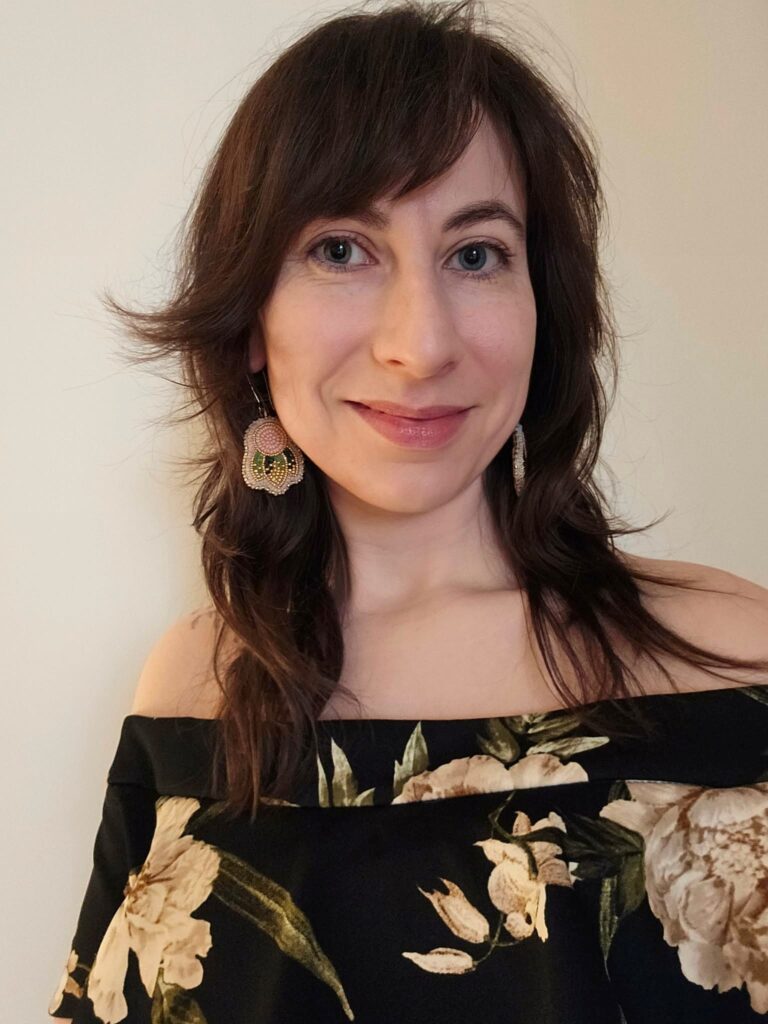
About the author: Teresa Vander Meer-Chassé
Teresa Vander Meer-Chassé is a proud Niisüü Member of the White River First Nation from Beaver Creek, Yukon and Alaska. Teresa is a Dineh (Upper Tanana), Frisian and French visual artist, Master of Fine Arts and curator. Her artistic practice is invested in the awakening of sleeping materials by processing natural materials and a (re)animation of found objects that is centred on her family. Her work has been shown in over 40 exhibitions since 2012. Teresa’s curatorial practice focuses on filling gaps and writing new narratives that highlight the importance of accurate representation and visibility for Indigenous Peoples.
