Artistic Programming
Wednesday, June 17

The Summit’s Artistic Program creates opportunities both to showcase existing artistic
projects and create new exhibitions, performances and artworks. The Artistic Program
showcases the breadth and depth of contemporary artistic practice across the Arctic, and
ensures artists’ voices remain central to the Summit’s activities. This year, we are thrilled to
showcase artwork across many disciplines featuring critical perspectives from around the
Circumpolar North. We encourage delegates to see as much artistic content as possible.
Some projects are unique to Arctic Arts Summit 2026 and can only be seen here, so make
sure to experience them!
All Day | Exhibition | The Many Ways We Love, Various Artists; Sjadduo; organized by Curating Change and Taqsiqtuut Indigenous Research-Creation Lab
The Many Ways We Love
13-17 June 2026
Sjadduo
Website
Organized by Curating Change and Taqsiqtuut Indigenous Research-Creation Lab
The Many Ways We Love draws on the essay of the same title by the late Iñupiaq artist Jenny Irene, in which Jenny – whose life and work is celebrated for their deep commitment to storytelling, Indigenous, Queer, and Two-Spirit communities – expresses a desire to see a future where all expressions of gender and sexuality are celebrated, and where everyone can freely express the many ways we love, anywhere in the North. We undertake this project with the support of Jenny’s partner, Nora, and her friends and family in Alaska.
The Many Ways We Love features Queer, Trans, Non-Binary, and/or Two-Spirit (or LGBTI) artists across all visual art disciplines, including images of performance art, by Indigenous Peoples, national minorities, Black people, People of Colour and other artists originally from or currently residing in the North. The artworks are prominently displayed outdoors in a banner installation encircling one of the main public venues. It is co-curated by the research team of Curating Change, a project that focuses on expanding decolonial and inter-cultural exhibition practices, in collaboration with the Canada Excellence Research Chair (CERC) in Decolonial and Transformational Indigenous Art Practices.
Artists:
Anna Linder is an artist with a main focus on moving images, installations & performances. Especially experimental & abstract art, processes, collectivity, periphery, interpersonal relations, family history & the work of the hand. Linder also works as a curator and cultural producer.
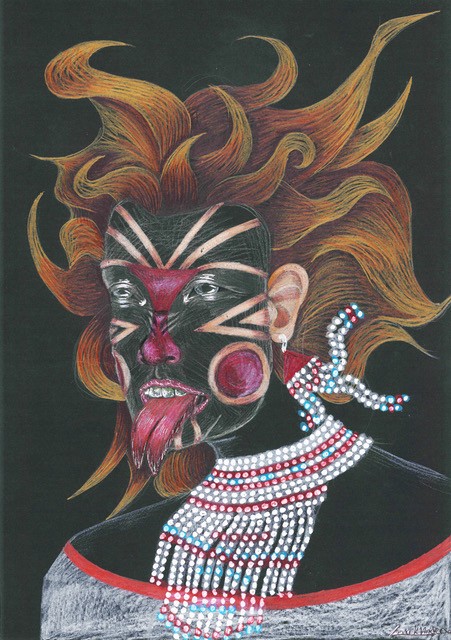
Arngasaq is a Black Inuk artist that specializes in multimedia arts, aiming to create for self expression– their pieces touch subjects in all forms; trauma, politics, and cultural storytelling. Their art pieces are made from self interests– with the main themes being supernatural, cultural and horror oriented.
Embla is a dancer and performer based in Iceland and her work is rooted in disability and Queer pride. With an academic background in sociology, she has researched disability in relation to sexuality, shame, pleasure, and affect. In her artistic practice, she brings these themes into performance through dance, movement, storytelling, and devised theatre, aiming to present unapologetic and sensual representations of disability and Queerness on stage.
Ethan/Kayaaní J Lauesen is a visual artist based in Fairbanks, Alaska. They earned their Bachelor of Fine Arts from the University of Alaska Fairbanks in 2019. Their body of work focuses on their Denaakk’e Koyukon Athabaskan and Lingít cultural backgrounds, their Queer identity, and how they are perceived in Alaskan communities. The prints, paintings, and drawings they produce are an intimate response to public perceptions of their Indigenous and Queer identities, encapsulating their personal narrative and experiences documenting cultural change.
Eva Svaneblom (she/her), born in 1987, is a Tornedalian dance artist, based in Tromsø, Norway since 2020. Her artistic practice revolves around the situated body—how the body is shaped through encounters with its physical and sociocultural environments. She often work by playing with and reshaping stereotypes, where her Tornedalian background meets her Queer identity. In these fields of tension, new attitudes and expressions emerge that inspire and drive my creative work forward. Aesthetics are a central part of her work, both in choreography and performance, as well as in visual elements such as costume and scenography. She frequently uses references from pop culture and seeks expressions that can speak to a wide audience. A common thread in her practice is collectivity and community—she explores how art can create shared spaces and foster understanding across different experiences. Eva’s work takes many forms: from performances in gallery spaces or outdoors, to short videos on social media, and full-length productions in black box theatres. She works both solo and collaboratively, often across disciplines. She usually has both solo and collaborative projects running simultaneously. Eva also explores drag as an art form through the non-binary drag king Ei Ei. Ei Ei is fabulously Queer and extra Tornedalian! Since 2021, curating performing arts is also an extended part of her practice.
Hans-Henrik (HH) Suersaq Poulsen is an actor, singer, seamster, and artist, who graduated from The National Theatre School. He sings contemporary music infused with traditional elements such as throat singing and drum dancing. HH carries into the 21st century the living spirit of Kalaallit Nunaat´s ancient traditions, weaving them seamlessly into contemporary expression. HH also designs and creates contemporary and traditional garments (look out for his Anoraqs!). He has deeply explored other Inuit languages—making him able to communicate in the Inugguit dialect (North Greenlandic), Iivit dialect (East Greenlandic), as well as Inuktitut (the Canadian Inuit dialect).
Fox Sandberg (they/them) is a nonbinary, autistic South Sámi artist, based in Lïkssjuo, Sweden. Fox’s family has roots in Vualtjere, Sápmi, and Scotland. They hold a BA in Sequential Arts from the University of Gävle, and have worked as an illustrator and author, focusing in particular on South Sámi and Queer narratives, alongside a life-long passion for animals, in a number of different mediums. In 2017, they published Elsas Väg mot Tråante, and illustrated the Sámi radio theatre Elsa i Saajvoe-kungens rike. Over the years, they have provided public art for Umeå University, Lycksele Zoo and Lycksele Municipality. As an autistic, Indigenous nonbinary artist, Fox has battled social anxiety, body dysphoria and depression all their life. This has had an impact on their ability to work, and produce art in a fast-paced, often hostile work environment. Nonetheless, art, human rights and animals remain a strong and unyielding passion, which can often be seen in their works. Having been diagnosed as autistic as an adult, Fox is currently learning how to accept their limitations and unlearn years of harmful masking practices to attempt to fit into societal norms, which led to chronic fatigue and burnout. Through their art, they wish to highlight decolonial practices and uplift Queer, neurodivergent and Indigenous voices on a local as well as global stage.
Golga Oscar, a Yup’ik artist from Southwest Alaska, creates artwork that reflects Yup’ik identity in both traditional and modern forms. His work is influenced by his Yup’ik ancestors and Indigenous artists all over Turtle Island. As a self-taught artist, Oscar has produced a variety of garments, from footwear to headwear. Living in a Western society, he challenges perspectives of what a Yup’ik lifestyle looks like.
Oscar also emphasizes digital art, such as graphic design and digital photography. Through the lens of the Indigenous perspective, his main goal is to Indigenize Western spaces, creating a welcoming environment for current and future Native artists in conquering the ongoing Western assimilation.
Ida Isak Westerberg (b. 1986, Sunderbyn) has a degree in higher textile craft education at Friends of Handicraft and is living and working as a textile artist in Luleå and Övertorneå. Westerberg works with site-specific processes where creation takes shape, nuances and woven qualities through a dynamic harmony between materials and how they react in relation to specific environments. Through collaboration with nature, with the bog Sompasenvuorna in Tornedalen as a recurring co-creator, Westerberg’s sculptural weaves bear tactile traces of history, but also on questions of belonging, our changing desires and Queer identities.
Jia Illusia Juvani (b. 1988) is a non-binary body, trans and queer artivist originally from Ylitornio, Finland. As a child, their idol was Ursula from The Little Mermaid. At the core of their work you can find subjects like queer, feminism, death, lust, poetry, love, hate, stereotypes, worn out clichés and general silliness. Their main mediums are video, photography, sound, objects and text. They currently live and work in Hyvinkää, Finland.
Inuvialuk artist Kablusiak (they/she) lives and works in Edmonton, Alberta. They create works using a variety of materials, including soapstone, permanent marker, sheets, felt, fur, and words. Their work explores the connections and ruptures between existence within and outside Inuit Nunangat, the impacts of colonization on the expression of gender and sexuality, the desire to make people laugh, and everyday life. Their work has been recognized with numerous awards including the Lieutenant Governor of Alberta’s Arts Award (2020), the 2019 Sobey Art Award (semi-finalist) representing the Prairies and the North, the 2021 and 2023 Kenojuak Ashevak Memorial Award (semi-finalist), the 2023 Lieutenant Governor of Alberta’s Arts Award, the Gattuso Award and the prestigious 2023 Sobey Art Award.
Jake Kimble is a multidisciplinary Chipewyan (Dënesųłıné) artist and curator from Treaty 8 territory and belongs to the Deninu K’ue First Nation in the Northwest Territories. Kimble’s photographic practice revolves around acts of self-care, self-repair, and gender-based ideological refusal. Holding both a degree in Acting from Vancouver Film School as well as a BFA in Photography from Emily Carr University of Art + Design Kimble imbues his work with a sense of theatricality and levity, which are core principles in their practice. Through a clever subversion of the everyday aesthetics Kimble also plays with language and ambiguity – something that comes natural with them being a two-spirited artist. Using a funny bone as a tool, Kimble excavates themes of existentialism, narcissism, and the strange, offering an invitation to the audience to examine the absurdities that exist within the everyday so that they too may exhale, unclench, and even chuckle in the spaces where laughter is often lost.
Michael Richardt (DK/NE) is a performance artist specialising in time-based and long-durational performance. His practice includes video, film, photography, choreography, sculpture, writing, installation, painting, drawings, prints, artist books, collages and music. Richardt is a matriarchal thinker and creates work using a self-developed system anchored in spectral colours and the physical body. His performances have lasted from 13 consecutive days to a split second. In 2017, the documentary My Mother Is Pink focused on Richardt’s durational, intergenerational, and interdisciplinary artwork RULE PINK, and was nominated for Best Art Documentary at the Sheffield Documentary Film Festival and won the Outstanding Excellence Award at the Desert Edge Global Film Festival in India. In 2018, he worked for Marina Abramović performing Imponderabilia and Freeing the Voice at Denmark’s Louisiana Museum of Modern Art and The Freeing Series at Norway’s Henie Onstad Art Centre. His work was recently exhibited at the Kunsthal Nikolaj in Denmark as well as the Reykjanes Art Museum, Gerðasafn Art Museum, the Nordic House in Iceland, and Nitja Center for Contemporary Art in Norway. In 2024 he performed the concert performance POPera, composed by Pussy Riot’s Diana Burkot, with his character and lyrics, at Reykjavík Arts Festival, with 7 brass and flute players, conductor and sign language interpreter. The show will be shown in an electronic version at Tjanarbío Theatre in Reykjavik in September 2026, and he’ll exhibit and perform at the group show Cancel Culture Club and Spa, at Södertälje Art Gallery in Sweden from October 2026.
Prim (Pasa Mangiok) is a fourth generation artist, originally from Ivujivik, Nunavut but now residing in Montreal for their BFA in Studio Arts at Concordia University. Their great-grandmother was a seamstress, their grandmother, Passa Mangiuk, was a lino printer, painter and graphic artist, while their father, Thomassie Mangiok, is a graphic designer and illustrator. Prim identifies as Two Spirited, and is part of the LGBTQ+ community. Prim is a mixed Inuit and Atikamekw artist, Prim mainly focuses on creating artwork to challenge what Inuit art is, and what it can be, and their mediums vary from beading, sewing, sculptures, and experimenting with materials, along with paintings and drawings. They are interested in combining both their Atikamekw and Inuit heritage in their artwork, and further plans to research deeper in Inuit shamanism and Indigenous spirituality.
Salomon H Simonsen is a Greenlandic Inuk writer based in Denmark. Their work explores displacement, trans identity, exile, belonging, and the ongoing impact of colonialism. Through poetry and prose, they reflect on what it means to long for home while feeling separated from it.
Sebastian Blind (1986) works with reweaving himself to his Sámi heritage and his relationship to the noaidi as a bearer of knowledge, with a deepened connection to the drum as a ritual and historical tool for healing, communication, and navigation between different world levels.
Seqininnguaq/Siqiniq is an awarded multimedia artist and Indigenous rights advocate from the Inuit community of Kalaallit Nunaat and has spent most of their life exploring their identity as a Queer Inuk in many different ways.
Curators
Dr. Heather Igloliorte, an Inuk-Newfoundlander and Nunatsiavut Beneficiary, is the Canada Excellence Research Chair in Decolonial and Transformational Indigenous Art Practices at the University of Victoria, BC, where she is a Professor in the Visual Arts Department. Heather has been a curator since 2005 and has worked on more than thirty curatorial projects; she was recently the Curator of the 2025 Bonavista Biennale: String Games. Her curatorial work has been recognized by The Hnatyshyn Foundation with the Award for Curatorial Excellence in Contemporary Art (2021). Igloliorte publishes frequently on Indigenous art and curatorial practice, especially regarding Circumpolar arts, including her co-edited volumes Arctic Prisms: Indigenous Arts of the Circumpolar World (2023) and Qummut qukiria!: Art, Culture, and Sovereignty across Inuit Nunaat and Sápmi: Mobilizing the Circumpolar North (2022). Igloliorte has served on many museum and gallery advisories, councils and juries. She is Past President of the board of the Inuit Art Foundation, and was the first Indigenous person in Canada to be awarded a Royal Canadian Academy of Arts Medal for her service to Indigenous art and artists, also in 2021. Heather participated in the Summits in 2017 and 2019, and was the Curator of Visual Arts and Summit Coordinating Producer for the Whitehorse AAS in 2022.
Originally from Amiskwaciwâskahikan, Dr. Michelle McGeough is a Métis scholar and artist. Prior to accepting her current position as an Assistant Professor at Concordia University, she taught at the University of British Columbia. Dr. McGeough received her Ph.D. in Indigenous art histories from the University of New Mexico. Since her return to Canada, she has joined the board of Indigenous Curatorial Collective, an indigenous run and led non-for profit. Dr. McGeough serves on the board of the Tegan and Sara Foundation. An international organization that provides financial support through grants to organizations that fight for economic justice, health and representation for self-identified LGBTQ girls and women in both Canada and the USA. She is also a founding member of Shushkitew Collective, an organization of Métis artists and scholars who are working towards Métis equity in the arts.
Dr. Carla Taunton, a white-settler scholar, is an Associate Professor in the Division of Art History and Contemporary Culture at the Nova Scotia College of Art and Design University (NSCAD) in Mi’kma’ki (Nova Scotia). Her research focuses on arts-led critiques of settler colonialism systems, institutions, and logics, and aims to contribute to scholarly and curatorial activations of white-settler intergenerational responsibility, inter-cultural collaboration, and decolonial + abolitionist methodologies. Her recent publications include her co-edited PUBLIC 64: Beyond Unsettling (2022) and the Routledge Companion to Indigenous Art Histories of the United States and Canada (2023). She is currently leading Curating Change, a SSHRC funded project that underscores curatorial practice as research and aims to mobilize inter-cultural decolonial and transformative curatorial methodologies. She works as an independent curator and has curated projects at local and national artist run centres, university and regional art galleries as well as public art festivals.
Photo Credits:
Jake Kimble (Chipewyan (Dënesųłıné) – Deninu K’ue First Nation), Calling My Spirits Back, 2023, Archival inkjet print, photography
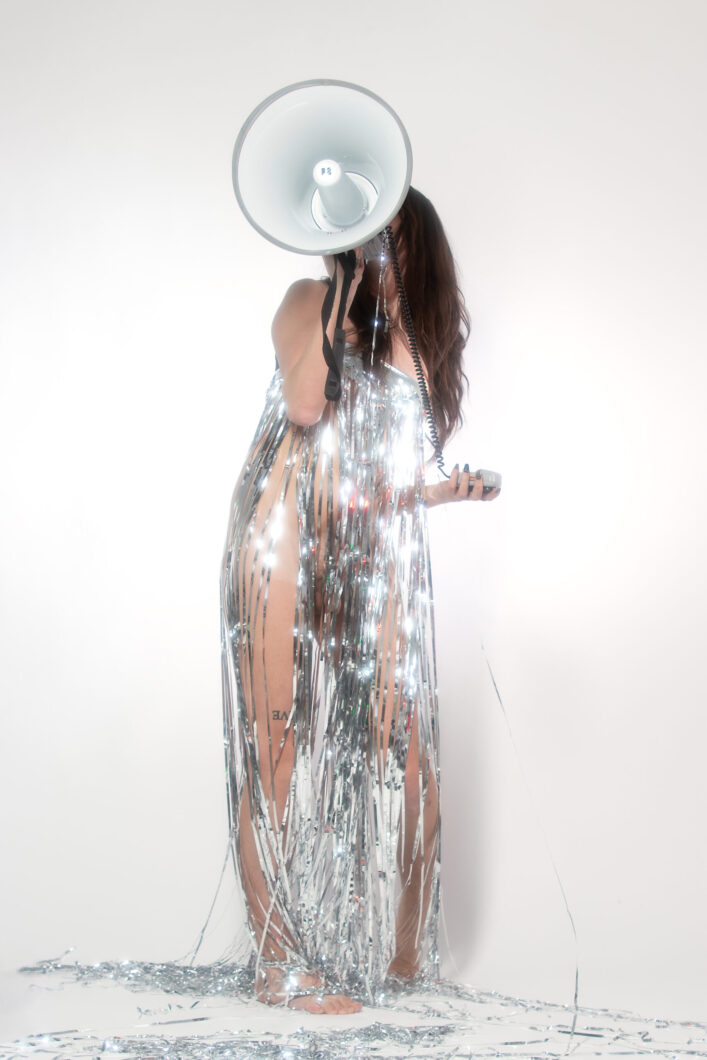
Eva Svaneblom (Tornedalian), Queerilainen, 2024, dance/performance, photo: Courtney B Ropp, choreography/performer: Eva Svaneblom
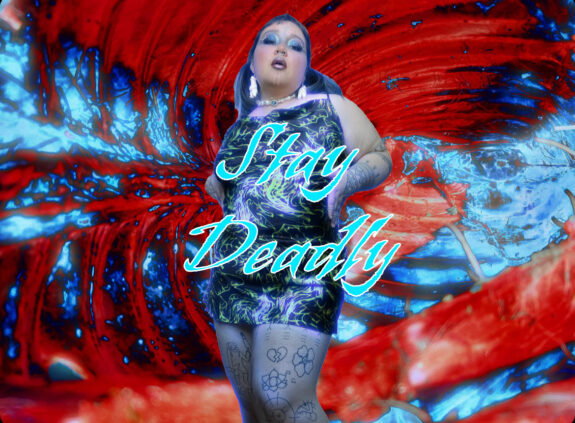
Seqininnguaq/Siqiniq (Inuit, Kalaallit Nunaat), Stay Deadly, 2024, digital art
All Day | Exhibition | A River Runs Beneath, Various Artists; Various Locations, organized by the Taqsiqtuut Indigenous Research-Creation Lab
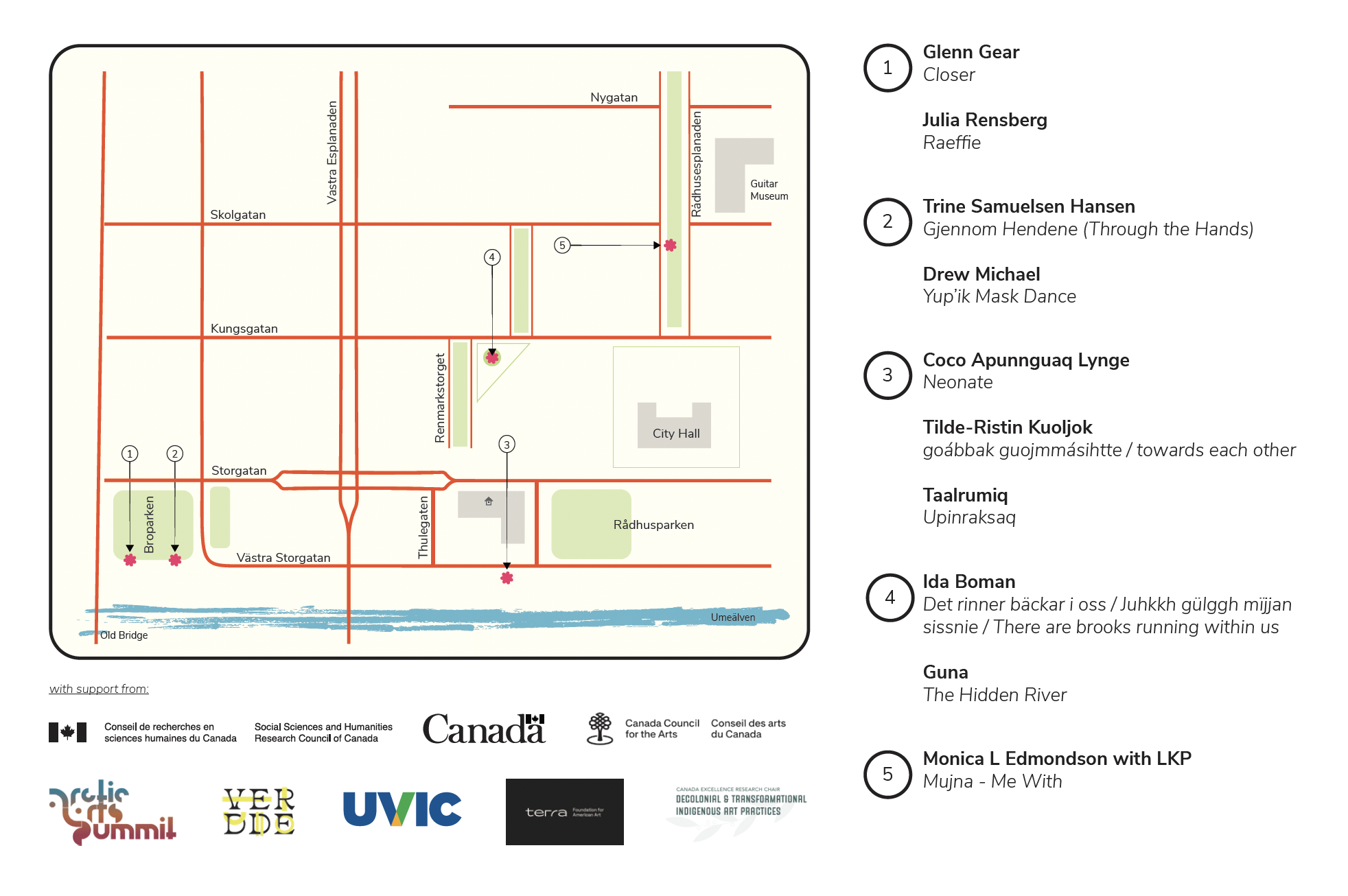
A River Runs Beneath: Indigenous AR Projects from the Circumpolar World to Umeje/Umeå
13 June – 20 June
Various Locations
Organized by Taqsiqtuut Indigenous Research-Creation Lab
A River Runs Beneath is a Northern international Augmented Reality project created to debut at the Arctic Arts Summit and, specifically, Ubmeje. Titled in reference to the river running beneath the city centre, the artists in this exhibition contribute works that think through confluences, movement, shared histories, place-making, site-specificity, language, land and waterways. Local and visiting artists from Sapmi and Inuit Nunaat invite Summit attendees to seek out the QR codes for A River Runs Beneath throughout the city and be the first to experience these thoughtful, fun, and dynamic works in person before they are shared with the world. Visit camp or hit up a disco, dress up in Arctic fashion, and experience language and culture like you never have before.
To create these original works for the Summit, Indigenous artists from across the North and working in all media came together for artistic incubator residencies in Canada and Sweden in 2025 and 2026. Post your AR selfies with the hashtag #AAS_ARiver to be featured online.
Artists
Ida Boman is an artist from Ubmeje/Umeå, based in Västerbotten, Saepmie, with both South Sami and Swedish heritage. Her practice revolves around more-than-human relationships starting from movements between body, landscape and poetry. Through experimental site-specific installations she explores what makes a place, makes nature, and how it is influenced by language, traditions, hierarchies and narratives. She often returns to the importance of bodily knowing and space for the unclear. Boman is educated in creative writing and feminist theory, among other things, and holds a master’s degree of Fine Arts from Umeå Academy of Fine Arts and a bachelor’s degree of International Conflict and Crisis Management from Umeå University. She was rewarded the Royal Academy of Fine Arts scholarships for art students and young artists in 2022 and the Region Västerbotten scholarship for graduating students at Umeå University’s Academy of Fine Arts in 2024. In recent years, she has had both solo exhibitions and participated in a number of group exhibitions around the region. Boman also have a curational practice and is currently working as a temporary operations manager at the People’s Movements for Art Promotion, Konstfrämjandet Västerbotten, in Ubmeje/Umeå.
Monica L Edmonson belongs to the Lule Sámi area of Sábme/Sápmi. The issues she wants to explore in her art work, and the stories she would like to tell, indicate the use of materials and techniques. However, glass is the material she knows best and it is often used to express the coexisting notions of fragility and strength in her people, us humans and our land. Public artwork and collaborations with architects are just as important in her practice as hands-on glass work and extensive art projects. It is a story hidden in each vessel of glass, sculpture in stone, urban glass façade or installation. It can be a story to remind us of our own – as well as natures’ – fragility and strength, a story which explores questions of identity and migration or a story to connect personal or local history with contemporary art. After a visual arts degree from Canberra School of Art Australia (1999), she established a glass workshop and studio in Tärnaby north Sweden. Her work is part of national and international art collections, for example at the National Gallery of Australia and Nationalmuseet Stockholm, and have been exhibited at the National Gallery of Canada and Koganezaki Glass Museum Shizuoka Japan, amongst others.
Glenn Gear is an Indigiqueer filmmaker and multidisciplinary artist of Inuit and Newfoundland heritage living in Montréal. He is originally from Corner Brook Newfoundland and has family throughout Nunatsiavut. His research-creation practice is shaped by Inuit ways of learning and knowing – employing a hands-on and tactile approach through animation, video projection, collage, photography, painting, and work with traditional materials such as sealskin and beads. His work often employs a multi-layered approach, combining a materials-based practice with storytelling, archival moments, and embodied experience. Many of his installations create dynamic spaces of audio and visual connection to land, water, and animals; sites that reveal movement, patterns, and life cycles alongside everyday magic. He currently teaches at Queens University in the Film & Media Department and continues to facilitate low-budget, DIY animation workshops with Inuit and Indigenous youth across Canada and abroad. His films have screened throughout Canada and around the world.
Guná is of Dákha/Tlingit Khwáan ancestry from the Dahk’laweidi Clan. She honors her ancestral Tlingit art form while merging formline into a bold contemporary vision. Trained by masters such as William Wadsen and Mike Dangelo, and educated at Emily Carr University of Art and Design, she channels her culture into art that challenges and confronts, shaping her unique approach to visual storytelling. Her work, which has been recognized with awards like the William and Meredith Sanderson Prize for Emerging Canadian Artists, and longlisted for the Yukon Art Prize and national Sobey Award, has been exhibited in galleries across Canada. Guná has shared her knowledge through lectures and workshops at institutions such as Princeton, Emily Carr, and Stellenbosch, where she explores themes of cultural theft, decolonization, and healing. For Guná, art is activism – a call to respect, protect, and empower. She is committed to utilizing her art as a powerful voice for Tilingit sovereignty, thereby inviting audiences to honor Indigenous resilience.
Trine Samuelsen Hansen is a Norwegian and Sea Sámi architect, artist, and musician from Skiervá in Northern Troms on the Norwegian side of Sápmi. Her interdisciplinary practice moves between architecture, spatial installation, performance, and sound, exploring how Indigenous knowledge, place, and collective memory can shape contemporary artistic and architectural practice.Rooted in Sea Sámi cultural traditions, Hansen’s work investigates how space can function as a framework for listening, gathering, and dialogue. Central to her practice is the concept of árran—firepace—understood not only as a physical structure but as a social and spiritual centre for conversation, storytelling, and community. Through ritual-based and participatory approaches, she develops spatial situations that invite audiences to engage with questions of belonging and cultural continuity in Sápmi. Her diploma project Ságastallaárran – A Sea-Sámi Ritual-Based Architecture, developed at the Bergen School of Architecture in 2025, proposes a ceremonial architectural practice grounded in Indigenous methodologies. Presented as a full-scale installation and building manual, the project enables a conversational gathering space to be assembled in different locations, opening possibilities for dialogue across communities and contexts. Alongside her artistic research, Hansen has worked with the international art triennial Bergen Assembly in both 2022 and 2025, contributing as an exhibition technician, builder, and collaborator on large-scale installations. She has also participated as a singer and joiker in performance and radio works presented at institutions including Bergen Kunsthall. Through her practice, Hansen seeks to create spaces that nurture trust, reflection, and shared learning—where architecture becomes a living process of relationship-building between people, land, and history.
Tilde-Ristin Kuoljok (b. 1996) lives and works in Burgávrre, Jåhkåmåhkke, Sábme (Purkijaur, Jokkmokk, Sweden). She belongs to the reindeer herding community of Sirges and comes from a line of Sámi duodje practitioners. Kuoljok grew up learning traditional knowledge and handicraft practices within her family before pursuing formal studies. She is a Lule Sámi duodjár (traditional Sámi handicrafter), textile artist and trained conservator, educated at Sámij Åhpadusguovdásj in Jåhkåmåhkke and at the University of Gothenburg. Kuoljok’s practice is grounded in traditional Lule Sámi duodje, working primarily with textiles, fur and leather – most often sourced from the reindeer. Through her work she investigates materiality, form and process, extending ancestral knowledge systems into contemporary textile art. Her practice moves between tradition and experimentation, exploring duodje as both cultural continuity and contemporary artistic expression, and as a method for engaging with past, present and future. Her work has been exhibited internationally, including at KIN Museum for Contemporary Art, Oulu Art Museum, Rovaniemi Art Museum and Sven-Harrys Konstmuseum, among others. In addition to her textile practice, Kuoljok has designed and produced stage costumes for Aira Dance Company. She has been awarded several grants and residencies, including the Region Västernorrland Sámi Artist Residency (2025) and Sápmi Art (2022).
Coco Apunnguaq Lynge is a multidisciplinary Kalalleq Inuk artist, working within graphic design, character concept art, fashion design, book illustration and art exhibition. Born in Greenland and raised in Denmark, she is a graduate of The Animation Workshop in Denmark, and has also studied multimedia design and fashion design.Her illustrations are printed in several books published across Denmark, Greenland, Iceland, France, Canada and England. She has worked on several AAA games as a character artist and illustrated for board games. Coco’s work has also been published on stamps in Greenland. In 2024 she became an award winning illustrator, for her work on Mythical Monsters of Greenland: A Survival Guide.
Julia Rensberg is a vytnesjäjja and artist from the southern part of Sápmi, currently living outside Jokkmokk where she has her workshop. She primarily works with traditional duodji in wood and antler, while also creating larger-scale art works. Her life and practice are closely connected to reindeer and reindeer herding, which shape everyday life in Sápmi. The reindeer’s grazing lands are part of a larger living landscape where forests, waters, animals, and people are interconnected. These lands support rich biodiversity, and their protection is essential not only for Sámi culture and reindeer herding, but for the health of nature itself. Her work reflects on what it means to live in relationship with the land and asks how we can protect and care for it. Just as land cares for us. She works from the understanding that we are not separate from the natural world, but part of it — a worldview where body, mind, and spirit are inseparable from the land.
Taalrumiq is an Inuvialuk fashion designer, artist and content creator from Tuktuuyaqtyuuq, Inuvialuit Settlement Region. Raised on the shores of the arctic ocean with her Inuvialuit family and community, she was named at birth according to Inuvialuit custom, after her great-grandmother Taalrumiq. She graduated from the University of Alberta with a Bachelor of Science and Bachelor of Education degrees, and is currently a 2nd year graduate student in the Master of Fine Art low residency program at Emily Carr University of Art + Design, where she is researching and creating a body of work based on ancestral Inuvialuit Fashion.
Notably her work appears in Netflix’s Avatar: The Last Airbender, she was a featured Designer on 7TH GEN and Project Runway Canada 2025.
Drew Michael (Yup’ik and Inupiaq) and his twin brother were born in Bethel, Alaska in 1984. Drew, his three sisters and brother grew up in Eagle River, Alaska and currently live in Anchorage, Alaska. Drew started carving at age 13, learning from archeologist Bob Shaw and printmaker Joe Senungetuk at the University of Anchorage Alaska. Years later he was influenced by contemporary Athabascan mask-maker, Kathleen Carlo, Inupiaq carver Lawrence Ahvakana, Alutiiq mask carver Perry Eaton and Sugpiaq painter Alvin Eli Amason. Mask making for Drew has been a process of learning about transformation and seeing the spirits of the world around in the animals, land, weather, and sea. His knowledge has taught him about his own history and the importance of mask making as a Yupik/Inupiaq and Polish man. In 2016 he went to Quinhagak, Alaska to be part of an archeological dig at the Nanalliq site, where a mask revealed itself to him and the moment solidified the energy masks carry and the people who created them. His work has expanded into community development through teaching mask making, creating community spaces, and developing opportunities for stories to be shared about how to live as a real human being and ways of connecting to the world around while honoring the spirits.
Curators
Dr. Heather Igloliorte, an Inuk-Newfoundlander and Nunatsiavut Beneficiary, is the Canada Excellence Research Chair in Decolonial and Transformational Indigenous Art Practices at the University of Victoria, BC, where she is a Professor in the Visual Arts Department. Heather has been a curator since 2005 and has worked on more than thirty curatorial projects; she was recently the Curator of the 2025 Bonavista Biennale: String Games. Her curatorial work has been recognized by The Hnatyshyn Foundation with the Award for Curatorial Excellence in Contemporary Art (2021). Igloliorte publishes frequently on Indigenous art and curatorial practice, especially regarding Circumpolar arts, including her co-edited volumes Arctic Prisms: Indigenous Arts of the Circumpolar World (2023) and Qummut qukiria!: Art, Culture, and Sovereignty across Inuit Nunaat and Sápmi: Mobilizing the Circumpolar North (2022). Igloliorte has served on many museum and gallery advisories, councils and juries. She is Past President of the board of the Inuit Art Foundation, and was the first Indigenous person in Canada to be awarded a Royal Canadian Academy of Arts Medal for her service to Indigenous art and artists, also in 2021. Heather participated in the Summits in 2017 and 2019, and was the Curator of Visual Arts and Summit Coordinating Producer for the Whitehorse AAS in 2022.
Maria Svonni, based in Giron, Sápmi, is the artistic director of the Luleå Biennial, the oldest art biennial in Scandinavia. She is the founder and artistic director of Verdde, a nomadic art institution working for the inclusion of Sámi perspectives in everyday life through contemporary Sámi art. Her work is organized around collaborations, utilizing site-specific methods and activities to promote dialogue and long term change. Svonni is active as a freelance curator and writer. She was part of the team that formulated the artistic program in the winning application for Giron to become European Capital of Culture in 2029 and will be involved to make the programme come to life with a focus on Indigenous Sámi values and public art. She led the establishment of KiN art museum, the first museum focused on contemporary art in Norrbotten County, and is currently involved in creating the first dedicated space for Sámi contemporary art in the Swedish parts of Sápmi.
All Day | Public Artwork | The Reindeer-Lion, NORDTING; Renmarkstorget, organized by UmArts
The Reindeer-Lion, sculpture by NORDTING, downtown Umeå
in collaboration with UmArts
Location: Renmarkstorget
All the Nordic kingdoms have lions as their guardians. Lions have little to do with the Nordics, and even less to do with the Arctic. But the lion is an ancient symbol of the king and royal power. In front of the Norwegian Parliament, the Swedish Royal Castle and the Danish throne, there are lions in granite, bronze and solid silver. They are guarding the king, the church, and centralized power.
Those lions must lose their heads, and get new ones.
The Reindeer-Lion is the Circumpolar North’s own creature. It has a body of power, but with a completely different head; it thinks differently, it has a different agenda. The Reindeer-Lion is the sphinx, griffin and guardian spirit of the North.
The Reindeer-Lion will be unveiled on Renmarkstorget in central Umeå/Ubmeje.
Artist Biographies
Jérémie McGowan (PhD) is a designer, artist and punk rock bass player based in Romsa/Tromsø. His work spans objects, ideas, museums and provocations, rooted in critical-creative perspectives and social engagement. Together with Anne May Olli and RiddoDuottarMuseat in Kárášjohka, he is co-creator of the ‘museum performance’ Sámi Dáiddamuseax (2017). Current projects include Arctic Armpit, a one-man punk band (2021–), and Real. Arctic., a multimodal art and archival project realised in collaboration with Amund Sjølie Sveen / NORDTING (2023–). Jérémie is currently a postdoc researcher with SAMFORSK at UiT – The Arctic University of Norway.
Amund Sjølie Sveen (b. 1973) is an Arctic artist, writer and researcher from Vadsø, Northern Norway. He is the artistic director of NORDTING – The Northern Assembly. His work has for many years focused on the narratives and power struggles in the north, taking the Arctic as a starting point for investigating both local and international issues in our globalized world of market economy. He is a regular participant in public debates, and is associated with the Arctic University in Tromsø as a researcher.
All Day | Exhibition | This is Arctic Land, NORDTING; Tráhppie (Helena Elisabeths väg 4), UmArts Studio (Östra Strandgatan 32D) and Västa Ràdhusgatan, organized by UmArts in collaboration with Tráhppie
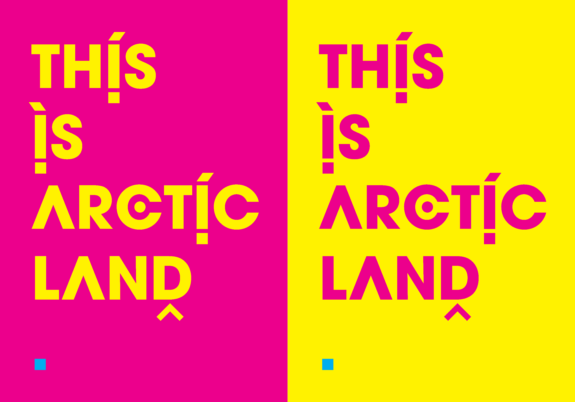
This Is Arctic Land
in collaboration with UmArts and Tráhppie
Location: Tráhppie (Helena Elisabeths väg 4), UmArts Studio (Östra Strandgatan 32D) and Västa Ràdhusgatan
Time: 12-18 June
This Is Arctic Land is a series of public interventions in Ubmeje/Umeå by artists Jérémie McGowan and Amund Sjølie Sveen. Realised in collaboration with UmArts and Tráhppie, the project takes form as a large banner on the facade of Tráhppie, a collection of signs outside UmArts, a monumental billboard in the city square, and a limited-edition DIY stencil kit in the Arctic Arts Summit conference pack.
Borrowing its rhythm and form from the well-known slogan “This Is Sámi Land”, This Is Arctic Land pays homage to the importance of protest for land, self-determination and identity, in support of Ubmeje/Umeå in Sápmi. The project both addresses and participates in the processes of “Arctification” occurring in many northern areas today. Who chooses to be(come) part of the Arctic, or (re)brand themselves as “Arctic”, and to what ends? What is at stake, and what does it mean?
Artist Biographies
Jérémie McGowan (PhD) is a designer, artist and punk rock bass player based in Romsa/Tromsø. His work spans objects, ideas, museums and provocations, rooted in critical-creative perspectives and social engagement. Together with Anne May Olli and RiddoDuottarMuseat in Kárášjohka, he is co-creator of the ‘museum performance’ Sámi Dáiddamuseax (2017). Current projects include Arctic Armpit, a one-man punk band (2021–), and Real. Arctic., a multimodal art and archival project realised in collaboration with Amund Sjølie Sveen / NORDTING (2023–). Jérémie is currently a postdoc researcher with SAMFORSK at UiT – The Arctic University of Norway.
Amund Sjølie Sveen (b. 1973) is an Arctic artist, writer and researcher from Vadsø, Northern Norway. He is the artistic director of NORDTING – The Northern Assembly. His work has for many years focused on the narratives and power struggles in the north, taking the Arctic as a starting point for investigating both local and international issues in our globalized world of market economy. He is a regular participant in public debates, and is associated with the Arctic University in Tromsø as a researcher.
All Day | Exhibition | Melting Barricades, Inuk Silis Høegh and Asmund Havsteen-Mikkelsen: Renmarkstorget; organized by Nuuk Art Museum
Melting Barricades
16-18 June
Location: Renmarkstorget
By Inuk Silis Høegh (KAL) and Asmund Havsteen-Mikkelsen (DK)
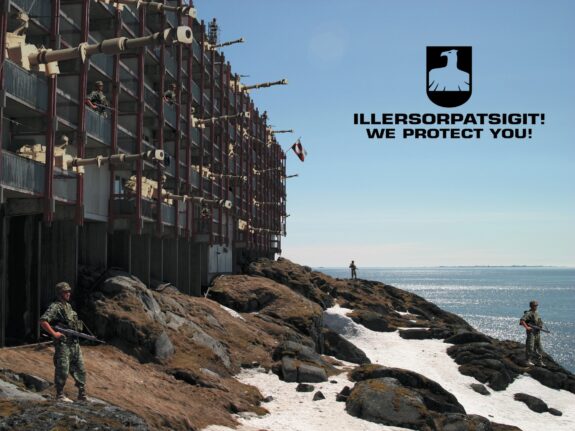
Defend your country! Join the Greenlandic army today!
In 2004, two officers marched through the pedestrian street in Nuuk, megaphones in hand, recruiting citizens for a new national military. Volunteers were measured, weighed, and asked about their dog sledding, hunting and snowmobile skills. Hot seal soup was served after enrolment. For those hours, the Greenlandic military was a reality.
This spectacular recruitment campaign was the beginning of Melting Barricades — an art project in which artists Inuk Silis Høegh and Asmund Havsteen-Mikkelsen assumed the roles of Major General and Lieutenant Colonel. Two years later, the newly formed army invaded Denmark, congratulating Copenhageners on their new citizenship in the United States of Greenland.
The campaign did not stop at the street. Military recruitment posters were plastered across bus stops throughout Nuuk — the same everyday public spaces where citizens encounter advertising and news. Standing here in Umeå, you are now part of that same tradition.
With humour, irony and theatrical force, the project raises urgent questions about sovereignty, colonialism, defence policy and geopolitical power — questions that have only grown more pressing since.
Melting Barricades is presented here as a pop-up exhibition in connection with the Arctic Arts Summit, Umeå, June 2026. Curated by Nuuk Art Museum.

All Day | Exhibition | I SAW YOU, Carola Grahn, Renmarkstorget, organized by Arctic Arts Summit
I SAW YOU
Carola Grahn
During the Arctic Arts Summit 2026, Sámi artist Carola Grahn transforms the urban landscape of Ubmeje/Umeå through I SAW YOU — a large-scale public art intervention unfolding across the city.
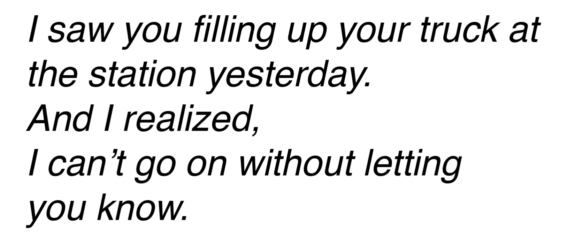
Originally created in 2016, the work takes the form of a love letter placed in unexpected everyday locations: gas stations, roadsides, and transient public spaces. In Umeå, the text will appear on a monumental wall installation in the city centre, across selected petrol stations and in physical letters given to the Arctic Art Summit participants. A Dodge van is also specially decorated by the artist as a moving extension of the work itself.
Blending intimacy, humour, melancholy, and sharp social observation, I SAW YOU reflects on belonging, mobility, class, desire, and the emotional geography of the North. Addressed to an unnamed former lover encountered at a gas station, the text unfolds as a meditation on two fundamentally different relationships to place: one person who could never leave, and another who could never stay.
By bringing this vulnerable and cinematic narrative into public space, Grahn challenges conventional ideas of where art belongs — and who it speaks to. The work moves between contemporary art, roadside culture, Sámi experience, and northern everyday life, inviting audiences to encounter art not only in institutions, but in the ordinary spaces people pass through every day.
About the Artist:
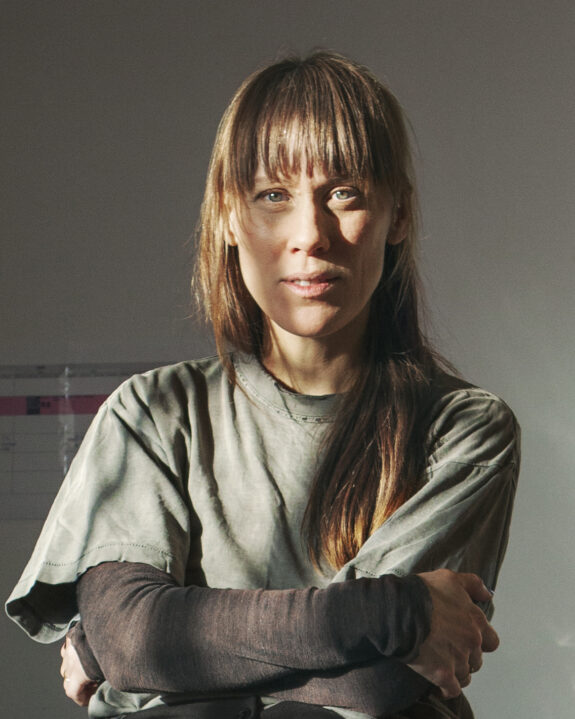
Carola Grahn is a South Sámi artist from Jåhkåmåhkke/Jokkmokk and holds a Master’s degree from the Royal Institute of Art in Stockholm. Through her artistic practice, she critically examines humanity’s alienation from nature and the destructive legacy of colonialism, which continues to cause suffering for both people and the environment. In her work, she weaves together references from Western art history and popular culture with Sámi traditions and the rural landscapes of northern Sweden—often with a dark underlying humour.
9.00–19.00 | Installation | The Rhizome Room Installation, Multisalen, Väven
The Rhizome Room
16-18 June
Location: Multisalen, Väven
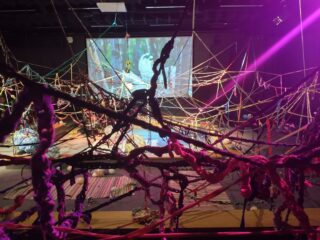
As part of the 2026 edition of the Arctic Arts Summit, the University of Oulu’s SAFIRE team and Art Organisation Silence will work together with visual artists Riikka Keränen and Kimmo Ylönen to initiate a social and interactive artistic multispace – The Rhizome Room – that will serve as a scenography for performances, the backdrop for panels, discussions and artist meetings, and as a standalone drop-in lounge space for being and making together.
Originally curated and produced by members of University of Oulu’s research community (Neal Cahoon, Rebecca Carlson and Huiying Ng) for the European Citizen Science Association Conference in March 2026, the staging of the installation in Ubmeje/Umeå will feature an Art Organisation Silence-commissioned performance by Harri Kuusijärvi & Marjo Selin, guest DJ mixtapes by Matti Aikio and DJ Hulluella, and an artistic taster menu of drinks and snacks within an immersive workshop and lounge space.
Perhaps best known within Research and Arts contexts through the philosophical writings of Deleuze and Guattari, rhizomes are nonhierarchical and unpredictable. They represent a “plane of immanence”, a site where relations and possibilities are ongoing and emergent. In soils and root systems, plant rhizomes exist in close community with fungi and microbes, forming reciprocal and co-constitutive loops in which each lifeform alters and supports several others. In a similar way, we feel that our circumpolar community has the opportunity to co-create together. Through a rhizomatic spirit, our dialogues involve growing and changing together through shared perspectives, practices, and priorities. You will find The Rhizome Room in Vaven’s Upplev multisal.
Artist Biographies
Riikka Keränen is a visual artist who lives and works in Ristijärvi. She graduated from Kankaanpää School of Fine Arts in 2010. At the centre of Keränen’s artistic work are a variety of materials, with which she reflects on the relationship of humans and other organisms, as well as with time and the surrounding world and its phenomena. Important elements in her work are intuitiveness, thinking with hands, and play. Keränen’s works are sculptures, installations and location-related environmental artworks made using a variety of different techniques.
Kimmo Ylönen is a visual artist living and working in the outer archipelago of Parainen. In his studio, Ylönen builds sculptures using wood collected from the forest floor and demolition sites, in addition to other recycled materials, addressing big questions about humanity and the universe. The work on these ever-accumulating entities seems to be for life. Alongside producing new, hard-surfaced and durable works, Ylönen develops his ability to work with light equipment on the road. The work can be, for example, a long performance realised on foot or by bicycle and a community art walk, during which site-specific and activistic artworks that slowly mold into nature are made.
Matti Aikio is a visual artist, coming from an Indigenous Sámi reindeer herding culture. His main mediums are moving image, text, sound, photography and installation, focusing on the Indigenous relationship with nature & its conflict with that of modern industrialised society’s relationship with nature, and he also performs as a DJ. In all of his works, he is especially drawn to the idea that human cultures at large are much more shaped by nature and influenced by other species than modern society is aware of. Matti Aikio provides the mixtape for The Rhizome Room on Tuesday 16 June and will also perform as part of Avant Joik on Wednesday 17 June.
Eleonora Alariesto is a Sámi DJ, artist, and producer, best known for her project DJ Hulluella. Based in Rovaniemi, Northern Finland, she is also a freelance journalist, host of the Sámi podcast “Mii gullo…?”, a project planner, and a soon-to-graduate Arctic World Politics major at the University of Lapland. DJ Hulluella performs live at the Arctic Arts Summit on Tuesday 16. June (21:00-22:30), and also provides an ambient mixtape for The Rhizome Room on Wednesday 17 of June. Instagram & SoundCloud: @djhulluella
Mauri Lähdesmäki (b. 1983) is a film and video artist from Rovaniemi. He has worked extensively as a cinematographer, director, and editor on numerous video art and film productions. His work has received both national and international recognition and awards. In recent years, Lähdesmäki has increasingly focused on documentary film, but his expression also spans the realms of poetic and metaphorical cinema, as well as video art. Lähdesmäki’s works are characterised by an exploration of contemporary themes from a timeless perspective. He has a mastery of the language of cinema, yet he is constantly seeking new ways to expand and deepen his expression. In his view, a work of art is, in part, self-generating. Mauri Lähdesmäki has been involved as a cinematographer, artist and producer in the works of Marja Helander, which will be screened in the cinema space at Vaven on Tuesday 16. June at 17:00.
Marjo Selin graduated with a Master of Arts degree from the Department of Dance at the University of the Arts in Helsinki in 1999. Since then she has worked at Dance Theater Hurjaruuth and she has also undertaken a number of freelance projects since 2001. Marjo is a founding member of Piste Kollektiivi and is actively involved in Rasa Collective. She has worked with choreographers such as Marjo Kuusela, Sato Endo, Simo Kellokumpu, and Carl Knif. As a dance artist, Marjo is interested in exploring themes of body language and linguistic expression, as well as investigating the relationship between humans and their environment. Through her art, she aims to promote the principles of regional equality and equity, and she performs and works as an artist in places like daycare centres, schools, care facilities, and other public spaces. Marjo Selin will perform alongside Harri Kuusijärvi at 20:00 on Tuesday 16. June in The Rhizome Room.
Harri Kuusijärvi is a distinctive voice in modern accordion, redefining his instrument through improvisation, electronics, and bold sound worlds. Drawing on a background in classical contemporary music, his work bridges contemporary jazz, electroacoustics, and global influences. Harri Kuusijärvi will perform alongside Marjo Selin at 20:00 on Tuesday 16 June in The Rhizome Room, and alongside Jaakko Laitinen at Sjadduo on Wednesday 17 June.
Jaakko Laitinen
Jaakko Laitinen is a musician and songwriter from Rovaniemi, best known for his band Jaakko Laitinen & Väärä raha. The band is known as an electrifying live act whose music blends Balkan rhythms with northern musical traditions. In addition to music, Jaakko Laitinen has worked on various film and stage productions and has been actively involved in Rovaniemi’s cultural life. Jaakko Laitinen will perform alongside Harri Kuusijärvi at Sjadduo on Wednesday 17 June.
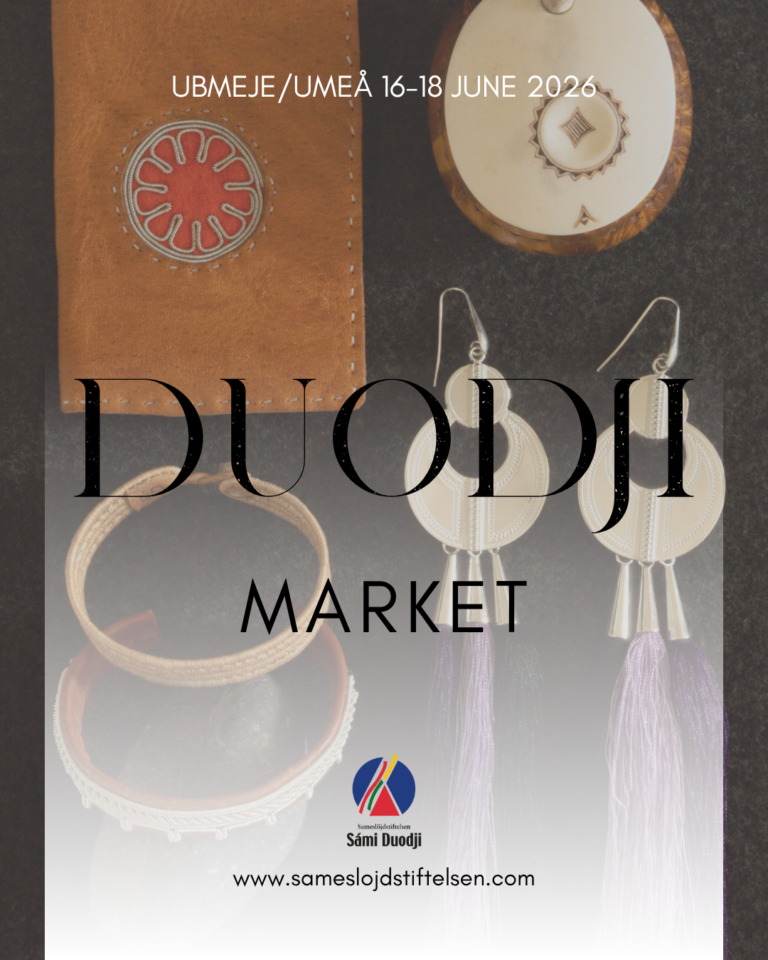
10.00-17.00 | Market | Duodji Market Hosted by the Sámiduodji Foundation
Welcome to the duodji market during the Arctic Arts Summit in Ubmeje/Umeå, 16–18 June 2026!
The market is organized by the Sámiduodji Foundation, bringing a large part of the Jokkmokk shop to Ubmeje. Several duojárat will also be present, selling their own duodji, art, and design.
The market will take place at Kajscenen at Väven.
Tuesday, 16 June: 10:00–16:00
Wednesday, 17 June: 10:00–17:00
Thursday, 18 June: 10:00–17:00
A warm welcome!
10.00–19.00 | Exhibition | ARcTic: Art, Land, Power Umeå Konsthall, Väven, organized by Umeå kommun in collaboration with Aejlies - the Sámi Centre
ARcTic: Art, Land, Power
June 15th – September 6th 2026
Location: Väven, Umeå konsthall, 3rd floor
To coincide with the Arctic Arts Summit in Ubmeje/ Umeå, Umeå konsthall is opening an exhibition featuring works that reflect experiences related to the summit’s themes – art, land and power. Here, these themes are explored in greater depth and take on new forms through art. Different perspectives, expressions, and voices are given a voice in the exhibition. History is interwoven with the present and the future.
The participating artists have various connections to the geographical region of Sábmie. This encompasses parts of Sweden, Norway, Finland and the Kola Peninsula in Russia. Sábmie is and has always been inhabited by the Indigenous Sámi people.
A big thank you to all the participants and to Aejlies – the Sámi Centre in Tärnaby – which, through a generous collaboration, has contributed a selection from its collection of duöjjie/Sámi handicrafts.
Participating Artists:
Victoria Andersson, Linnéa Axelsson, Sebastian Blind, Monica L Edmondsson, Per Enoksson, Carola Grahn, Olof Marsja , Lena Stenberg, Katarina Pirak Sikku and Katarina Spik Skum.
A video by Joar Nango and Ken Are Bongo will be available from June 15th to June 18th.
Represented through the Aejlies collection:
Birgitta Andersson, Cecilia Andersson, Sabina Baer, William Hallin, Ingemar Israelsson, Marja-Kari Omma, Anders Östergren Njajta and Lena Njaita.
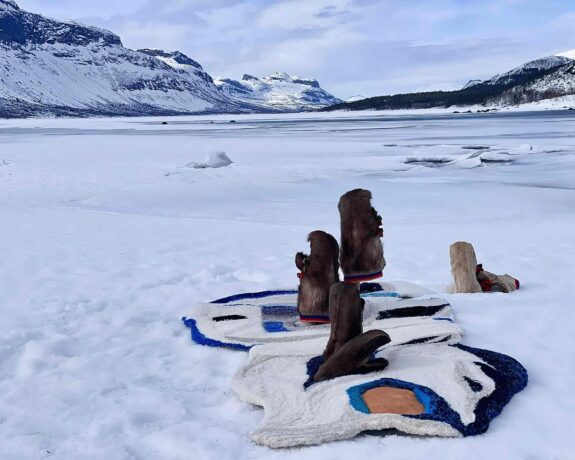
10.00–19.00 | Exhibition | Flags from Suialaa Folkets Hus, organized by Suialaa Arts Festival
Flags from Suialaa
16-18 June
Folkets Hus
Artworks from three up-and-coming Kalaallit Inuit artists, Cecilie Christiansen, Lena Kuitse Andersen and Palleq Kristiansen were printed as flags for the Suialaa Arts Festival 2025 as an initiative to bring art into the cityscape. The printed works were joined by a flag by Alberte Parnuuna, embroidered by hand, and hoisted outside the culture house Katuaq in Nuuk. Making arts and culture accessible for everyone is one of the main focus areas of the Suialaa Arts Festival, and in addition to that, the project was one of the festival’s many experiments at alternative ways of showcasing art and artists. At the Arctic Arts Summit 2026, the audience will be able to experience the flags from a much closer distance at Folkets Hus.
Artists
Alberte Parnuuna (b. 1995) is a Copenhagen-based visual artist, filmmaker and 2D animator. Originally from Nuuk, Parnuuna’s practice revolves around personal, political and poetic storytelling—often diving into themes of cultural codes, memory and identity, as well as the long shadows of colonial history. Her animation company, founded in 2024, is called “siorssuk visuals”. Parnuuna holds a Bachelor of Fine Arts in Film and Media Science (2018) and a Master of Fine Arts in Visual Culture (2022) from the University of Copenhagen. She has participated in group exhibitions, film programs and talks in several places in Europe, North America and Kalaallit Nunaat.
Cecilie Christansen was born in 1999 in Nuuk and currently live in Aarhus to attend the Aarhus Art Academy after graduating from the Nuuk Art School is 2022. She is well known for my beading work, especially her earrings.
Palleq Kristiansen is 23 years old and lives in Nuuk. He graduated from the Nuuk Art School in 2025.
Lena Kuitse Andersen is a 23 years old artist born in Nuuk who likes to, “express myself in modern Greenlandic art, which is a bit creepy and different.”
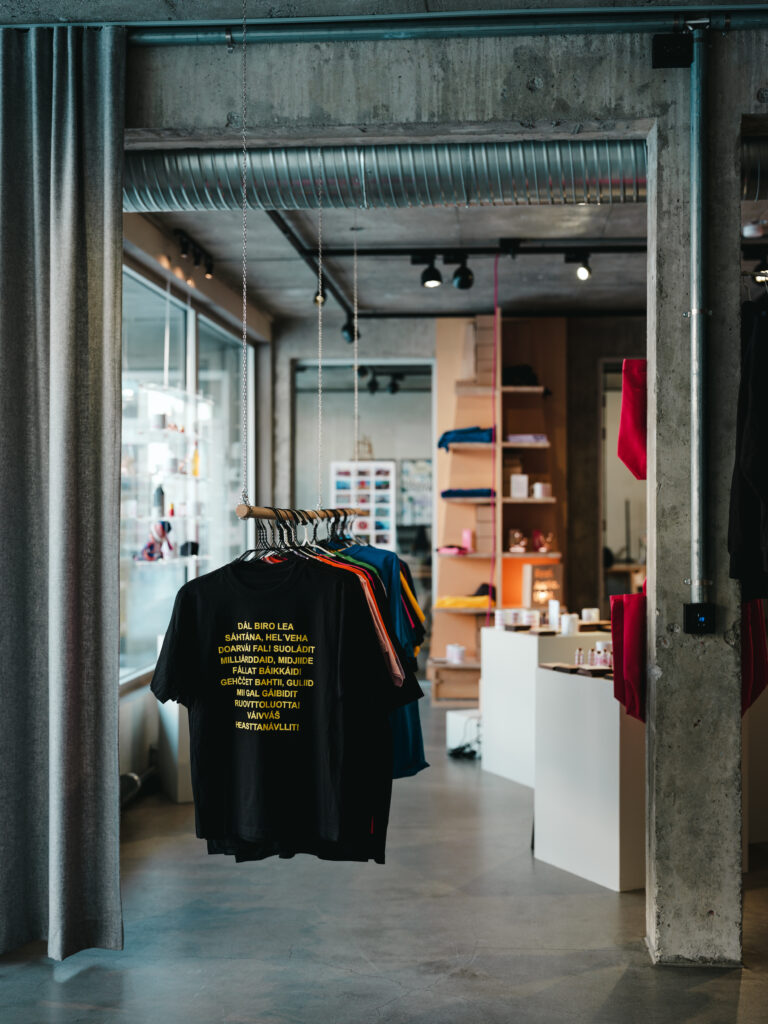
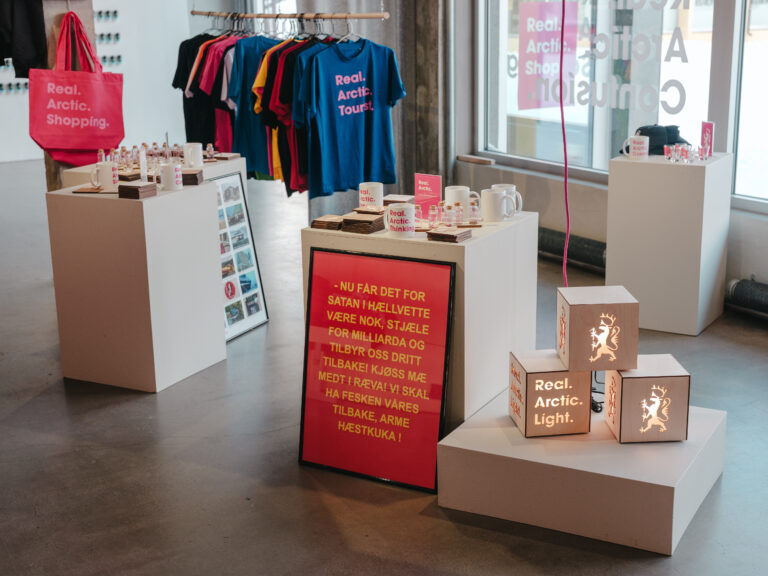
10.00-19.00 | Installation | Real Arctic: Tráppihe and Kommunhörnan, Väven, organized by Tráppihe and UmArts
Real. Arctic.
in collaboration with UmArts and Tráhppie
Location: Tráppihe Sámi Cultural Centre, Gammlia
12-19 June, 12.00-16.00
Location: Kommunhörnan, Väven
13 June: 13.00-15.00 (Opening)
14 June: Closed
15 June: 10.00-19.00
16 June: 10.00-19.00
17 June: 10.00-19.00
18 June: 10.00-16.00
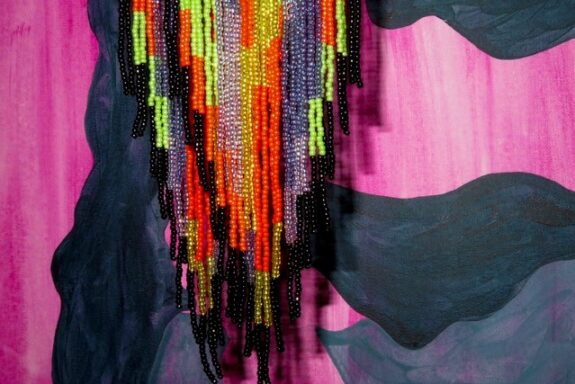
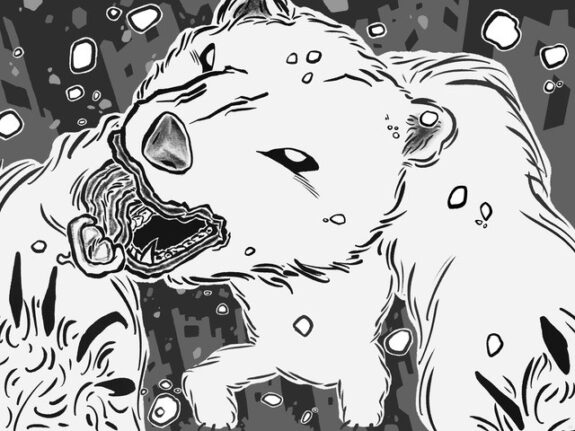
Real. Arctic. is an ongoing art and archival project by Jérémie McGowan and Amund Sjølie Sveen that occurs at sites across the Arctic, and that takes many different forms. The project is concerned with issues facing the Arctic such as self-determination, power, marketing, geopolitics and self-exoticization.
Real. Arctic. comes to Ubmeje/Umeå in collaboration with UmArts and Tráhppie as an art installation, a tourist shop and a series of performances. Based at Väven and Tráhppie, the project switches between original artworks, archival documentation, mass-produced collectibles and off-the-shelf consumer products. Together, these examine how the Arctic is imagined, marketed and lived today. Real. Arctic. ______. merchandise, a line of designed objects that critically mirror the souvenir industry, is on display – and for sale – throughout the Arctic Arts Summit at both locations.
Clearly, the Arctic is in demand. But who is buying – and who is selling – and at what cost?
Artist Biographies
Jérémie McGowan (PhD) is a designer, artist and punk rock bass player based in Romsa/Tromsø. His work spans objects, ideas, museums and provocations, rooted in critical-creative perspectives and social engagement. Together with Anne May Olli and RiddoDuottarMuseat in Kárášjohka, he is co-creator of the ‘museum performance’ Sámi Dáiddamuseax (2017). Current projects include Arctic Armpit, a one-man punk band (2021–), and Real. Arctic., a multimodal art and archival project realised in collaboration with Amund Sjølie Sveen / NORDTING (2023–). Jérémie is currently a postdoc researcher with SAMFORSK at UiT – The Arctic University of Norway.
Amund Sjølie Sveen (b. 1973) is an Arctic artist, writer and researcher from Vadsø, Northern Norway. He is the artistic director of NORDTING – The Northern Assembly. His work has for many years focused on the narratives and power struggles in the north, taking the Arctic as a starting point for investigating both local and international issues in our globalized world of market economy. He is a regular participant in public debates, and is associated with the Arctic University in Tromsø as a researcher.
12.00-21.30 | Video Installation | Guhte gullá, Vita kuben, Norrlandsoperan, organized by Norrlandsoperan
Guhte gullá / Here to hear
17 June: 12.00-21.30
18 June: 12.00-14.00
Location: Vita kuben, Norrlandsoperan
Outi Pieski is one of the leading Sámi artists working today, having shown at Tate Modern (2025), MARKK, Hamburg (2023-24), the Venice Biennale (2019), Gwangjubiennale (2021), the Sydney Biennale (2022) and GIBCA – Göteborg International Biennial for Contemporary Art (2023).
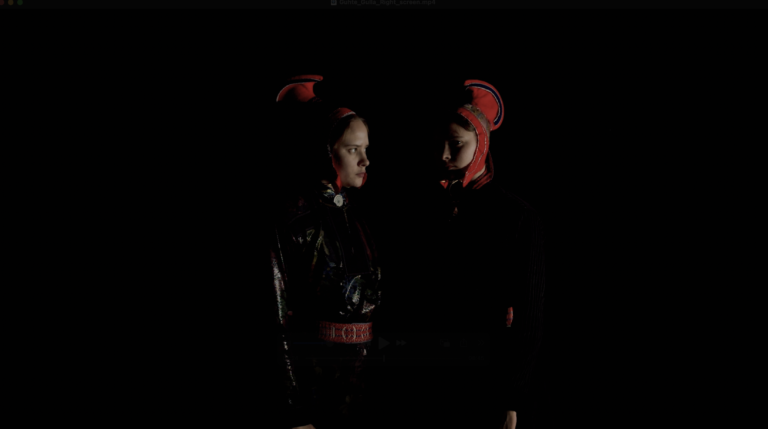
In Guhte gullá (2021), a multichannel video installation, young people dance to escape the angst of world destruction, summoning the aid of the forgotten Sámi earth deities Uksáhkká, Juoksáhkká and Sáráhkká. We are losing our connection with the earth and our ancestors who rest beneath the soil. It is time for us to reconnect with the sacredness deep within the earth.
In their work Guhte gullá / Here to hear, women of different generations listen to the voices of their foremothers through dance and duodji, traditional Sámi handicrafts. The mother-daughter relationship between Outi Pieski and Biret Haarla Pieski and Gáddjá Haarla Pieski chimes aptly with the theme of their first joint artistic collaboration. The space is filled with Tuomo Puranen’s ritual-beating electronic music and Mari Boine’s joik, which inviting us to listen, reflect, and pay attention to the message of the foremothers.
Credits:
Directors: Biret Haarla Pieski, Gáddjá Haarla Pieski & Outi Pieski
Cinematographer, Editor: Mauri Lähdesmäki
Choreography: Biret Haarla Pieski, Gáddjá Haarla Pieski
Performers: Biret Haarla Pieski, Gáddjá Haarla Pieski
Music: Mari Boine, Tuomo Puranen
Sound Design: Pekka Aikio
Costume Designer: Auri Lukkarinen, Outi Pieski
Film Assistant: Maria Duncker
Sound recording: Svein Schultz
Commissioned by HAM/Helsinki Biennial 2021
Thank you: Teuri Haarla, P.A.R.T.S – Performing Arts Research and Training Studios, Angel Films.
12.15–13.15 and 15.30–16.30 | Performance | Lávvobottoš, Behind Väven, organized by Elle Sofe Company
Lávvobottoš
Organized by Elle Sofe Company
16 June, 12.15-13.15 and 16.30-17.30
17 June, 12.15-13.15 and 15.30-16.30
Årstidernas Park
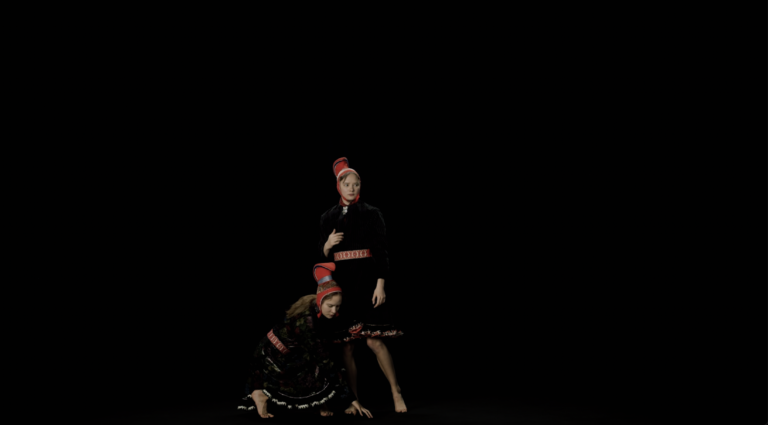
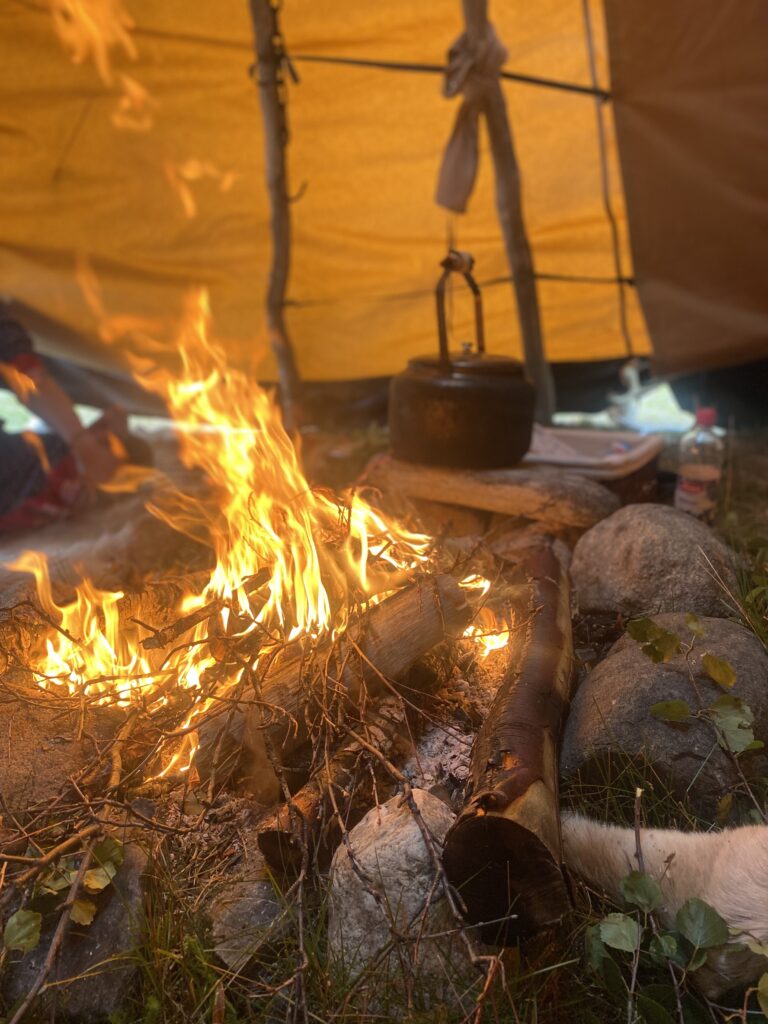
Lávvobottoš invites you into a traditional sámi lávvu, where stories, yoik, sound, and movement open a doorway to presence, listening, and a quiet sense of belonging.
This is a work in progress showing of a new work by Elle Sofe Company. Performers and creative contributors are Inger Marie Nilut, Nora Svenning and Emma Elliane Oskal Valkeapää.
This experience is suitable for all ages.
Duration: Approximately 45 minutes, but you are invited to hang out longer in the lávvu after the performance.
Artistic director: Elle Sofe Sara
Tour manager: Ingvild Kristin Kirkvik
14.00–18.00 | FUTURE CARTEOGRAPHIES, Galerie Verkligheten, organized by UmArts
FUTURE CARTOGRAPHIES: Rúrí + Elena Mazzi
Galleri Verkligheten, Pilgatan 16 Umeå
10-18 June 2026
Description:
Future Cartographies investigates the condition of complexity and rapidly transformation of geographies within and beyond the arctic. It is a dialogue between the work of two artists, Rúrí and Elena Mazzi, engaging with spatial research through artistic practice. Their approaches intersect art and architecture as a spatial science as a way of reading and interpreting territorial changes.
The cartographies are conceived as a critical lens for understanding infrastructures, territories, and resource extraction systems, a spatial tool envisioning new narratives through documentation, data interpretation, and visual translations.
The exhibition is organized by Umeå School of Architecture, in collaboration with UmArts research centre and Galleri Verkligheten, and curated by Maria Luna Nobile as one of the contribute of the EURAU26 LATITUDES Symposium Situated reflections on architectural research.
Opening
FUTURE CARTOGRAPHIES will open 10 June at Galleri Verkligheten, Pilgatan 16 Umeå from 19.00-21.00
Artist Biographies:
Rúrí (Iceland, 1951) is a visual artist whose art focuses on the human kind and it’s relation to the Earth and the Cosmos. Since 1999 many of her works raise questions about water, shortage of safe water for consumption, but also the possible effects of icecaps melting on shorelines of continents and countries. These works are based on scientific information. Her works have been exhibited widely around the world. Rúrí has received a number of awards for her art, and was recently awarded the Icelandic Visual Arts Council´s Honorary Award 2026.
credits: ph. giulio lapone
Elena Mazzi (Italy, 1984) is a visual artist, working with specific geographical and socio-political contexts. Her works have been displayed in many solo and collective exhibitions all over the world. She attended several residency programs, and she is the winner of various art prizes. In 2015 she started to lead workshops in collaboration with Institutions, Schools, Academies. She is currently a PhD candidate at Villa Arson and Université Côte d’Azur, Nice.
Calendar and opening hours:
Opening (18.00) 19.00 to 22.00
10 June Wednesday 19.00 to 22.00
11 June Thursday 14.00 to 18.00
12 June Friday 14.00 to 18.00
13 June Saturday 14.00 to 18.00
14 June Sunday 13.00 to 17.00
15 June Monday 14.00 to 18.00
16 June Tuesday 14.00 to 18.00
17 June Wednesday 14.00 to 18.00
18 June Thursday 14.00 to 18.00
14.00–18.00 | House_FLOW Counter Move, UmArts. Organized by UmArts
house_Flow Counter Move
Location: UmArts Research Studio, Östra Strandgatan 32D, Arts Campus, Umeå University
Time: 10-18 June 2026 14.00-18.00
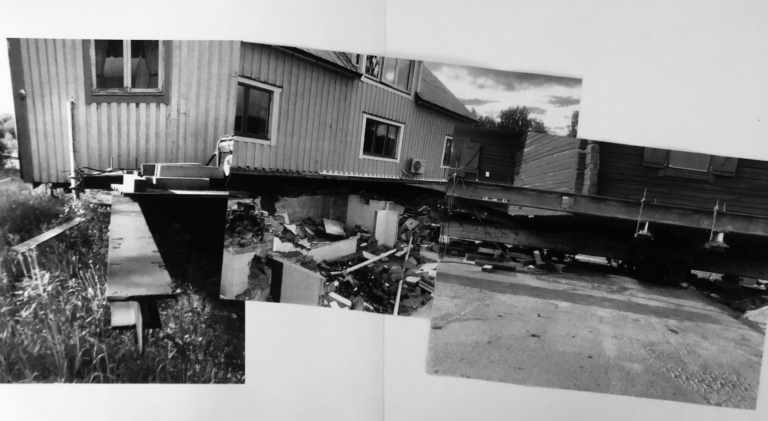
Tonia Carless’s collaborative visual research investigating house moving in Västerbotten and Norrland will be exhibited in the UmArts Research Studio on the Arts Campus, Umeå University. The project investigates wholesale structural moving of buildings in the north of Sweden, documenting over 400 moves made by one house-mover (husflyttningar), a common practice in the circumpolar north.
The exhibition presents a moment of destabilisation of the abstract representations of architecture through temporal mapping and shifting perspective. This mass spatial reconfiguration of buildings creates a speculative exploration of climate, economic and infrastructural change, outside of the planning process. The installation includes the new work The Film the House Made, from the point of view from a window of a moving house, looking out across the northern Swedish landscape, territorially fluid but inhabited, immersed and embodied in a circular economy.
The project proposes structural house-moving as an architecture of de-growth, and that all buildings can be moved.
Opening
house_FLOW Counter Move will open 10 June 13.00-14.00 at UmArts Studio (Östra Strandgatan 32D, Arts Campus, Umeå University), with remarks at 13.30.
Credits: The exhibition takes place as part of the Latitudes conference at Umeå School of Architecture, and as part of the off-summit program for the Arctic Arts Summit, and is produced by Tonia Carless and Robin Serjeant with: Sonja Lindgren, Cinematography; Magnus Mårtensson, Töre Husflyttningar; Callum Cording, UWE Digital Cartography; Paul Revell, UWE Printing. With support from: SWECO FFNS Foundation for Research, Development and Education, University of The West of England, Umeå School of Architecture, UmArts. The project was initially developed through an UmArts Small Visionary Project Grant in 2021, and was first shown at the 2025 Copenhagen Architecture Biennial. The exhibition is accompanied by the publication Wide Load (Bred Last) A House Moved (Carless, Serjeant, Roush, 2023) with essays by James Benedict Brown and Matthew Hyman, MSDM publications.
Dr. Tonia Carless is an artist-architect investigating spatial political of architecture and the circular economy through drawing and visual practice. Her practice based research centres on uneven development and architectural representation. Since 2021 Carless has collaborated with UmArts and Umeå School of Architecture on a research project on moving buildings. She is Senior Lecturer in Architecture at the University of the West of England Bristol UK, and previously Associate Professor at Umeå School of Architecture.
15.15–16.00 | Film Screening | Witness Films Screening, Tystnad, Väven, organized by Arctic Indigenous Film Fund
WITNESS FILMS
Date: 17 June 2026
Time: 15.15-16.00
Location: Tystnad, Väven
Host:
Witness is a global mentorship initiative by the Arctic Indigenous Film Fund (AIFF) for Indigenous filmmakers across the Arctic, including Canada, Alaska, Greenland, and Sápmi. Participants create 3–5 minute films exploring the intersection of climate change and community reality. Grounded in the principle of Indigenous authorship, Witness fosters partnerships that transcend colonial borders. By strengthening cross-regional networks and building professional capacity, the program creates new pathways for authentic storytelling and shared Indigenous sovereignty in cinema.
TAMATTA ATAQATIGIIPPUGUT (WE ARE ALL CONNECTED)
GREENLAND / 2026 / 5 MIN. / KALAALLISUT
Director: Arina Kleist (Inuk)
Producer: Arina Kleist, Princess Daazhraii Johnson (Neet’saii Gwich’in)
A reflection on ancestral spirits and our broken bond with Nature, told through compelling imagery and a Greenlandic perspective.
Arina Kleist, a filmmaker based in Qaqortoq, South Greenland, is a media freelancer focused on video storytelling. Her debut short,Ivikkisartoq Kingulleq, won Best Short Film at the Nuuk International Film Festival, marking her as a rising talent.
Princess Johnson, a writer, director, producer, and actor from Lower Tanana Dene lands, Alaska, centers Indigenous voices. She is Emmy®-nominated for Molly of Denali, a producer on the award-winning True Detective: Night Country, and serves on multiple Indigenous boards.
SUKKAILLUTIT UQARUK (SAY IT SLOWLY)
CANADA | 2026 | 5 MIN | INUKTITUT, ENGLISH
Director: Ashley Qilavaq-Savard (Inuk)
Producer: Sara Beate Eira (Sámi), Ashley Qilavaq-Savard
A moving parallel between language loss and climate change, highlighting personal and communal resilience.
Ashley Qilavaq-Savard, a writer, artist, and filmmaker from Iqaluit, Nunavut, creates poetry and films exploring decolonization and Indigenous narratives. Her previous shorts include the award-winning horror film Reclaim and the documentary Lessons From Our Grandfather.
Sara Beate Eira, a Sámi producer and filmmaker, Based in Guovdageaidnu, brings a background in journalism and political advocacy to her work. A former editor-in-chief of Ávvir and core team member on Ellos Eatnu – Let the River Flow, she develops documentary and fiction slates that share Sámi stories globally.
VUOGÁIDUVVAN (ADAPTATION)
SÁPMI, FINLAND | 2026 | 5 MIN | SÁMI
Director: Aslak Paltto (Sámi)
Producer: Sadetło Scott (Tłıc̨ hǫ Dene), Marc Fussing Rosbach (Inuk), Aslak Paltto
Across shifting seasons, a reindeer herder reveals how climate change and government neglect erode the land, the herd, and the identity that defines his life.
Hánno Heaika Ásllat Ánde, also known as Aslak Paltto, is a Sámi filmmaker, reindeer herder and journalist from Leammi in Northern Finland. His films include Through a Reindeer Herder’s Eyes and Eat, Feed, Sleep, Repeat, as well as his latest feature for the Sámi Truth and Reconciliation Committee, Reindeer.
Marc Fussing Rosbach, a Greenlandic filmmaker and composer, is known for blending Greenlandic culture with genre storytelling. Founder of Furos Image, he writes, directs, and scores his own work, including the Akornatsinniittut series. His award-winning films and soundtracks highlight his innovation in independent cinema and visual effects.
DENEEGE LEŁ GHU KK’OTS’EEDENEEYH TE HEŁ HOOZOONH TS’E DENOTS’EDENEEYH (WE GET BETTER WHEN WE TAN MOOSE HIDES)
UNITED STATES | 2026 | 5 MIN | DENAAKK’E
Director: Brittany Woods-Orrison (Koyukon Dene)
Producer: Sadetło Scott (Tłıc̨ hǫ Dene), Brittany Woods-Orrison
Enduring the chaos happening to their peoples and homelands, a group of Alaskan Dene women find strength and hope in reviving the ancestral practice of brain tanning hides.
Brittany Woods-Orrison, a filmmaker from Dleł Taneets, began her journey with Native Movement’s Alaska Native Filmmakers Intensive, creating her first film, The Land and I Heal One Another. She has worked on Tribally-Owned Broadband, This is a Story About Salmon, and co-host the podcast Half Smoke.
Sadetło Scott, a Tłıc̨ hǫ Dené filmmaker from Yellowknife, Northwest Territories. She explores Indigenous language and lived experience through film and holds a degree in Indigenous Governance with certificates in film production. Through her company, Zahk’e Productions, she creates work like nihtâwikihew and Edaxàdets’eetè, supporting cultural revitalization and storytellin
16.00–16.45 | Performance | ČSV, Årstidernas Park, organized by Suialaa Arts Festival
ČSV
17 June, 16.00-16.45
Årstidernas park
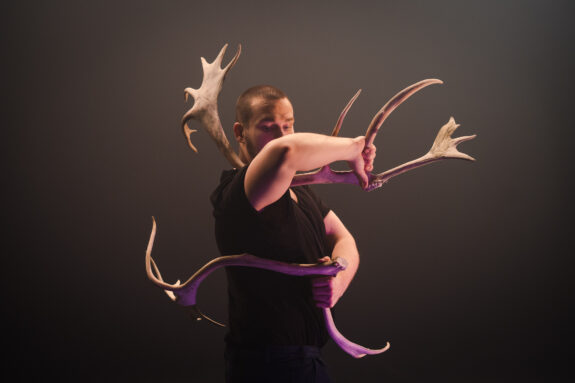
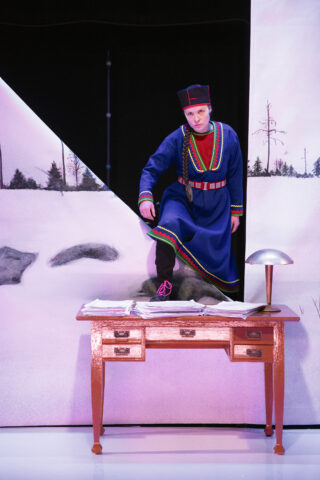
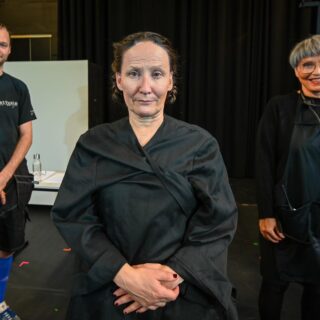
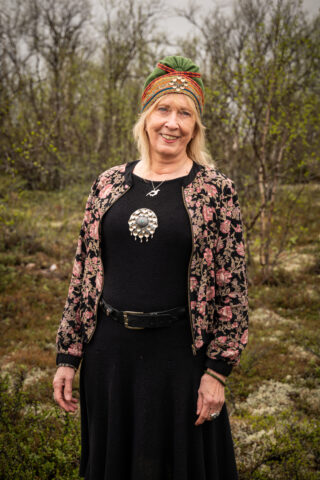
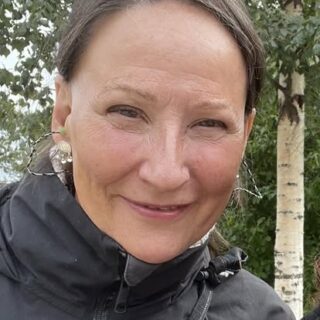
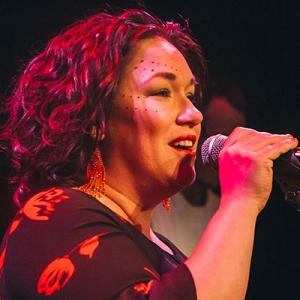
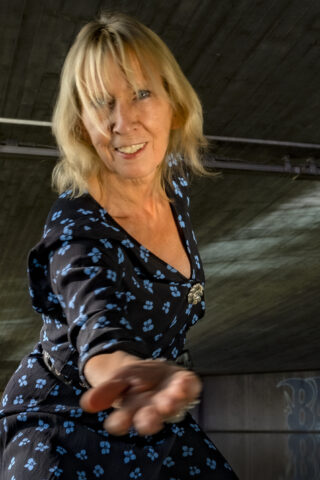
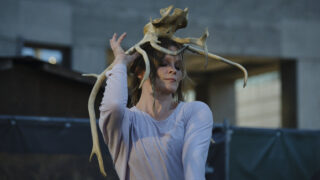
ČSV is a Sámi activistic expression with several meanings, and here we work from the meaning “Show Sámi Spirit”. Our focus is on how Indigenous people still have a deep connection with nature, yet we must fight to keep living our traditions, our cultural way on our ancestral lands. In this project 12 Indigenous artists from 5 countries come together, discuss what is important for us, and try to uncover green colonialism and political lies used to steal our ancestral lands.
Come join us on this outdoor performative journey where we share our thoughts on this subject through dance, joik, circus arts, throatsinging, drumdancing, acting and poetry.
Artist Information
Creating and performing artists:
Sylvia Cloutier, Canadian Inuit throatsinger and drumdancer
Sylvia Cloutier is a performer, singer, actor, musician, playwright, television and theatre producer, director, motivational speaker and mother from Kuujjuaq, Nunavik (Northern Quebec), currently residing in Montreal. Over the course of her illustrious thirty-year career as a singer, she has performed nationally and internationally both as a solo artist and in collaboration with many esteemed artists and ensembles including Tafelmusik, the National Art Center Symphony Orchestra and Orchestre Symphonique de Montreal. Cloutier is the co-founder of the Inuit performing arts company Aqsarniit; served as Artistic Director of Qaggiq theatre company in Iqaluit from 2004- 2009, and as theatre project manager in Kuujuaq, Nunavik (2008-2010).
Aviana Steinbacher, Greenlandic inuit actress
Avianna Steimbacher is an actress who graduated from the National Theatre of Greenland in 2021. She is also a playwright and poet whose work centers Greenlandic identity and political themes. Her work has toured across both Greenland and Denmark, bringing contemporary Greenlandic perspectives to diverse audiences. Through her stage work in Denmark, she explores and challenges stereotypes surrounding Greenlander, using performance as a space for dialogue, resistance and reimagining identity.
Malu Lynge, Greenlandic Inuit maskdancer
Malu Lynge is a performer born and raised in Nuuk, Greenland. She graduated from The National Theatre of Greenland in 2021 and now works as a freelance actor, culture bearer, and singer-songwriter. It is important for Malu Lynge to teach the culture to the next generations. She has led workshops in schools and kindergartens across Nuuk and other towns in Greenland, teaching maskdance and traditional practices such as lighting the qulleq (oil lamp).
Jørgen Stenberg, born in 1972 in Malå (Málage), is an Ume Sámi joiker, reindeer herder, storyteller, and cultural worker. He belongs to a small group of active bearers of the Ume Sámi joik tradition and has made significant contributions to preserving and developing this unique cultural form.
His joik is deeply rooted in reindeer herding, language, and the landscape where he lives. Through his voice, he conveys stories, memories, and emotions that reach beyond words – from quiet presence to profound sorrow and joy. For Jörgen, joik is not just music, but a way of relating to people, nature, and history. On stage, he not only performs joik – he also shares stories about reindeer herding, Sámi culture, and Indigenous rights. His performances are personal, present, and deeply moving.
Anna Åsdelle, Swedish Sámi actress and joiksinger
Anna Åsdell is a south sami actress that was born and raised in Lycksele/Liksjoe. The last 17 years she has been working at different theaters in Sápmi, such as Giron Sámi Teáhter, Norrbottensteatern, Västerbottensteatern and Åarjelhsaemien teatere. She has also acted in different movies and TV-shows, were the Swedish audience mostly recognise her from the christmas series ”Snödrömmar” that was aired in 2024. Anna lives with her family in Gällivare/ Váhtjer.
Sebastian Björkmann, Swedish Sámi dancer
Sebastian Björkman, with the Sámi family name Partapuoli, is a dancer and dance educator with roots from Ammarnäs, as well as from some of the families who were forcibly relocated from the Karesuando area in the 1930s. Through dance, he seeks his way back to the voices of his origins, combining contemporary dance with one foot still in the urban dance culture he has been active within for around fifteen years. Through his dance, he explores different ways of relating to his Sami heritage and identity, and how these can be expressed in his artistic practice. He trained in street dance at the Stockholm University of the Arts and has focused primarily on the styles of popping and locking. Most recently he has worked on the cross-disciplinary work Guoddi, and prior to that with Marit Shirin Carolasdotter and Riksteatern in the work Jarkelidh.
Cecilia Persson, Norwegian Sámi actress and joiksinger
Mary Sarre, Norwegian Sámi joiksinger and actress
Inga Marja Sarre, Norwegian Sámi joiksinger and actress
Ingá Márjá Sarre is a Sámi actor, joiker and artist from Guovdageaidnu/Kautokeino, with more than thirty years of experience in film, television and theatre. She first appeared on screen at the age of fourteen in the NRK television series Skáidi, and made her theatre debut at Beaivváš Sámi Našunálateáhter in 2000 in Vølundda Muitalus. Since then, Sarre has taken part in a wide range of productions at Beaivváš and beyond, and in recent years has been especially visible in Lappjævel, Sámi bucket listu and Gavdnjejuvvon – Drevet, which is nominated for the 2026 Hedda Award for Best Performance for Youth. Her artistic work is marked by a strong stage presence, physical expressiveness, and a clear grounding in Sámi language, identity and storytelling traditions. Alongside her acting work, she is also active as a joiker with a distinctive and expressive voice. She recently released the song Aarthtse together with Jon Henrik Fjällgren, produced by Tobias Lundgren, and is also a certified acting coach trained in the Ivana Chubbuck technique in Los Angeles in 2017. Ingá Márjá is the Chair of the Board for the period 2023–2027 of Sámi Lávdi, the Association for Sámi Performing Arts.
Camilla Therese Karlsen, Norwegian Sámi choreographer, circus artist, dancer and poet
Camilla Therese Karlsen is a Sámi multitalented artist from the Norwegian side of Sápmi. She started out almost 30 years ago as a hip hop dancer and gymnast, later became a DJ, before she did circus art and education in New Zealand and China. She has worked as a circus artist, physical actress, joiksinger and dancer around the globe in theatre, circus, film and dance performance. For 5 years, she was head of circus at the performing arts school Die Etage in Berlin, and she has coached many artists on their way up. As a choreographer, she is most proud of her work with “Allaq-Dållen Giele” by Åarjelhsaemientheatere. It was nominated for the “Hedda prize”. Also her contribution to the opening ceremony of Olavsdagene with the grand project “The Herds” has been noticed. Her work as a choreographer and performer is much based on connectedness and working with that what the performers bring into her work, how to help them own the work and become it. The last years she has been searching for how you can dance the same way that we joik, the same way joik becomes the essence of something. This has lead to a strong awareness as a performer and she realise it is bringing her closer to the audience.
Composer of music: Sondre Närva Pettersen, Norwegian Sámi composer
Choreographer: Camilla Therese Karlsen, Norwegian Sámi choreographer
Outside eye: Ada Einmo Jørgensen, Norwegian Sámi choreographer and dramaturge
The performance also use one poetic text by Nils Aslak Valkeapää
COOPERATION AND SUPPORT
A cooperation between:
Company Ulv & Ugle
Sámi Lávdi
Suialaa Arts Festival
Arctic Arts Summit.
Supported by
Barents Sekretariatet
NAPA
We acknowledge the support of the Canada Council for the Arts.

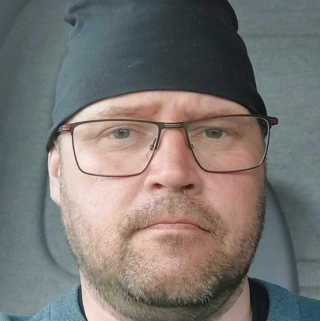
16.00–17.00 | Artist Talk | Tomas Colbengston: Västerbottens Museum, organized by Västerbottens Museum
Tomas Colbengtson MFA
www.colbengtson.com
Tomas is Sámi, born and grown up in a small village Björkvattnet Tärna, at the border of Norway/Sweden. In Tomas artwork, he asks how colonial heritage has changed indigenous lives and landscapes, both of the sami and other indigenous peoples. Struggling to revitalize his mother tongue, south Sami language, he works with visual art, using Sami history and collective memory as the source to his art.
His work with printed art on different materia that cast shadows can be read as a metaphor for governmental invisibility of Sami people and culture.
In his art Tomas seeks to assemble a language to formulate the loss but also rejuvenation of Sami identity. Questions that is a global and effect everybody in one or another way.
Colbengtson is initiator of one of the first art residence for indigenous artists “Sapmi Salasta 2018.
Exhibitions:
Colbengston has exhibited in 26 countries
Colbengtson is represented amongst others in:
British museum, London, U.K.
The National Museum, Oslo, Norway
The National Museum, Stockholm, Sweden
Kiasma, modern museum, Helsinki, Finland
Sami parlament of Norway
The Royal House of Norway
West collection, Oaks, Pennsylvania, U.S.
National Nordic museum, Seattle
2024 Recipiant of the Queen Sonja Print Award
Public works:
Glass sculpture, Östersund city hall, Sweden
Commissioned by City of Östersund, 2023
Biessie giebnie, South Samie museum Snåsa, Norway
Commissioned by KORO, 2021
Tsigle-Pathfinder, glassculpture, Saxnäs, Sweden
Commissioned by Konstvägen 7 älvar
Initiator and curator of “Arctic Highway”, Indigenous art exhibition that is touring in USA and Canada 2022–2024
Education:
Konstfack. National college of Arts Craft and Design, Stockholm 1986-91 MFA Painting
Valand Academy of Art, Gothenburg 1995-9
Tomas published books:
2024 ”Soejvene” ISBN 978-91-89945-12-8 Publisher: Korpen
2019 ”Faamoe” ISBN 978-91-98513-00-4 Publisher: Gaaltije
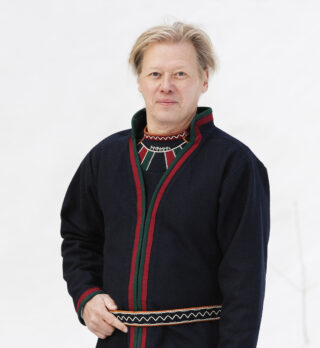
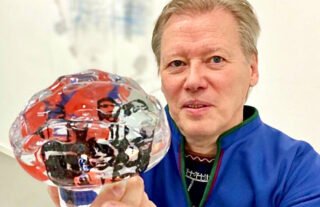
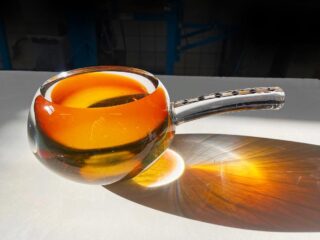
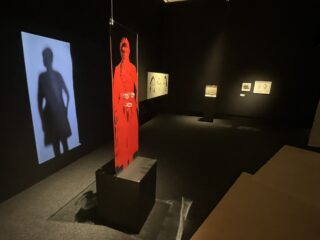
16.00–17.30 | Performance | Avant Joik, Norrlandsoperan, organized by Norrlandsoperan and Bildmuseet
Avant Joik
17 June at 16:00
Location: Stora Scenen, Norrlandsoperan
Avant Joik is a pan-Sámi and Nordic ensemble that creates an expressive and intuitive fusion of vuöllie [joik], avant-garde vocal expression, electronic music, and visual experiments. Their multi-sensory and improvisational working method is shaped by the three members’ diverse backgrounds.
Katarina Barruk, raised in Lusspie [Storuman] and Gajhrege [Gardfjäll] and now based in Oslo, combines vuöllie with contemporary pop and breathes new life into the critically endangered Ume Sámi language through music. Composer Maja Solveig Kjelstrup Ratkje from Tråante [Trondheim] uses the voice as an instrument in her practice. Her work ranges from avant-garde vocal techniques to compositions for orchestra, opera and political sound art. Matti Aikio, an artist and activist from the Finnish Sápmi, works with installation and video. His art revolves around indigenous peoples’ relationship to nature, land rights and the ecological consequences of colonialism.
This performance was commissioned by Bildmuseet and Gaaltije Saemien Museume as part of the Art and Truth-Telling year-long and multi-sited project marking the process of the Truth Commission for the Sámi people on the Swedish side of Sábmie. It is presented here in collaboration with the Arctic Art Summit and Norrlandsoperan.
Image caption: Avant Joik, performance at Hebbel am Ufer, 2019
Other photo credit: Knut Utler
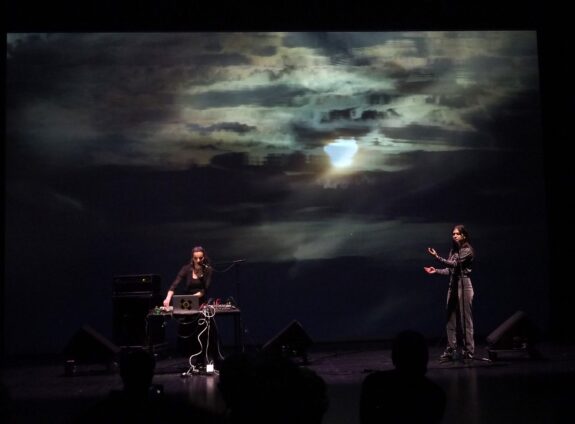
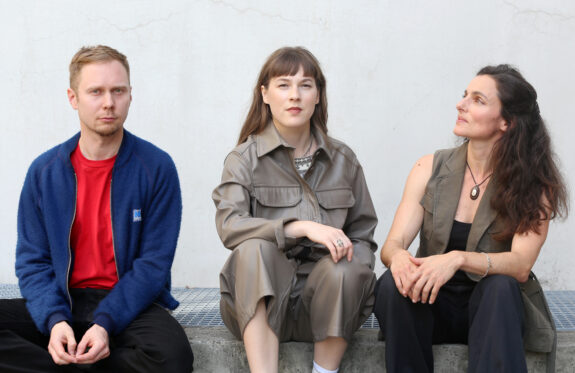
16.00 | Screening | Life Beyond the City Short Film Package
Short Film Package – Life Beyond the City
17 June, 16.00
Tagnig, Väven
Organized by Folkets Bio Umeå, Umeå Filmfestival and Film i Västerbotten
In connection with the Summit, we have curated a four-day film programme. The selection features a wide range of stories from the Arctic, exploring themes of identity, resilience, community, and change. Among others, we meet young skateboarders in Kiruna fighting to preserve their community as the city relocates, an Inuit human rights advocate seeking both justice and healing, and Indigenous youth sharing their dreams, experiences, and hopes for the future in their own voices. Several of the films have never before been screened in Umeå.
Together, these films create a powerful and nuanced portrait of life in the circumpolar North, where cultural heritage, belonging, and the future are constantly being reimagined.
Admission to all screenings is free of charge, but tickets must be collected from our box office prior to the screening. Tickets are available from June 9th.
16.00–18.00 | Exhibition | qiaqsutuq, Ordet, Väven, organized by Taqsiqtuut Indigenous Research-Creation Lab
qiaqsutuq
Artists: Coco Apunnguaq Lynge (Kalaaleq Inuk), Erin Ggaadimits Ivalu Gingrich (Koyukon Denaa and Iñupiaq), Jamesie Fournier (Nunavummik), Malayah Enooyah Maloney (Nunavummiuk) and Taqralik Partridge (Nunavimmiuk)
Curated by: Dr. Heather Igloliorte (Nunatsiavummiuk), Dr. Carla Taunton
16 June 2026: 16.00-18.00
17 June 2026: 16.00-18.00
Location: Ordet, Väven
In Inuktitut, qiaqsutuq is the sound of the whistling wind and the sound of crying. In this immersive, virtual reality experience based on a multimedia installation by artists from across Inuit Nunaat (from their Inuit homelands in Alaska, Canada and Greenland) qiaqsutuq is critically imagined as a lament for nuna, tariuq, and sila, a chorus of its Arctic inhabitants from the land, sea and sky. As glaciers melt, permafrost warms, floods abound and smoke billows north from forest fires, weather becomes unpredictable, and thus dangerous, in the Arctic. Featuring the distinct perspectives on the impacts of climate change by Iguttaq (Bee Woman), Tuktu (Caribou), Nanuq (Polar Bear), Tulugak (Raven) and Natchik (Seal), these harbingers warn of the fast approaching consequences of our collective inaction on the precious life throughout Inuit Nunaat.
qiaqsutuq was first created as a mixed-media installation at an artist incubator at NSCAD University, produced by Inuit Futures and the Inuit Art Foundation in 2023 in Kjipuktuk/ Halifax, NS, Canada. It premiered at Nocturne Night Festival in 2023, and has been remounted in Victoria, BC, Canada before being turned into a virtual reality experience in 2026 by MX50.
The artists and curators are grateful for the assistance of Aghalingiak (Nunavummit), Matthew Brulotte, Aningaaq Rosing Carlsen (Kalaaleq Inuk), Julie Grenier (Nunavimmiuk), Jordan Hill (T’Sou-ke Nation), Laura Hodgins, Yi Fan Liu, Dr. Isla Myers-Smith, Danielle Aimée Miles, Holliss Roberts, Nathan Ryan (Ta’an Kwächän/Kwanlin Dün First Nations), Taqramiut Nipingat Inc, Dominic Tibault and Nils Ailo Utsi (Sámi), who provided technical and coordination assistance.
Artists
Jamesie Fournier is an Inuk educator and award-winning author from the NWT. His debut horror book, The Other Ones, is currently being made into a stop-motion film. His poetry collection, Elements, was published in Inuktitut and English. His children’s book, Lemming’s First Christmas, was recently animated in English and Inuktitut. He designed the Nanualuk exhibit with the Montreal Science Centre which won a CASCADE award in 2026. He divides his time between Nunavut, Ontario, and the NWT.
Erin Ggaadimits Ivalu Gingrich is a Koyukon Dené and Iñupiaq Carver and Interdisciplinary Artist living, working, and subsisting in the subarctic climate of South-Central Alaska. Honoring her arctic and subarctic ancestral homelands, Ivalu’s work represents what has tied her and her ancestors to the North. Through carved, painted, and beaded sculpture and mask forms Ivalu creates representations of the revered wild relatives that have provided for her, her family, and her ancestors for generations. Continuing the viewpoint of seeing these resources from homelands as gifts given to the worthy who reciprocate respect and care for the land and wild relatives that share it. Connection to the realities of subsistence lifeways and arctic survival is vital to Ivalu’s work that mirrors what keeps us fed, warm and present in the North. With ancestral ties to the communities of Nulato, Nome and Utqiagvik; Ivalu currently resides between the Denaʼina Homelands of Anchorage and Cohoe, Alaska. Most recently Ivalu was selected for the 2025 Eiteljorg Contemporary Art Fellowship and a 2025 Smithsonian National Museum of the American Indian Native Arts fellowship.
Coco Apunnguaq Lynge is a Kalaaleq Inuk and Danish artist who brings a fusion of culture and creativity to every piece she creates. With experience in character concept art for AAA games and a portfolio showcased in multiple countries, she has collaborated with major companies, studios and publishers such as Lego, Respawn, Crytek, Sharkmob and Gearbox among others.
Malayah Enooyah Maloney is a multidisciplinary Inuk artist from the Qikiqtani region of Nunavut, with maternal roots in Mittimatalik and paternal roots in Cape Breton, Nova Scotia. Based on the unceded territories of the Musqueam, Squamish, and Tsleil-Waututh Nations, she is currently completing a degree in First Nations and Indigenous Studies at the University of British Columbia. Working across photography, textiles, beading, and hand-poke tattooing, Malayah creates work inspired by memory, mixed heritage, Inuit identity, and Indigenous storytelling. Her practice is deeply informed by family teachings, northern upbringing, and a passion for culturally grounded creative expression.
Taqralik Partridge is a writer, artist and curator from Kuujjuaq, Nunavik, QC, based in Ottawa, ON. Partridge’s artistic work focuses on and celebrates Inuit life in the North and in the South. Partridge has held positions as Editor-at-Large for the Inuit Art Quarterly, Director of the Nordic Lab at SAW Gallery, Adjunct Curator at the Art Gallery of Guelph and Associate Curator of Indigenous Art at the Art Gallery of Ontario. She was shortlisted for the Sobey Art Award in 2024.
Curators
Dr. Heather Igloliorte, an Inuk-Newfoundlander and Nunatsiavut Beneficiary, is the Canada Excellence Research Chair in Decolonial and Transformational Indigenous Art Practices at the University of Victoria, BC, where she is a Professor in the Visual Arts Department. Heather has been a curator since 2005 and has worked on more than thirty curatorial projects; she was recently the Curator of the 2025 Bonavista Biennale: String Games. Her curatorial work has been recognized by The Hnatyshyn Foundation with the Award for Curatorial Excellence in Contemporary Art (2021). Igloliorte publishes frequently on Indigenous art and curatorial practice, especially regarding Circumpolar arts, including her co-edited volumes Arctic Prisms: Indigenous Arts of the Circumpolar World (2023) and Qummut qukiria!: Art, Culture, and Sovereignty across Inuit Nunaat and Sápmi: Mobilizing the Circumpolar North (2022). Igloliorte has served on many museum and gallery advisories, councils and juries. She is Past President of the board of the Inuit Art Foundation, and was the first Indigenous person in Canada to be awarded a Royal Canadian Academy of Arts Medal for her service to Indigenous art and artists, also in 2021. Igloliorte participated in the Summits in 2017 and 2019, and was the Curator of Visual Arts and Summit Coordinating Producer for the Whitehorse AAS in 2022.
Dr. Carla Taunton, a white-settler scholar, is an Associate Professor in the Division of Art History and Contemporary Culture at the Nova Scotia College of Art and Design University (NSCAD) in Mi’kma’ki (Nova Scotia). Her research focuses on arts-led critiques of settler colonialism systems, institutions, and logics, and aims to contribute to scholarly and curatorial activations of white-settler intergenerational responsibility, inter-cultural collaboration, and decolonial + abolitionist methodologies. Her recent publications include her co-edited PUBLIC 64: Beyond Unsettling (2022) and the Routledge Companion to Indigenous Art Histories of the United States and Canada (2023). She is currently leading Curating Change, a SSHRC funded project that underscores curatorial practice as research and aims to mobilize inter-cultural decolonial and transformative curatorial methodologies. She works as an independent curator and has curated projects at local and national artist run centres, university and regional art galleries as well as public art festivals.
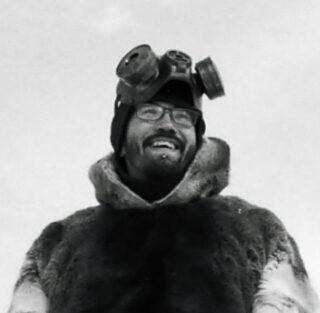

16.00–17.30 and 20.00–21.30 | Performance | STILLA, Women's History Museum, Väven
Stilla – akte vuesiehtimmie/Čávžu – čájálmas/Stilla – the Performance
17 June 2026, 16.00-17.30 and 20.00-21.30
Women’s History Museum, Väven
Organized by: NOOR Productions
Which landscape is irreplaceable to you? Would you break the law to defend it?
Stilla – the performance is about ecological grief, anger, sorrow and loss of landscape, about civil disobedience and belonging.
About listening to the ice forming on the river, about naivety, and about walking on a path the feet know by heart. About human rights and monstrous pylons, about wind turbines and power lines, and about mining sludge and fjord fishing.
Actors and creators: Ivar Beddari, Trond P S Munch and Lijkievaerien Åvla-Heika/Ole Henrik Lifjell
Dramatist/dramaturge, creator and developer: Tale Næss
Developed together with: Bernt Bjørn
Production manager NOOR Productions: Vegard Krane
Visual consultant/developer of the map project Kárta: Magdalena Haggärde
Contributions from Ferske Scener by: Kristina Junttila, Kristin Bjørn, Eva Svaneblom and Marianne Siljuberg
Dialogue partners: Åarjelhsaemien Teatere and Giron Sámi Teáhter
The performance is supported by
BarentsKult, Norwegian Culture Council, The Arctic Arts Festival, Davvi – center for performing arts, SNN, Tromsø Muncipality, Rådstua Theatrehouse and Small Projects
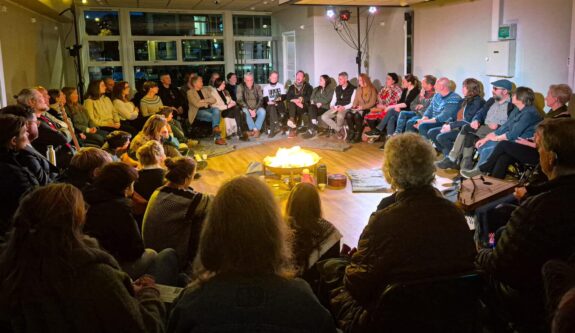
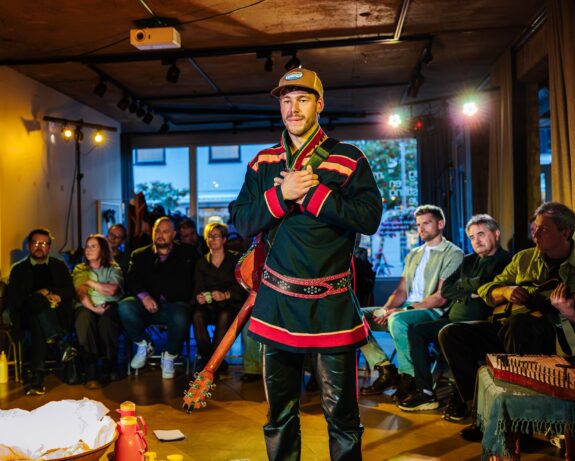
16.30–18.00 | Performance | TIRRV. Divided, Tystnad, Väven, organized by Pikene på Broen
Tirrv. Divided
Organized by: Pikene på Broen
17 June, 16.30-18.00
Tystnad, Väven
A theater play about the theater play Tirrv, written and staged in 2019 in Murmansk by the Arctic Theater. The original documentary theater play (verbatim) “Tirrv” (=”hello” among Kola Sámi) is based on interviews conducted by fifteen theater makers with Sámi people in Lovozero, Murmansk region in 2018. Out of 25 hours of audio recordings and 200 pages of texts collected, the play brought forward real monologues of Sámi people from 6 to 90 years old living on the Russian side of Sápmi. Personal and deeply moving stories never told before were performed by five actors and twelve dancers in the Murmansk region. The play was named by local Sámi people as one of the most important theater productions about indigenous people. Despite being one people, the “Russian” Sámis have had and continue to have a very different living and experience than the Sámi that stayed “on the other side” after the borders were drawn and they were forced to choose which side of new national state borders to live on. Sámis on the Norwegian, Swedish and Finnish side are noting that their contacts with the Russian partners has ceased to almost zero after Russia’s invasion of Ukraine. Due to sanctions, changed Norwegian visa regulations and repressions in Russia, there is no visible possibility to bring the actors from Murmansk to show the performance in its origin.
The playwright and theater director of the play Evgeny Goman, however, had left Russia, lives in Kirkenes and is today a curator and producer in Pikene på Broen. The theater group is crossed by the border that stops all present and past, leaving only nostalgia in its place, making the theater play Tirrv also but a memory today. Tirrv. Divided is a story about how the original play was made, what it looked like and how it was met by the Sámi people. It is also a story about friends and dreamers divided by external circumstances, facing new realities and struggling to adapt.
Tirrv. Divided is staged with only five Russian speaking actors. The play is shown with English subtitles.
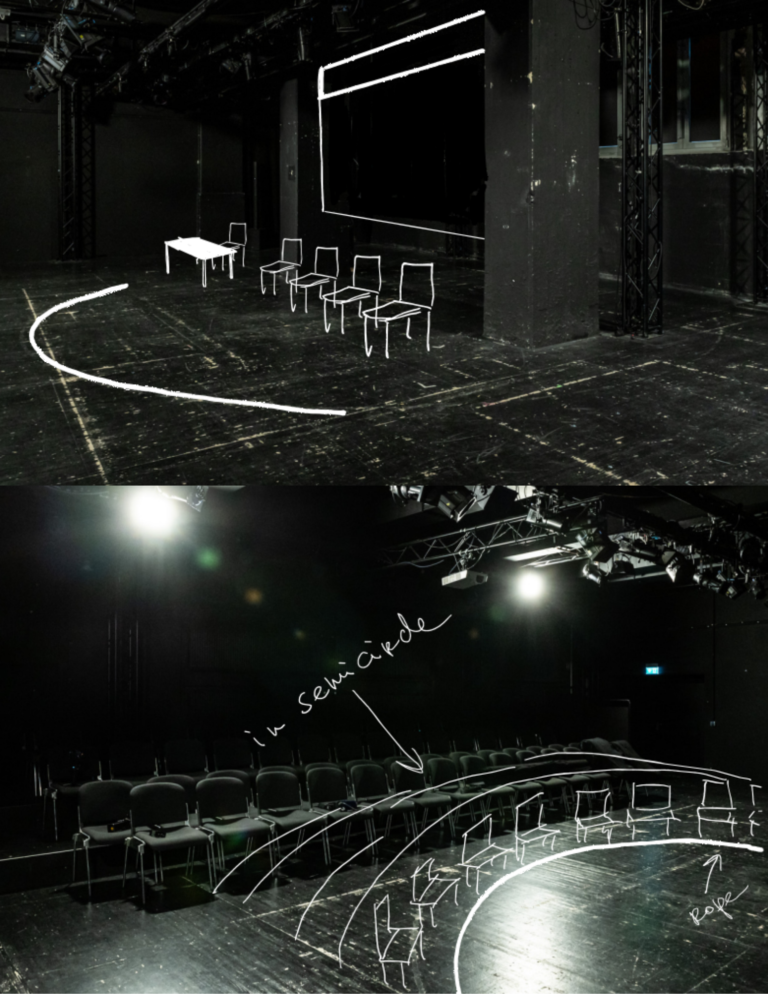
17.00–17.45 | Performance | Hïegke lin
Hïegke lin
17 June, 17.00-17.45
Ögonblicksteatern
Through the performance Hïegke lin, Marika Renhuvuf wants to show that the Sámi culture is stronger than ever. Hïegke libie – there is still life is us! (Monologue is in Swedish and south Sámi languages.)
More information and tickets are available here.
Artist Information
Marika Renhuvud is a contemporary dancer and choreographer from Idre Sámi community in northern Dalarna, Sweden. She is now based in Funäsdalen in Härjedalen, but her work takes her to stages and projects around the world. Marika trained at the New Education for Contemporary Dance in Härnösand and at the Ballet Academy in Stockholm.
Concept and idea: Marika Renhuvud
Performer: Marika Renhuvud
Scenography and visual collaborator: Maria Nilsson Waller
Costume: Marika Renhuvud and Maria Nilsson Waller
Artistic advisor: Martin Johansson
Sámi consultant: Katarina Blind
Producer: Magnus Lundmark
Photo: Henrik Ljusberg
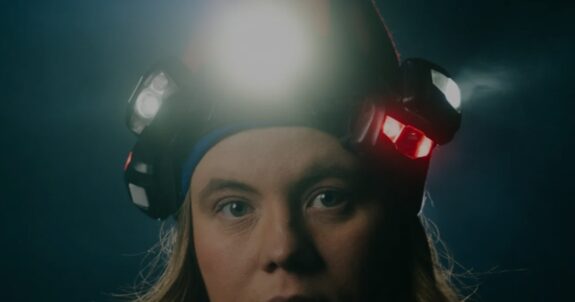
19.00 | Screening | Short Film Package - collab with Tromsø Internationella Filmfestival
Short Film Package
17 June, 19.00
Tagnig, Väven
Organized by Folkets Bio Umeå, Umeå Filmfestival and Film i Västerbotten,in collaboration with Tromsø Internationella Filmfestival
In connection with the Summit, we have curated a four-day film programme. The selection features a wide range of stories from the Arctic, exploring themes of identity, resilience, community, and change. Among others, we meet young skateboarders in Kiruna fighting to preserve their community as the city relocates, an Inuit human rights advocate seeking both justice and healing, and Indigenous youth sharing their dreams, experiences, and hopes for the future in their own voices. Several of the films have never before been screened in Umeå.
Together, these films create a powerful and nuanced portrait of life in the circumpolar North, where cultural heritage, belonging, and the future are constantly being reimagined.
Admission to all screenings is free of charge, but tickets must be collected from our box office prior to the screening. Tickets are available from June 9th.
19.00–21.00 | Performance |"Vidderna inom mig" - Sámi Oratorio: Umeå City Church
“Vidderna inom mig” – Sámi Oratorio
17 June at 19:00
Umeå City Church
Organized in collaboration by: Umeå Barockkör, Ersbodakören, Umeå pastorat and Såhkie Ubmejen Sámieseäbrrie (Umeå Same Förening/ Umeå Sámi Association)
“Vidderna inom mig” is a Sámi oratorio in 14 movements by Svante Henryson, based on poetry by Nils-Aslak Valkeapää. The work combines Sámi expressions with classical music and jazz elements in a staged composition exploring identity, nature, and the human inner landscape.
The performance features a large ensemble including orchestra, choirs, children’s choir, yoik, and recitation in North Sámi, with electric cello in a central role.
Participants:
Svante Henryson – electric cello
Krister Stoor – yoik and recitation
Joel Henryson – electric bass
Magnus Jonasson – percussion
Orchestra conducted by Per-Erik Andersson
Umeå Baroque Choir
Ersboda Choir
Children’s choir
Practical information:
Tickets available via Biljettcentrum.
Price (17 June): 280 SEK.
100 tickets are free of charge and reserved for Arctic Arts Summit delegates. These are distributed on a first come, first served basis at the entrance.
The image for “Vidderna inom mig” is created by Per Elof Nilsson Ricklund, and his artwork can also be seen in the church during the week.
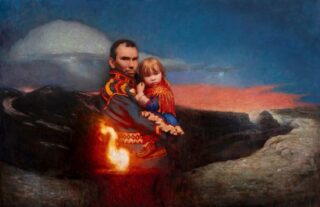
19.00–20.20 | Film Screening & Artist Talk | Árvu by Elle Sofe Sara, Tystnad, Väven. Organized by: International Sámi Film Institute
Artist Talk and Film Screening with Elle Sofe Sara
Hosted by International Sámi Film Institute
17 June, 19.00-20.00
Tystnad, Väven
Join us for an exclusive artist talk by famed Sámi artist Elle Sofe Sara and watch clips from her new film Árru. Amid the breathtaking landscapes of Sápmi, reindeer herder Maia fights to protect her ancestral lands from a looming mining project. As protests intensify, she seeks support from her charismatic uncle Lemme, whose presence reawakens deeply buried trauma. Maia faces an impossible choice: defend the land at the cost of her family, or surrender it to break a painful silence.
Artist Information
Elle Sofe Sara (b. 1984) is a choreographer, director and filmmaker. Elle Sofe Sara is described as one of the most interesting and important choreographers in her generation in Norway. Sara’s work expands upon seemingly mundane, often overlooked areas of Sámi physicality— unspoken rituals that have escaped the vice grip of colonialism. In this Sara uncovers a space in which the past and the present coincide. While her choreography is known for its playful approach, she also delves into taboo subjects such as trauma, abuse, and suicide. As an Indigenous artist, Sara seeks to create work that resonates as strongly for her community as it does for the art world.
Sara´s critically acclaimed choreographic works tour extensively nationally and internationally. In addition to working as a choreographer, she has also made several award-winning short films and documentaries. Sara also co-founded Daíddadállu, a Sámi indigenous contemporary art collective. She grew up and lives in Guovdageaidnu, Sápmi / Finnmark. And when she is not working with choreography or film, or traveling for work, Sara can be found marking reindeer calves with her children or reading animal tracks in the snow.
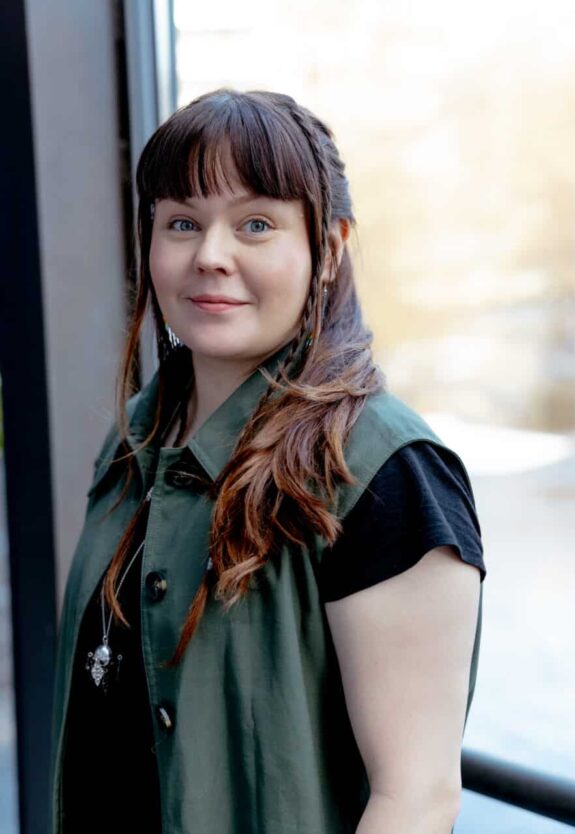
20.00–21.30 | Performance | Ávus, Norrlandsoperan, organized by Norrlandsoperan and Bildmuseet
Ávus
17 June at 20:00
Location: Stora Scenen, Norrlandsoperan
Electronic music and Sámi vuöllie [joik] merge in Ávus – an Ume Sámi word that stands for both space and happiness. The group was formed by the Grammy-winning saxophonist Jonas Knutsson, known from collaborations with the likes of Avicii. Knutsson is joined by Ingá-Máret Gaup-Juuso from Gárasavvon [Karesuando], an established voice in the new generation of Sámi musicians; Jörgen Stenberg, an Ume Sámi joiker, a cultural worker, an oral storyteller and a reindeer herder active within the Máláge [Malå] Sámi community, as well as the percussionist Mikael Emsing and the synthesizer Andreas Estensen. Together they offer a magical and emotional show where vuöllie [joik] takes centre stage.
This concert is supported by Bildmuseet in collaboration with the Arctic Art Summit and Norrlandsoperan.
Photo credits: Ávus, photograph by Maria Fäldt
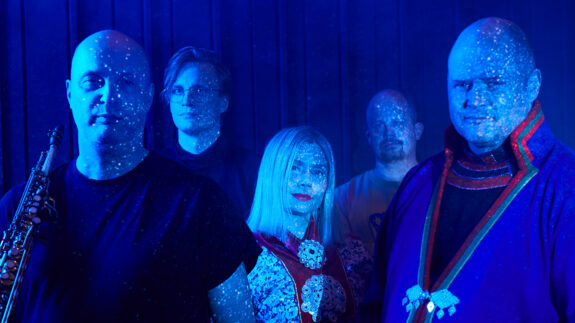
22:00–01:00 | Gathering | BONJU: Open Stage & Queer Gathering, Scandic Plaza, Umeå
BONJU – Open Stage & Queer Gathering
17 June 2026 | Scandic Plaza, Umeå | 22:00–01:00
“Bonju” — crooked, not straight. A reclaimed word, a reclaimed space.
The second evening of BONJU shifts into an open stage format, inviting delegates into a queer-centred Indigenous gathering shaped by participation, experimentation, and encounter.
The evening begins with a mingle from 22:00, followed by an open stage at 23:00 featuring performances from summit participants and invited delegates. All forms of performance are welcome.
Programme:
Host: Timimie Märak
DJ: Frtetude
Closing DJ set (00:00–01:00): DJ Hulluella
Open stage sign-up form: https://forms.gle/FqHh86Nw5PDDwmwg9
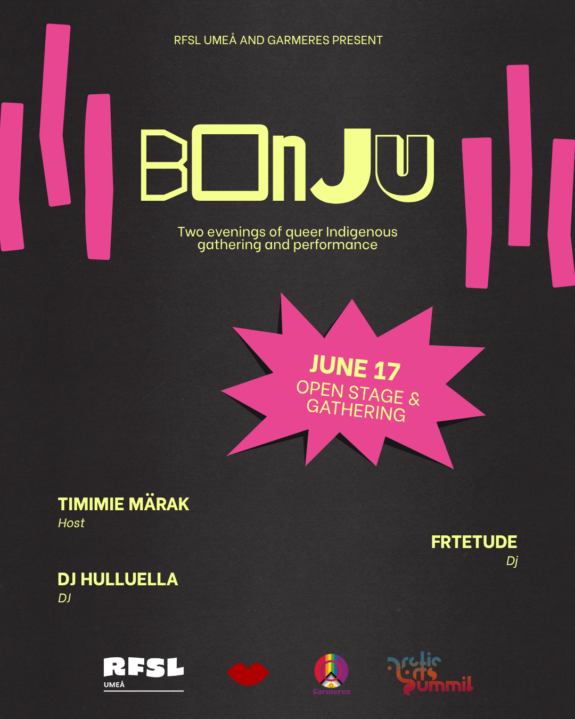
22.30-23.30 | Screening & Livestream | Arctic Night LIVE! Hosted by NORDTING
Arctic Night LIVE!
by NORDTING
NORDTING and the Arctic Arts Summit join forces to give the Arctic and the rest of world what it doesn’t yet have (and might not even know it is missing): An original Arctic late-night TV show. NORDTING – known for its Northern People’s Assemblies and Pan-Arctic Visions – will pick up on Summit themes, hosting guests and live music to disturb and comfort us into the light Ubmeje/Umeå night. Arctic Night LIVE will be broadcast from the Summit gathering venue Sjadduo three evenings in a row. The stage is set for a fusion of art, political commentary, and late-night TV – all with the aim of forming a shared public conversation across the Arctic. Welcome to a new border-crossing exercise.
Arctic Night LIVE can be experienced live in person or watched through the Arctic Arts Summit web page. Featuring Amund Sjølie Sveen, Sirí Paulsen, Eva Svaneblom, Erik Stifjell, and more.
Artist Biographies
Jérémie McGowan (PhD) is a designer, artist and punk rock bass player based in Romsa/Tromsø. His work spans objects, ideas, museums and provocations, rooted in critical-creative perspectives and social engagement. Together with Anne May Olli and RiddoDuottarMuseat in Kárášjohka, he is co-creator of the ‘museum performance’ Sámi Dáiddamuseax (2017). Current projects include Arctic Armpit, a one-man punk band (2021–), and Real. Arctic., a multimodal art and archival project realised in collaboration with Amund Sjølie Sveen / NORDTING (2023–). Jérémie is currently a postdoc researcher with SAMFORSK at UiT – The Arctic University of Norway.
Amund Sjølie Sveen (b. 1973) is an Arctic artist, writer and researcher from Vadsø, Northern Norway. He is the artistic director of NORDTING – The Northern Assembly. His work has for many years focused on the narratives and power struggles in the north, taking the Arctic as a starting point for investigating both local and international issues in our globalized world of market economy. He is a regular participant in public debates, and is associated with the Arctic University in Tromsø as a researcher.
(Photo by Knut Åserud)
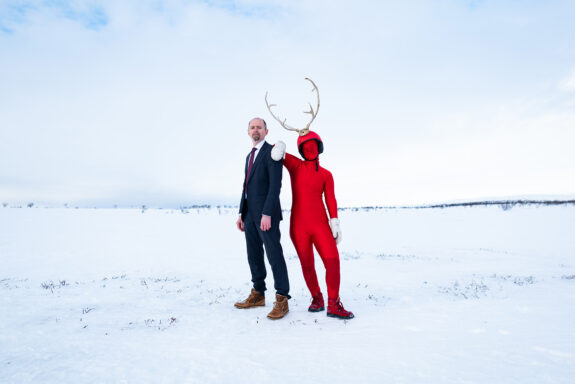
19.00-22.00 | Performance | Sjadduo Live! Organized by Arctic Arts Summit
Sjadduo Live!
17 June, 19.00-22.00
Sjadduo
Organized by Arctic Arts Summit
Enjoy an evening of live music in Sjadduo featuring acts from across the Circumpolar North! Tûtu is an award-winning singer-sound writer and producer from Kalaallit Nunaat known for his melodies and deeply emotional songs. Finnish musicians Jaako Laitinen and Harri Kuusijärvi blend northern musical traditions with Balkan rhythms and modern accordion techniques, respectively. Singer-songwriter Natalie Carrion, with roots in the Caribbean and Sápmi, began her career in Ubmeje/Umeå before performing on some of Sweden’s largest stages. Finally, Swedish hip-hop artist ræv (formerly known as Gonza-ra) will share atmospheric, reflective and distinctly northern beats, before the night ends with the last edition of Arctic Night LIVE!
Schedule
20.00-20.20: Tûtu
20.30-20.50: Jaakko Laitinen and Harri Kuusijärvi
21.00-21.20: Natalie Carrion
21.30-21.50: ræv (formerly known as Gonza-Ra)
23.20-23.30: Arctic Night LIVE!
Artist Information
Natalie Carrion is a singer-songwriter with roots in the Caribbean and Sápmi. She began her music career as a 16-year-old street performer in Umeå and has since gone on to perform on some of Sweden’s biggest stages, including appearances at Melodifestivalen and Skansen. In January 2026, she released her latest album, The Brokens, marking a new chapter in her artistic journey. Alongside her music career, she has worked as a TV host, journalist, and screenwriter, with storytelling, identity and creative expression serving as the common thread throughout her work
Harri Kuusijärvi is a distinctive voice in modern accordion, redefining his instrument through improvisation, electronics, and bold sound worlds. Drawing on a background in classical contemporary music, his work bridges contemporary jazz, electroacoustics, and global influences. Harri Kuusijärvi will perform alongside Marjo Selin at 20:00 on Tuesday 16. June in The Rhizome Room, and alongside Jaakko Laitinen at the tent stage on Wednesday 17. June.
Jaakko Laitinen is a musician and songwriter from Rovaniemi, best known for his band Jaakko Laitinen & Väärä raha. The band is known as an electrifying live act whose music blends Balkan rhythms with northern musical traditions. In addition to music, Jaakko Laitinen has worked on various film and stage productions and has been actively involved in Rovaniemi’s cultural life. Jaakko Laitinen will perform alongside Harri Kuusijärvi at the tent stage on Wednesday 17. June.
ræv, formerly known as Gonza-Ra, played a significant role in putting northern Sweden on the map of the Swedish hip-hop scene. With a sound often described as atmospheric, reflective, and deeply rooted in northern landscapes.
Gustav Lynge Petrussen, better known by his stage name Tûtu, is a Greenlandic award winning singer-songwriter and music producer. He began his solo career in 2021 and has since released the albums “Astronaut” (2023), “Qunneq” (2025) as well as several earlier EPs and singles, including “Oquk” (2022). His well-composed melodies and tones create a feeling that is universal and touches souls across language barriers. With a unique ability to convey deep emotions in his songs, Tûtu allows listeners to shape their own unique understanding of the message, inviting reflection and personal interpretation. Tûtu also experiments with electronic and acoustic elements in his music production.Furthermore, Tûtu has helped shape the modern Greenlandic music scene by producing for several acclaimed artists.