Discursive Programming
Wednesday, June 17


09.00–10.30 | Session 6 | Preliminary Findings and Expectations of the Swedish Truth Commission for the Sámi People, Hosted by: Truth Commission Sweden
Session 6 – Preliminary findings and expectations of the Swedish Truth Commission for the Sámi People
Theme: Indigenous Leadership
Wednesday, 17 June 2026, 9.00 – 10.30
Idun, Folkets Hus
Host: Swedish Truth Commission for the Sámi People
This plenary will open with a 45 minute keynote presentation, Preliminary findings and expectations of the Swedish Truth Commission for the Sámi People, in which Krister Stoor and Marie B Hagsgård, members of the Swedish Truth Commission for the Sámi People, reflect on results of the work thus far, and share their thoughts and expectations on the future relationship between Sápmi and Sweden.
Following the presentation, the panel, From Truth to Transformation: Lessons from Arctic Truth and Reconciliation Processes, brings together representatives from truth and reconciliation commissions and related processes across the Arctic — including Canada, Kalaaliit Nunaat (Greenland), Norway, Sweden, and Finland — to reflect on how these initiatives have reshaped public discourse, cultural policy, institutional responsibility, and relations between states and Indigenous peoples.
While each national context is distinct, these processes raise many shared questions: How do truth-telling processes influence national narratives? What kinds of political, cultural, and societal change can they realistically trigger? How do we move from documentation and acknowledgment to long-term structural transformation?
With Sweden standing at a pivotal moment, the panel will explore what effects can and should be hoped for in the years ahead, drawing on lessons learned elsewhere: from shifts in public awareness and policy development to the challenges of implementation, accountability, and sustaining momentum after the report is delivered. The conversation asks what meaningful reconciliation requires in practice — and what role culture, institutions, and Indigenous leadership must play in what comes next.
10.45–11.45 | Session 7 A | Rooted and Rising: Queer Resilience Across the Circumpolar North, Hosted by: Swedish Performing Arts Coalition
Session 7A – Rooted and Rising
Theme: Sovereign Stories
17 June 2026, 10.45-11.45
Miklagård, Folkets Hus
Host Swedish Performing Arts Coalition
Picking up the baton from “Queer in the North: Art, Community, and Collaboration” at the 2022 Arctic Arts Summit in Whitehorse, this session convenes queer artists and arts professionals from across the circumpolar region to take stock of where our communities stand today. Facilitated by Ulricha Johnson, the conversation will map the current landscape, strengthen circumpolar networks, and establish an affinity space where queer perspectives can be elevated across multiple levels of the arts sector. The session is organized by the Swedish Performing Arts Coalition (Scensverige), home of the Proud Performing Arts network. Allies are welcome.
Moderator
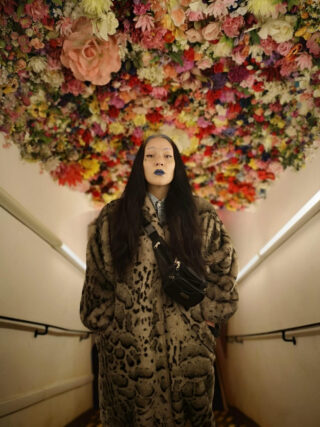
Timimie Märak
Timimie puts just as much in between the lines they write as in the words they choose to share. Like them, their poetry is a combination of deep roots and conections, read at a big city pace.
Participants
Birte Olsen
Kim Rehnman
Siku Rojas
Drew Michael
Glenn Gear
Birte Olsen, 30, (they/them), is from Sisimiut, Kalaallit Nunaat. Growing up queer in a small community has given them a critical perspective on their surroundings and fueled a deep exploration of identity and belonging.
Now based in Nuuk, Birte crafts poetry in Kalaallisut, weaving words into a tapestry of self-reflection and introspection. Their work not only mirrors their own journey but also invites readers to embark on their own paths of interpretation and understanding.
With their work as a musiccoordinator, Birte values and highly working for inclution both for women and Queer artist in the music scene in Greenland.
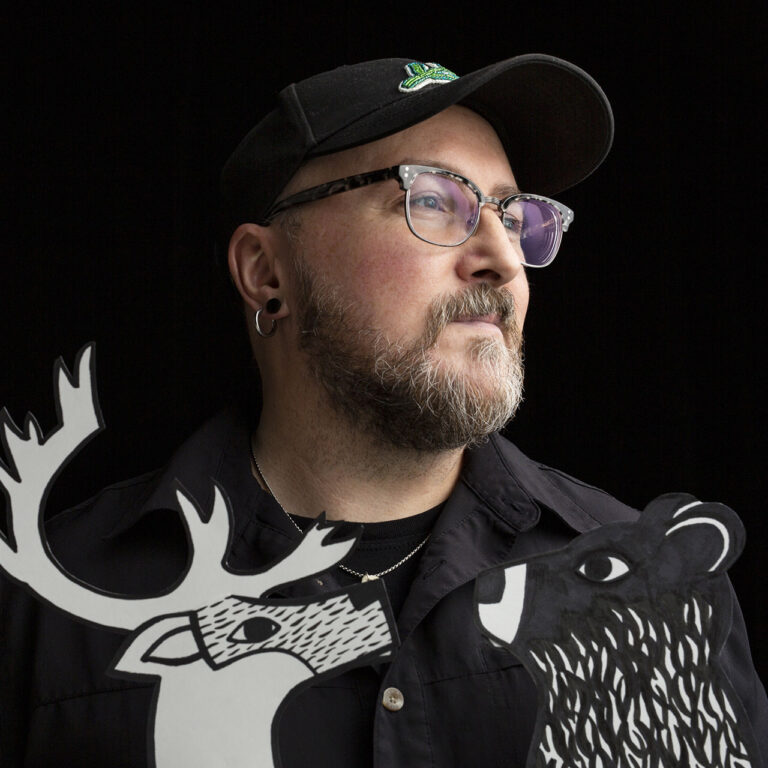
Glenn Gear is an Indigiqueer filmmaker and multidisciplinary artist of mixed Inuit heritage living in Montréal. He is originally from Corner Brook Newfoundland and has family throughout Labrador and Nunatsiavut, Canada. His research-creation practice is shaped by Inuit ways of learning and knowing, through a hands-on and tactile approach using animation, photography, painting, sound, bead work, and traditional materials such as sealskin. He currently teaches at Queens University in the Film & Media Department and continues to facilitate low-budget, DIY animation workshops with Indigenous youth. His films have screened throughout Canada and around the world.
Drew Michael (Yup’ik and Inupiaq) and his twin brother were born in Bethel, Alaska in 1984. Drew, his three sisters and brother grew up in Eagle River, Alaska and currently live in Anchorage, Alaska.
Drew started carving at age 13, learning from archeologist Bob Shaw and printmaker Joe Senungetuk at the University of Anchorage Alaska. Years later he was influenced by contemporary Athabascan mask-maker, Kathleen Carlo, Inupiaq carver Lawrence Ahvakana, Alutiiq mask carver Perry Eaton and Sugpiaq painter Alvin Eli Amason.
Mask making for Drew has been a process of learning about transformation and seeing the spirits of the world around in the animals, land, weather, and sea. His knowledge has taught him about his own history and the importance of mask making as a Yupik/Inupiaq and Polish man.
In 2016 he went to Quinhagak, Alaska to be part of an archeological dig at the Nanalliq site, where a mask revealed itself to him and the moment solidified the energy masks carry and the people who created them.
His work has expanded into community development through teaching mask making, creating community spaces, and developing opportunities for stories to be shared about how to live as a real human being and ways of connecting to the world around while honoring the spirits.
Ulricha Johnson is the Managing Director of the non-profit professional members organisation SPAC- Swedish Performing Arts Coalition (Scensverige), founder of the Swedish national LGBTQI+ platform Stolt Scenkonst, as well as the global LGBTQIA2+ network Proud Performing Arts. Last year at SPAC´s Swedish Performing Arts Biennale that took place in Östersund/Staare a collaboration started with Viermie K and Gaaltije Saemien Museume. SPAC is the Swedish Center of International Theatre Institute, founded by UNESCO, and works with networks, international exchanges and promotes Swedish performing arts.
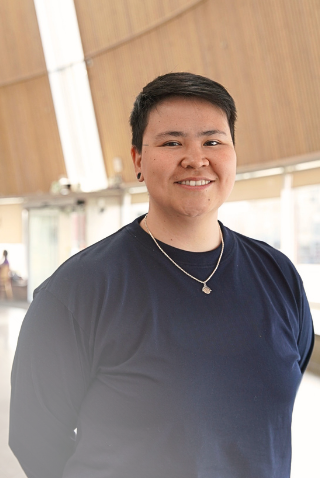
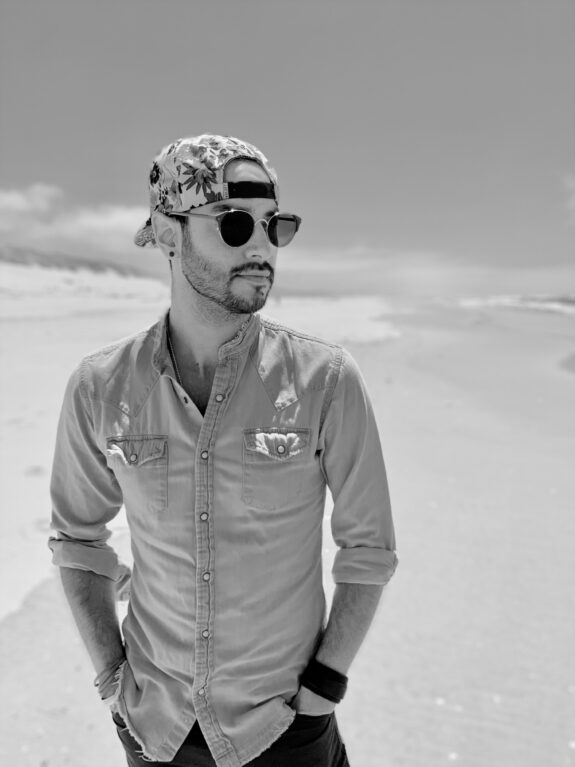
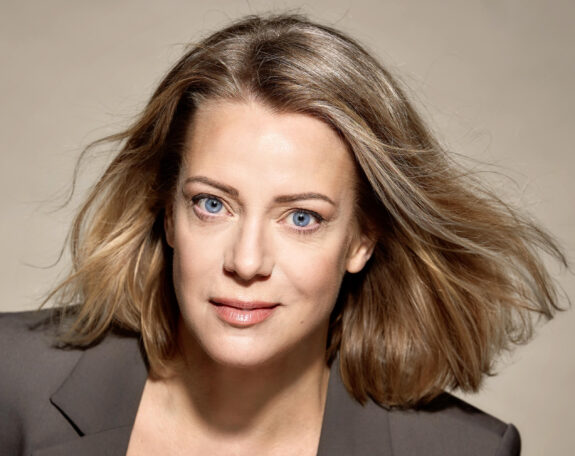
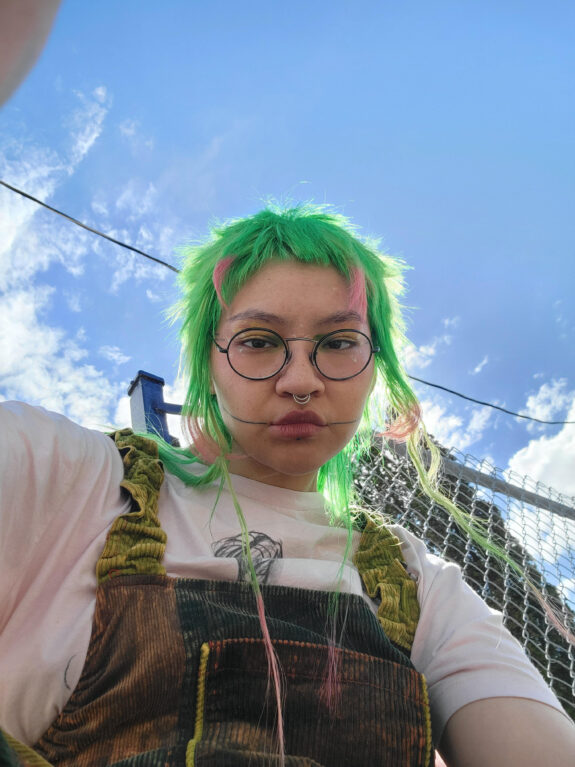
Siku Rojas is a non-binary multidisciplinary artist living in Iqaluit Nunavut with family ties to Igloolik and Peguche Ecuador. They are currently volunteering as a co-lead for the Nunavut Pride Society that is in the beginning stages of organizing.
10.45–11.45 | Session 7 B | Art and Truth Telling, Hosted by: Umeå University
Session 7B – Art and Truth-Telling
Theme: Sovereign Stories
Wednesday, 17 June 2026, 10.45-11.45
Vävenscenen
Host: Umeå University
This panel brings together curators and artists from across Sápmi to explore relational, decentred, and localised approaches to exhibition-making and contemporary art. The panel takes place in the context of the Truth commission for the Sámi people on the Swedish side of Sápmi. Focusing on the year-long Art and Truth Telling collaborative project curated by Anca Rujoiu and Anneli Bäckman that opened at Bildmuseet, Umeå, in October 2025, and continues at Gaaltije Sámiskt Museum in Östersund from 9 May – 17 October.
Speakers
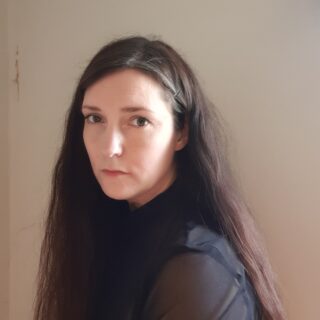
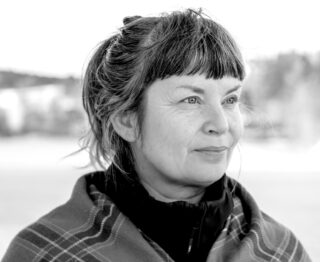
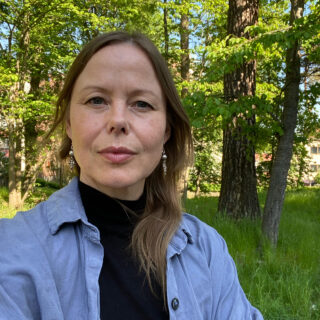
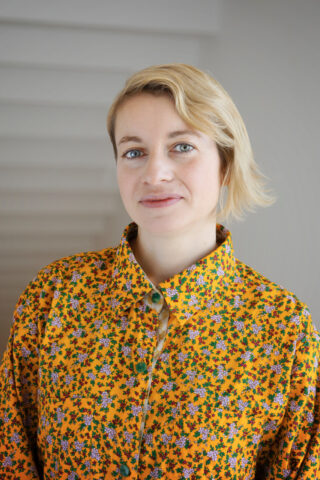
Matti Aikio is a Sámi visual artist rooted in Finnish Sápmi, who explores the aftermath of colonial contact zones between Finnish, Danish-Norwegian, Swedish, and Norwegian settlers and the Sámi people. Drawing from his background in Sámi reindeer herding culture, Aikio focuses on the conflict between the indigenous and non-indigenous relationship with nature and the history of land rights, through moving images, sound and text. Aikio’s art illuminates the complexities of Sámi heritage and global indigenous challenges, inviting viewers into a world where culture, history and activism intersect. His work has been included in the Helsinki Biennial, Tate Late at Tate Modern, Botkyrka Konsthall, Bildmuseet Umeå, National Gallery of Canada, Cairo Off Biennale, National Museum of Finland. In 2022, he was a Fellow at TBA-21 Ocean Space, Venice, Italy; and in 2023 a Fellow at Vera List Center for Art and Politics, New York. Aikio is currently exhibiting in the Art and Truth Telling exhibition at Gaaltije Saemien Museume, and is a member of Avant Joik.
Elme Ämting was born in Ubmeje [Umeå], is based in Kramfors, and has roots in the area around Sjeltie [Åsele] on the Swedish side of Sapmi. She works with sculpture and installation, often using craft techniques as a foundation. Personal experiences of cultural loss and mental illness are recurring themes in her work. She frequently utilizes archival material and is drawn to narratives of historical oppression and resistance. By integrating archival fragments into installations created through orally transmitted craft traditions, two systems of knowledge intersect. The narrative is given a visual form that helps us remember. Ämting is currently exhibiting in the Art and Truth Telling exhibition at Gaaltije Saemien Museume.
Sissel M Bergh is a Sámi Norwegian artist, researcher and filmmaker whose interdisciplinary practice explores the need for humanity to renew its relationship with the world, the land, memory, power and magic. Among her recurring themes is the way social relations and official readings of history have been shaped by an interplay of myth, facts and willful lies. Through her study of the South Sámi language, Bergh examines the cross-fertilization of South Sámi and Norwegian culture, exposing the political motives behind colonialist attempts to suppress South Sámi influences in Norwegian and Swedish culture. In Bergh’s practice, history and land are archived in language, and linguistic lore serves as a tool for uncovering layers of the past and reconnecting with the land. Bergh is currently exhibiting in the Art and Truth Telling exhibition at Gaaltije Saemien Museume.
Anneli Bäckman is a South Sámi/Swedish curator based in Staare (Östersund), Sápmi/Sweden. She works at Gaaltije Saemien Museume, where she leads the development of a Sámi museum rooted in the South Sámi region and shaped in dialogue with Sámi communities. Her work explores how Sámi-led museums and cultural institutions can formulate new spaces for cultural heritage, language, and artistic practices. She is curator of the Art and Truth-Telling exhibition at Bildmuseet (2025) and Gaaltije Saemien Museume (2026), in collaboration with Anca Rujoiu.
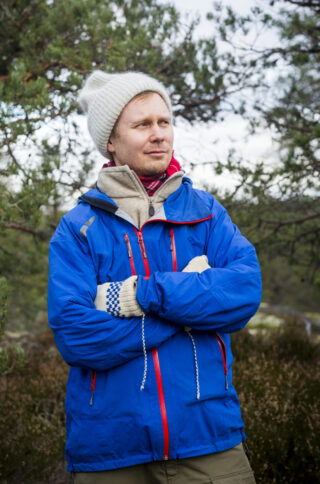
Anca Rujoiu is a curator of contemporary art, with experience in Western and Eastern Europe as well as the Asia-Pacific region. Anca joined Bildmuseet as curator in 2024. Previously she was: part of the curatorial team of the 2nd edition of the Diriyah Contemporary Art Biennale (2024); a founding member of the NTU Centre for Contemporary Art Singapore (2013–18); co-curated Art Encounters Biennial, Timișoara (2019). Rujoiu is a PhD candidate at Monash University, Melbourne; her research focuses on artistic agency in institution building and institutional histories. In collaboration with Anneli Bäckman, Anca is curator of Art and Truth-Telling a one-year and multi-sited project produced by Bildmuseet and Gaaltije Saemien Museume marking the process of the Truth Commission for the Sámi people on the Swedish side of Sábmie.
10.45–11.45 | Session 7 C | Where Are the Spirits Today? Indigenous Spirituality in a Changing World., Hosted by: Tjállegoahte
Session 7C – Where Are the Spirits Today? Indigenous spirituality in a changing world.
Theme: Sovereign Stories
Wednesday, 17 06 2026,. 10.45–11.45
Women’s History Museum, Väven
Host: Tjállegoahte
In our challenging “modern” times, can spirits adapt their core value to endure for land, water and eternity. Or do these times call forth new háldi and gátnéšat to stand guard?
Panelists:
Jamesie Fournier is an Inuk educator and award-winning author with Inhabit Media. His debut horror, The Other Ones, was made into a stop-motion film. His poetry collection, Elements, was published in Inuktitut and English. His children’s book, Lemming’s First Christmas, was animated in English and Inuktitut. He divides his time between Nunavut, Ontario, and the NWT.
Kristoffer Unga Pirak, Sámi artist
Kristoffer är ena halvan i konstnärsduon Johdet Pirak. Deras konst tar avstamp i deras kulturella arv och glesbygdslivet i norr där berättartraditionen är central. Konsten blir ett verktyg för att traditionens liv skall fortskrida lika väl som utvecklas.
Deras konceptuella verk styrs av platsen de befinner sig på. Vad den har att tillföra med sina egenskaper och material. Naturen är en viktig del i konsten och urbana subkulturer har uppfostrat dem lika väl som det samiska och tornedalska arvet, tillsammans flätar de samman en kosmologi som de jobbar utifrån.
Åsa Virdi Kroik, religious historian (PhD)
Kalle Kinnunen, moderator
Kalle Kinnunen is a journalist, communicator and producer with cross-sector experience in national minority issues, language revitalisation and the youth civil society. He works as a Language Revitalisation Promoter at the Institute for Language and Folklore, and with communications at Tjállegoahte – The Sámi Writers’ Centre in Jåhkåmåhkke. He has also hosted the bilingual radio show POPULA at P4, Swedish Radio.
10.45–11.45 | Session 7 D | What Comes After Truth? Art, Culture and TRC Legacies, Hosted by: Arctic Arts Summit
Session 7D – What Comes After Truth? Art, Culture and TRC Legacies
Theme: Sustainable Futures
17 June 2026, 10.45-11.45
Idun, Folkets Hus
Host Arctic Arts Summit
The Truth and Reconciliation Commission in Canada was established in 2028 as part of the Indian Residential School Settlement to document the history and lasting effects of the residential school system throughout the country. When it concluded in 2015, the commission released an extensive report accompanied by 94 Calls to Action, which outlined recommendations for all levels of government, public agencies and private industry, including the arts and culture sector, to rectify the harms caused by residential schools and work towards a more equitable, just future for Indigenous People.
After more than a decade since their release, many arts and cultural institutions have worked to address these Calls to Action, but progress has been uneven. Is reconciliation possible? This panel reflects on what has changed – and what hasn’t.
Speakers
Jerker Bexelius is a South Sámi cultural leader and director of the Gaaltije – Saemien Museume. His work focuses on strengthening Indigenous knowledge systems and ensuring Sámi perspectives are integrated into sustainable societal development. Through cultural institutions, policy dialogue, and cross-border collaboration in Sápmi, he advocates for Indigenous rights, cultural resilience, and community-driven development. Bexelius has extensive experience connecting Indigenous knowledge with contemporary governance, regional development, and cultural policy, highlighting how Indigenous worldviews can contribute to more sustainable and inclusive futures.
Patricia Feheley is the Director Feheley Fine Arts, a Toronto art gallery specializing in traditional and contemporary Inuit art. She travels frequently in the Canadian Arctic. Feheley holds a master’s degree in Museology and Art History from the University of Toronto. She has an extensive administrative background in the visual arts, coupled with a lifetime of experience with Inuit and the Canadian Arctic. She has also published widely on the subject of Inuit art. Feheley is the past President of the Art Dealers Association of Canada, a former board member of the Cultural Human Resources Council. She is the current President of the Art Dealers Association Foundation and also serves on the federal Canadian Cultural Properties Export Review Board (CCPERB). In 2023, she was awarded the Order of Canada in 2023 for her lifelong support of contemporary Inuit art and artists.
Steven Loft is Kanien’kehá: ka (also known as Mohawk), turtle clan of the Six Nations of the Grand River, also with Jewish heritage. In 2021, he was appointed the inaugural Vice President for the Indigenous Ways and Decolonization Department at the National Gallery of Canada, the first Indigenous senior executive in the gallery’s history. Before this, he was the Director of Strategic Initiatives for Indigenous Arts and Culture and previously, Director of the Creating, Knowing and Sharing: The Arts and Cultures of First Nations, Inuit and Métis Peoples program with the Canada Council for the Arts. A noted curator, scholar, writer, and media artist, in 2010 he was named Trudeau National Visiting Fellow at (now) Toronto Metropolitan University in Toronto (2010-2013). Loft has also held positions as Curator-In-Residence, Indigenous Art at the National Gallery of Canada, Director/Curator of the Urban Shaman Gallery (Winnipeg); Aboriginal Curator at the Art Gallery of Hamilton, Producer and Artistic Director of the Native Indian/Inuit Photographers’ Association (Hamilton) and Executive Director of the ImagineNative Film and Media Arts Festival. He has curated group and solo exhibitions across Canada and internationally; written extensively for magazines, catalogues and arts publications. A sought-after speaker, Loft has lectured widely in Canada and abroad on issues of Indigenous art, culture and decolonization. Loft co-edited the books Transference, Tradition, Technology: Native New Media Exploring Visual and Digital Culture (2005) and Coded Territories: Tracing Indigenous Pathways in New Media Art (2014).
Elizabeth Logue is of Algonquin /Irish decent (Kitigan Zibi Anishinabe First Nation). Over her more than 25 years as a federal public servant she has worked on building networks between Indigenous and non-Indigenous communities, governments and organizations, federal, provincial and territorial governments and working to find creative solutions and bringing ideas to life. She is Director, Creating, Knowing and Sharing- The Arts and Cultures of First Nations, Inuit and Metis Peoples. Previous to this she worked at the Canadian Department of Justice on the implementation of the United Nations Declaration on the RIghts of Indigenous Peoples. Highlights of her career include work on the establishment of the Inuit-Crown partnership Committee and work on the Advisory Committee for the permanent Arctic Gallery at the Canadian Museum of Nature. Elizabeth also has trained in theatre and has also been an Arts festival producer and performer. She lives on unceded Algonquin Anishinaabe territory with her husband Alasdair and two children Calum, 19 and Mairi, 16.
More information to come
10.45–11.45 | Session 7 E | Birgejupmi Through Art: Indigenous Curatorial Practice, Hosted by: Dáiddadállu
Session 7E – Birgejupmi Through Art and Duodji – Sámi Curatorship
Theme: Indigenous Leadership
Tuesday, 16 June 2026, 13.00-14.00
Tonsalen, Folkets Hus
Host Dáidaddállu
This session introduces the long-term processes developed through Birgejupmi Through Art and Duodji, including artistic collaboration, Indigenous methodologies, curatorial discourse, exhibitions and educational developments across Sápmi, Kalaallit Nunaat, and other circumpolar regions. This session explores how art and duodji function as systems of knowledge, responsibility, resilience and future making within Sami and Indigenous contexts, and particularly what that means for artists and curatorship
10.45–11.45 | Session 7 F | Carrying Knowledge, Shaping Futures: Senior Indigenous Artists in Dialogue, Hosted by: Arctic Arts Summit
Session 7F – Carrying Knowledge, Shaping Futures: Senior Indigenous Artists in Dialogue
Theme: Indigenous Leadership
Wednesday, 17 June 2026, 10.45-11.45
Studion, Folkets Hus
Host Arctic Arts Summit
Bringing together trailblazing Indigenous artists from across the circumpolar North, the AAS Residency at Granö foregrounds artistic practice as a vital carrier of knowledge, memory, and continuity. Guided by Britta Marakatt-Labba and Gunnvor Guttorm, and featuring artists such as Hilde Hauan Johnsen, Micheal Massie and Jessie Kleeman, this panel shares insights emerging from a week of exchange rooted in land, materials, and lived experience.
How do senior artists carry and transform knowledge across generations? What happens when practices grounded in specific places meet in a shared Arctic space?
Through reflections, conversations, and artistic perspectives, the session explores Indigenous sovereignty, environmental change, and cultural resilience—highlighting the role of art as both a method of knowledge transmission and a space for imagining sustainable futures in the Arctic.
10.45-11.45 | Session 7 G | Oadjut: What is contemporary Sámi architecture, who defines it and what does it bring to our lived environments?, Hosted by: Verdde
Session 7G – Oadjut: What is contemporary Sámi architecture, who defines it and what does it bring to our lived environments?
Theme: Sustainable Futures
17 June 2026, 10.45-11.45
PBsalen, Fokets Hus
Oadjut is a project about creating safe Sámi spaces through contemporary Sámi architecture and public art – starting with physical examples in Giron. With contemporary Sámi architecture, Sámi building traditions and Sámi philosophy as tools, this project works towards realizing the establishment of public architecture, based on Sámi terms. As part of the process, we have invited Sami architects to consider and define guiding principles for implementing Sámi architecture in city planning and shared public spaces. We are now able to introduce twelve design principles, built on a holistic Sámi outlook on the surroundings, including respect for nature and ways of looking at resources that align with how material for duodji is gathered and repurposed with a long-term and circular perspective, Sámi architecture holds a key role in creating a sustainable future.
We invite you to a presentation of the principles and a conversation around the needs and the next steps to make a lasting change in how contemporary Sámi architecture is included on its own terms in our shared public environments.
Speakers
Eveliina Sarapää is a Sámi architect based in Helsinki and the founder of Sarapää Oroza Hartiala Architects (SOHA). She has over 15 years of experience in demanding renovation projects, adaptive reuse, and the design of culturally and historically significant buildings and environments. Over the years, Sarapää has gained extensive experience in renovation, conversion, extension, and infill projects of various scales, as well as timber construction, real estate development, and construction management. Her work is often situated within protected buildings and valuable cultural environments, through which she has contributed to the preservation and maintenance of Finland’s built cultural heritage. In recent years, Sarapää has focused on questions related to Sámi architecture and on how Indigenous perspectives could influence contemporary construction and planning in Sápmi. She is one of the key contributors to the Manifesto of Sámi Architecture and aims through her work to increase the inclusion of Sámi perspectives in architectural and planning projects. Sarapää has taught at Aalto University, given lectures, and written about Sámi architecture. Her work moves at the intersection of architecture, research, and cultural discourse.
Jenni Hakovirta is Aanaar Sámi architect and researcher. She is based at Giellagas Institute (Sámi culture and language department) in Oulu University where she is currently working on a PhD project about Sámi and Indigenous architecture. Hakovirta’s study on Sámi architecture focuses on material culture approaches, decolonial architectural and oral histories and spatial epistemologies. She works on building a Sàmi and Indigenous architectural theory by developing understanding on the boundaries between different disciplines, authorship, and decolonial processes in architecture. Hakovirta has studied architecture in Strathclyde University, Scotland and Oulu University, Finland. She has been part of the Kárten – Mapping Sámi Architecture project that was presented in 2023 Venice Architectural Biennale and as part of Bodø European Capital of Culture 2024 program. She was also part of Futurecasting group in Canadian Centre for Architecture´s project ᖏᕐᕋᒧᑦ / Ruovttu Guvlui / Towards Home. Hakovirta lives and works in Aanaar where her family is from.
Architect and duodjar Johanna Minde explores the relationship between spatial design and duodji. Her interdisciplinary practice, where traditional duodji meets the spatial dimension, examines questions of place and identity, spatiality, and materiality. Minde combines her work as an architect with artistic projects in various contexts. Minde holds degrees in architecture from the Norwegian University of Science and Technology (NTNU) and the Royal Institute of Technology (KTH), and has studied traditional Sami crafts at the Sami Education Center (Samernas utbildningscentrum) in Jokkmokk. Johanna Minde is based in Luleå and Stockholm.
Kalle Bexelius is a junior architect with a focus on urban indigeneity. In his work, Kalle uses architecture as a tool for narrative agency within contemporary debate on topics concerning Saami interests. He explores architecture as an infrastructure for transfer of traditional knowledge, more specifically in untraditional contexts such as the urban. Moreover, he investigates tools and materials from a Saami perspective. Such examples can be holographic projections as alternatives to solid matter in the architect’s strive to produce phenomenological experiences. He also writes, most recently as an independent critic in “Nordic Review of Architecture’s” publishing about Saepmie.
Karin Jonsson Wilstrand is a spatial planner and architect with roots in Malå Sámi village in Västerbotten, a forest Sámi community in northern Sweden. Based in Umeå, she works as Studio Manager at Sweco Architects, where she focuses on architecture, spatial planning, and early-stage design and planning processes. She primarily works on projects across northern Sweden. Her professional experience spans projects from initial concept development, sketches, and volumetric studies to detailed development plans, building permits, and construction documentation.
During her master’s studies, Karin explored contemporary Sámi architecture and the reconnection of cultural heritage through architectural processes, following her grandmother’s footsteps and traditional Sámi handicraft practices, duodji. She is a member of Malå forest Sámi village and part of the network of Sámi architects.
Magnus Antaris Tuolja is a sámi handicrafter, working primarily with restoring and conserving traditional Sámi buildings and the immaterial heritage of the craft behind them. He is also the chairman of Sámi Duodji Foundation. His background is in traditional duodji, educated in the subject at Sámij åhpadusguovdásj 2012-2014. His journey continued into architecture at Umeå School of Architecture between 2014-2016 before he decided to move into architectural conservation. He studied the Building Craft’s programme between 2021-2024 at the Department of Conservation, University of Gothenburg. His bachelor paper on the historical craft of bending Ådnårisá (curved ribs in a Sámi goahti construction) received a Várdduo’s student prize scholarship of 2024.
Maria Nordvall is a third-year PhD researcher at the University of Aberdeen, Scotland and part of the international research project Arctic Heritage: Commodification, Identity, and Revitalisation in the Anthropocene (ArcHeritage). Originating from Jiellevárre, Gällivare, in northern Sweden, her research is grounded in intergenerational, place-based relationships with land and Sámi dwelling practices. Rooted in Forest Sámi culture, her work approaches autoethnography as a methodological, epistemological, and ethical orientation. Her ongoing doctoral research, Inside the Circle, Outside the Frame: Conceptualising Sámi Dwellings as Relational and Epistemic Worlds, examines the artistic and cultural expressions of Sámi dwellings across historical and contemporary contexts. Focusing primarily on the Swedish side of Sápmi, the project explores dwellings as sites of making, meeting, home, belonging, and cosmology, arguing that Sámi dwellings exceed their architectural form, operating as active epistemic, ontological, and axiological formations.
Trine Samuelsen Hansen is a Norwegian and Sea Sámi architect, artist, and musician from Skiervá in Northern Troms, on the Norwegian side of Sápmi. Her interdisciplinary practice moves between architecture, spatial installation, performance, sound, and artistic research, exploring how Indigenous knowledge, place, and collective memory can inform contemporary artistic and architectural practices. Rooted in Sea Sámi cultural traditions, Hansen’s work investigates how space can function as a framework for listening, gathering, and dialogue. Central to her practice is the concept of árran—the traditional Sámi fireplace—understood not only as a physical structure, but as a social and spiritual centre for conversation, storytelling, and community. Through ritual-based and participatory approaches, she creates spatial experiences that invite audiences to engage with questions of belonging, identity, and cultural continuity in Sápmi. Alongside her artistic research, Hansen has collaborated with the international art triennial Bergen Assembly in both 2022 and 2025, contributing as a builder, exhibition technician, and collaborator on large-scale installations. She is also co-leader of Jiennagoahti, a listening-goahti for Sámi sound art in Bergen, and performs as a singer and joiker in artistic projects, exhibitions, and public events. Through her practice, Hansen seeks to create spaces that nurture trust, reflection, and shared learning—where architecture becomes a living process of relationship-building between people, land, memory, and history.
Vilja Halonen is a multidisciplinary sámi architect, working in finnish side of Sápmi, who specializes in repairing buildings and sámi architecture, and especially repairing sámi architecture.

12.00-16.00 | Workshop | Drop-In Makerspace, Hosted by: Arctic Arts Summit
Drop-In Makerspace
16 June and 17 June, 12.00-16.00
Sjadduo
Organized by Arctic Arts Summit
Connect with other artists, duodjars and makers at this casual outdoor makerspace. Bring a work in progress, start something new, or stop by to learn from others. If you’re lucky, you might catch Ida Stinnerbom teaching different braiding techniques!
Ida Stinnerbom, age 12, is one of the youngest established yoik artists in Sápmi. She made her debut at the age of seven in live radio and television broadcasts and has since released several singles and performed on stages across Sweden and Norway, including Riksscenen in Oslo. Through her performances, audiences can hear landscapes, animals, joy, sorrow, and the emotional depth carried within traditional South Sámi vuollie/yoik. She also participates in the international project We Hear You – A Climate Archive, representing both Sweden and Sápmi through yoik and storytelling centered around nature, responsibility, and the future.
Please note: materials are not provided, so please bring your own.
13.00–14.00 | Session 8 A | Border Obstacles in Arctic Collaboration, Hosted by: Nordic Council of Ministers
Session 8A – Border Obstacles in the Arctic
Theme: Sharing and Shaping
Wednesday, 17 June 2026, 13.00-14.00
Vävenscenen
Host Nordic Council of Ministers
Addressing border obstacles is a key priority for the Nordic Council of Ministers, aiming to make it easier to work and collaborate across borders. In the Arctic, this is particularly relevant for artists and cultural actors, whose work often depends on cross-border mobility. Given the structures of today, which are the main challenges Arctic and Indigenous creators face when working across national boundaries, and how can these be addressed? Drawing from experiences and up-to-date knowledge from the Saami Council, the Inuit Circumpolar Council and Arctic creators, this panel explores opportunities and practical and structural barriers shaping cross-border cultural cooperation.
Speakers
Nina Refsnes Smith is Senior Adviser at the Arts and Culture Norway, with extensive experience from working with Nordic and international cultural cooperation.
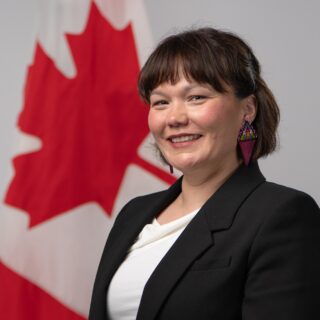
Virginia Mearns was appointed Arctic Ambassador by Prime Minister Mark Carney and joined Global Affairs Canada’s diplomatic corps effective September 15, 2025. As part of her mandate, Ambassador Mearns also serves as Canada’s Senior Arctic Official at the Arctic Council. Prior to her appointment, she held senior leadership roles across major Inuit organizations and the Government of Nunavut, and served as Principal Secretary to the Premier. Earlier, she spent over a decade at Nunavut Tunngavik Inc., advancing Inuit rights and strengthening programs and services across the territory.
Aviaaja Isaksen works as a project and human rights coordinator for the Inuit Circumpolar Council Kalaallit Nunaat. She is affiliated with a project that maps trade barriers in Inuit Nunaat, with a particular focus on Greenland, Canada and Alaska. The purpose of the project is to develop concrete recommendations to remove these barriers and thereby create better c onditions for increased trade within Inuit Nunaat.
Christina Hætta has worked as the head of the Saami Councils Cultural Unit since 2017. Her background is both from the political world and from the Sámi cultural field where she has worked as a producer, facilitator and curator for 20 years. She has a bachelor in cultural production from The Arctic university in Harstad.
Hege Veronica Henriksen is the director of Norwegian Crafts, a non-profit organisation working to promote Norway-based contemporary craft internationally. Over the past decade, Henriksen has led the organisation through a strategic expansion of its programming, with a particular focus on Indigenous craft practices. Norwegian Crafts is a member of the Nordic Network of Crafts Associations as well as European Crafts Alliance.
Oskar Östergren Njajta is the director of Aejlies, a Sámi cultural centre in Dearna (Tärnaby)

13.00–14.00 | Session 8 B | Settler Colonial Complicity - Truth and Reconciliation in Sápmi and Sweden, Hosted by: SSR: National Association of Sámi in Sweden
Session 8B – Settler Colonial Complicity – Truth and Reconciliation in Sápmi and Sweden
Theme: Sovereign Stories
17 June 2026, 13.00 – 14.00
Miklagård, Folkets Hus
Host: Sámiid Riikkasearvi – The National Association of Sámi in Sweden
This panel addresses questions of colonial complicity and the persistent lack of accountability within Sweden’s colonial history in Sápmi. While grounded in Indigenous contexts and realities, the conversation deliberately centers the role, responsibility, and reflections of the majority population—those positioned within settler society.
Bringing perspectives from Sápmi (Sweden and Norway) into dialogue with experiences from Turtle Island (Canada), Norway and Kalaaliit Nunaat (Greenland), the panel draws on Indigenous knowledge while asking what it means for non-Indigenous actors to engage meaningfully with these perspectives. What responsibilities follow from living within—and benefiting from—ongoing colonial structures?
The discussion is informed by an art-based research project by Kaisa Huuva and Malin Ståhl, which examines complicity and responsibility on personal and intra-personal levels. Their work raises urgent questions: How can members of the majority society speak of decolonisation without also engaging in processes of self-decolonisation? What does it require to move beyond acknowledgement toward accountability? And how can reconciliation be imagined when the structures of society remain fundamentally shaped by colonial logics?
Recognizing colonial complicity within the majority population is a necessary condition for any meaningful reconciliation between Sweden and the Sámi people. This panel creates space for critical self-reflection, discomfort, and dialogue among settler participants, while remaining accountable to Indigenous perspectives. Rather than offering definitive answers, the panel points toward possible pathways forward—where individual responsibility, structural change, and sustained engagement may contribute to transforming and healing the relationship between Sweden and Sápmi.
Participants in the panel:
Malin Ståhl is Swedish, born and resident at Frösön in Jämtland. Ståhl works as a visual artist, and is trained at the Iceland Academy of the Arts (BA), the School of the Art Institute of Chicago, the Slade School of Fine Art UCL London (MFA).
Kaisa Huuva, secretary of Culture at the National Association of Sámi in Sweden, SSR
Carla Taunton, associate professor, NSCAD University
Susanne Andreassen, CEO Director NAPA,
Jens Wergeland, CEO DAVVI – center for performing arts
Moderator: Patricia Fjellgren is indigenous Sámi from North and South Sápmi. She is a Sámi cultural worker and specialises in language revitalisation. She is a member of the Truth Commission of the Sámi people.
Kaisa Huuva is indigenous Sámi from Giron/Kiruna and Stockholm and PhD-student in Sámi studies at Umeå University and Secretary of Culture at Sámiid Riikkasearvi/The Sámi National Association in Sweden.
13.00–14.00 | Session 8 C | Dáiddáriid Vásáhusat - The Lived Experiences of Sámi Artists, Hosted by: Giron Sámi Teáhter
Session 8C – Dáidarid Vásáhusat – the lived experiences of Sámi artists
Theme: Indigenous Leadership
17 June 2026, 13.00-14.00
Studion, Folkets Hus
Host: Giron Sámi Teáhtre
Dáidáriid Vásáhusat – the lived experiences of Sámi artists is a combined report, performative work, and public conversation developed by Stein Bjørn, Åsa Simma and Tomas Bokstad – Giron Sámi Teáhter. Together, these elements form a single presentation that brings forward the lived experiences, knowledge, and future visions of Sámi artists.
The project takes place at a critical moment. In 2026, the work of the Swedish Truth Commission for the Sámi people is being made public, while political decisions continue to shape the conditions for Sámi culture. Within this context, Dáidáriid Vásáhusat contributes an artistic and practice-based perspective grounded in the voices of artists themselves. Dáidáriid Vásáhusat is both a documentation and a call to action. It insists that Sámi artistic practice is central to understanding culture, history, and future-making in Sápmi. By bringing together report, performance, and dialogue, the project creates a space where knowledge is presented, experienced, shared, and carried forward into conversation and change. Following the presentation, a conversation between Mikael Lindblad and Tomas Colbengtson will follow reflecting on the content.
Together, performance and conversation invite participants to engage with questions such as: What do these experiences reveal about current structures and responsibilities? How can artistic knowledge contribute to processes of truth, recognition, and change? What is required—concretely—for Sámi artists to work on their own terms in the future?
Read the full report in English here.
Participants
On stage: Stein Bjørn, Jonas Knutsson, Sara Hermansson, Ingá Máret Gaup-Jusso, Mary Sarre, Jörgen Stenberg, Andreas Estensen, Mikael Emsing, Mikael Lindblad and Tomas Colbengtson
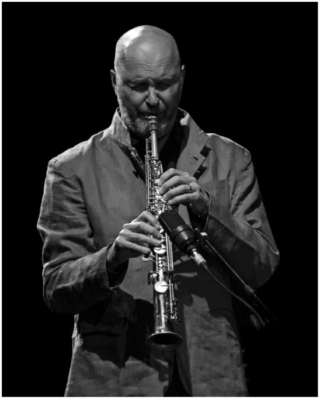
Electronic music and traditional Sámi joik come together in Ávus – an Ume Sámi word meaning both “space” and “happiness.” The group was formed by Grammy Award-winning saxophonist Jonas Knutsson, known for his collaborations with artists including Avicii. Knutsson is joined by Ingá-Máret Gaup-Juuso from Gárasavvon (Karesuando), an established voice in the new generation of Sámi musicians; Jörgen Stenberg, an Ume Sámi joiker, cultural practitioner, storyteller, and reindeer herder active within the Sámi community in Málaga; alongside percussionist Mikael Emsing and synthesizer player Andreas Estensen.
Joining them on stage are Stein Bjørn who is also directing the performance. Stein has been a professional actor since 1987 in film, theatre, and TV series. He was a member of the renowned Totalteatret in Tromsö. Beyond acting he has worked as a producer for festivals and cultural events, often focusing on Sámi themes of politics and identity.
Anna Åsdell is a South Sámi actor, singer and theatre maker from Lycksele, Sweden. She has been a central artistic force at Giron Sámi Teáhter since 2008, working across theatre, radio and television. Her work is deeply rooted in Sámi language, culture and storytelling, while reaching broad audiences across Sweden and Sápmi. Alongside her stage and screen work, she is committed to strengthening Indigenous voices and Sámi performing arts for future generations.
Mary Sarre is a Sámi actress, singer, joiker, and storyteller with a long-standing presence in Sámi performing arts. Through her work in theatre, film, and television, she has contributed to the development and visibility of Sámi cultural expression both nationally and internationally. Mary has appeared in numerous productions connected to Beaivváš Sámi Našunálateáhter and is known for bringing together acting, storytelling, and joik in powerful and deeply personal performances.
Michael Lindblad is a Sámi cultural leader with extensive experience in Indigenous arts and cultural development. Through his work with cultural institutions, festivals, and international collaborations, he has played an important role in strengthening Sámi cultural infrastructure and creating new opportunities for Sámi artists and communities. Michael is also chairman of Giron Sámi Teáhter.
Tomas Colbengtson grew up in a small Saemie village near Björkvattnet in Tärna, under the polar circle of Sweden. In his artwork, he asks how colonial heritage has changed Indigenous lives and landscapes, both of the Saemie and other Indigenous peoples. Having lost his mother tongue south Saemie language, he works with visual art, using Saemie history and collective memory as the source to his art. He is initiator of one of the first art residence for indigenous artists Sápmisalasta / Sápmiembraces. His work has been featured in numerous international exhibitions. He is represented in the British museum London , Tate Modern London,Nationalmuseum Stockholm, new National Museum of Art, Architecture and
Design, Oslo, Norway and Sami-parlament Karasjok Norway.
13.00–14.00 | Session 8 D | Decentralizing Arts Funding: Experimenting with New Models for Funding the North, Hosted by: Canada Council for the Arts
Session 8D – Decentralizing Arts Funding: Experimenting with New Models for Funding the North
Theme: Small places, small communities
Wednesday, 17 June June 2026, 13.00-14.00
Idun, Folkets Hus
Host: Canada Council for the Arts
National arts funders have long known that artists and cultural organizations based in and serving the North face unique barriers such as geographic remoteness from major art centers, lack of significant cultural infrastructure like studios and exhibition spaces, and the high costs of living. This is especially true for Indigenous and national minority communities, who are particularly underserved historically. How can arts funders meet the needs of northern communities? And how can they meet them on their own terms? This panel looks at new pilot programs and experimental, decentralized approaches to try to close the gap.
Speakers
Amanda Shannon, Department of Canadian Identity and Culture, Government of Canada
Elizabeth Logue is of Algonquin /Irish decent (Kitigan Zibi Anishinabe First Nation). Over her more than 25 years as a federal public servant she has worked on building networks between Indigenous and non-Indigenous communities, governments and organizations, federal, provincial and territorial governments and working to find creative solutions and bringing ideas to life. She is Director, Creating, Knowing and Sharing- The Arts and Cultures of First Nations, Inuit and Metis Peoples. Previous to this she worked at the Canadian Department of Justice on the implementation of the United Nations Declaration on the RIghts of Indigenous Peoples. Highlights of her career include work on the establishment of the Inuit-Crown partnership Committee and work on the Advisory Committee for the permanent Arctic Gallery at the Canadian Museum of Nature. Elizabeth also has trained in theatre and has also been an Arts festival producer and performer. She lives on unceded Algonquin Anishinaabe territory with her husband Alasdair and two children Calum, 19 and Mairi, 16.
Suki Wellman has 30 years of experience in the arts, with a background in performance, visual arts and arts administration. She holds a M.A. in History with a focus on gender history, racialized communities and the connections between discourse and power. Her work is informed by a commitment to social justice and inclusive cultural development. She is currently the Manager of Arts with the Government of Yukon, where she has also worked on cultural policy and funding program design, blending her academic and research background with her real-world experience and knowledge of the arts. Suki currently sits on the Operations group of Mass Culture, a national organization committed to the equitable mobilization of arts and culture research. She strongly believes in continued learning, knowledge-sharing, and making a lot of mistakes along the way.
Louise Andersson is a senior advisor in cultural policy at the Swedish Association of Local Authorities and Regions (SALAR). All of Sweden’s municipalities and regions are members of SALAR and the organization promote and strengthen local self-government and the development of regional and local democracy. Louise is an experienced process facilitator and project manager, as well as a moderator, lecturer and developer of educational programmes, with a particular interest in artistic and creative approaches. Previously, they held senior roles at a government agency, including as head of unit, with responsibility for exhibitions, museum policy, contemporary art and international trend analysis. Louise has a background in gallery education and has contributed to initiatives connecting contemporary art and audiences.
As the Executive Director of the Inuit Art Foundation and Publisher of Inuit Art Quarterly Lindsay Aksarniq McIntyre stewards the world’s only magazine dedicated to Inuit art, now entering its 40th publication year. An Inuk filmmaker, researcher, and practicing artist, she is also a fellow of the Sundance Institute, Forge Project, MacDowell, and COUSIN Collective, and winner of the Women in the Director’s Chair Feature Film Award. Across the board, innovation and thinking outside the box are key to both her artistic practice and her leadership at the IAF where she focuses on building supports for Inuit artists across Inuit Nunangat and a sustainable future for Inuit art.

13.00–14.00 | Session 8 E | Art as Geopolitical Changemaker - Real or Hubris?, Hosted by: Pikene på Broen
Session 8E – Art as Geopolitical Changemaker – Real or Hubris?
Theme: The Art of Geopolitics
Wednesday, 17 June 2026, 13.00-14.00
Tystnad, Väven
Host Pikene på Broen
Art practitioners in the Arctic, like most places, work with a broad range of topics from the very personal and relational, often situated within local communities, to questions on a geopolitical scale. In a time when many feel powerless towards the forces that shape our world, it might be tempting to trust art to build the resilience, diplomacy and preparedness that is needed. Is it realistic to think that art can have geopolitical impact – or is it all just Arctic hubris? And if we believe art can have an impact, how and in what way?
Taking the ongoing project Pan-ArcticVision (Amund Sjølie Sveen, NORDTING) as its point of departure and a case study to investigate, this panel delves into the different strategies, potentials, pitfalls and limitations of positioning art in the role of changemaker on a global scale.
Speakers
Amund Sjølie Sveen (b. 1973) is an Arctic artist, writer and researcher from Vadsø, Northern Norway. He is the artistic director of NORDTING – The Northern Assembly. His work has for many years focused on the narratives and power struggles in the north, taking the Arctic as a starting point for investigating both local and international issues in our globalized world of market economy. He is a regular participant in public debates, and is associated with the Arctic University in Tromsø as a researcher.
Sirí Paulsen is a Kalaaleq-Danish dramaturg, documentarist, sound designer, and as of March 2026 also a PhD-fellow at University of Copenhagen. She has been working with PanArctic Vision as dramaturg and creative producer since 2024. Sirí has worked with alternative narratives of history-writing for about a decade, and is passionate about bringing alternative views to society’s set narratives to light.
Jérémie McGowan (PhD) is a designer, artist and punk rock bass player based in Romsa/Tromsø. His work spans objects, ideas, museums and provocations, rooted in critical-creative perspectives and social engagement. Together with Anne May Olli and RiddoDuottarMuseat in Kárášjohka, he is co-creator of the ‘museum performance’ Sámi Dáiddamuseax (2017). Current projects include Arctic Armpit, a one-man punk band (2021–), and Real. Arctic., a multimodal art and archival project realised in collaboration with Amund Sjølie Sveen / NORDTING (2023–). Jérémie is currently a postdoc researcher with SAMFORSK at UiT – The Arctic University of Norway.
Irina Ivanova is a cultural manager and project coordinator at Pikene på Broen in Kirkenes, Northern Norway. Her work focuses on cross-border cultural collaboration, participatory art practices, and socially engaged projects connecting art, local communities, and democratic dialogue in the North. Originally from Murmansk, Russia, she has more than ten years of experience developing interdisciplinary cultural initiatives across the Nordic region and Europe. Her recent work includes residency programs, documentary and multimedia projects, and collaborative artistic formats exploring local identity, border realities, and cultural participation in Arctic contexts.
13.00–14.00 | Session 8 F | Intangible Cultural Heritage as Sites of Indigenous Cultural Resilience, Hosted by: Norwegian Center for Traditional Music and Dance
Session 8F – Intangible Cultural Heritage as Sites of Indigenous Resistance
Theme: Sustainable Futures
Wednesday, 17 June 2026, 13.00-14.00
Peterson-Bergensalen, Folkets Hus
Intangible Cultural Heritage, or living cultural traditions, practices and expressions like dance, song, and other performance practices, persist thanks to community support and intergenerational transmission. Bringing together artists, cultural workers and researchers, this panel will examine how examples of intangible cultural heritage, such as Inuit drum dancing and South Sámy sydisdans, embody community resilience, cultural continuity and creative practice rooted in place, identity, and shared histories. This discussion will examine how embodied art forms relate to wider questions of Indigenous self-determination, artistic practice and community infrastructure.
Speakers
Tone Erlien Myrvold
Kuluk Helms,
Sylvia Cloutier
Anna Kråik Åström
Marika Renhuvud
13.00-14.00 | Session 8 H | Indigenous Touring Network - Sápmi/Carribean, Hosted by: Invisible People Contemporary Dance and Anisotrophie
Session 8H – Indigenous Touring Network – Sápmi/Caribbean
Theme: Small Places Strong Communities
17 June 2026, 13.00-14.00
Ögonblicksteatern
Host Invisible People Contemporary Dance and Anisotrophic
How can Indigenous artists tour across oceans, borders and colonial geographies without being forced into systems that were not built for them? This panel explored the emerging idea of an Indigenous Touring Network between Sápmi and the Caribbean, connecting artists, presenters, communities and cultural organizations through shared values rather than standard market logic.
Hosted by Invisible People Contemporary Dance and Anisotrophie, the conversation looks at touring as more than mobility. It is about relationships, reciprocity, language, land, climate, care and self-determination. What kinds of networks are needed when distance is not only geographical, but also historical and political? How can Indigenous-led structures create new routes for performance, knowledge exchange and long-term collaboration? The panel invites audiences to think beyond conventional touring models and imagine a performing arts infrastructure where Indigenous perspectives define the terms of movement, presentation and encounter.
13.00–14.00 | Workshop | Birgejupmi Through Art and Duodji, Hosted by: Dáiddadállu
Dáiddadállu Birgejupmi Through Art & Duodji
Workshop (Part 2 following Session 7E)
17 June, 13.00-14.00
Tonsalen, Folkets Hus
This workshop session focuses on future Indigenous curatorial structures, education, accountability, and transnational collaboration across circumpolar Indigenous regions.
Grounded in the experiences developed through WP9 and Birgejupmi Through Art & Duodji, the workshop creates space for collective dialogue around Indigenous curatorship, institutional responsibility, community collaboration and long-term artistic futures.
13.00–15.00 | Network Session | How Can Sámi Languages and Cultures Become a Natural Part of Life for the Youngest Children?, Hosted by: Swedish Arts Council, Bookstart, Miessie
How Can Sámi Languages and Cultures Become a Natural Part of Life for the Youngest Children?
Hosted by Miessie, Bookstart and Swedish Arts Council
17 June, 13.00-15.00
Mimer, Folkets Hus
Open to All
Miessie – the interregional Sámi Bookstart project for children aged 0–3 – and Bookstart, Swedish Arts Council, invite you to an open network meeting with a user driven workshop. Together, we will explore how different actors can collaborate to strengthen opportunities for the youngest children to encounter and use Sámi languages in their everyday lives. We will work with needs, obstacles, and solutions, and highlight how traditional knowledge of traditions and cultural heritage can contribute to long term structures for revitalizing the Sámi languages.
If you are interested in one (or several) of the below topics, then this open network meeting is for you!
Initiatives for enhancing language development for children in the youngest age group.
Methods for incorporating traditional knowledge, and heritage languages into children’s daily lives.
Cultural projects with interregional collaboration.
13.00–15.00 | Network Session | Relate North: Show and Tell, Hosted by: ASAD Network and UmArts
Title: Relate North: Show and Tell
Location: Project Space, Umeå Institute of Design, Arts Campus
Date: 17 June 2026
Time: 13.00-15.00
Description
The Arctic Sustainable Arts and Design network (ASAD) will host Relate North—its annual symposium and exhibition—under the theme Land, Power, Art. Presented in collaboration with Umeå University, UmArts, and the University of Lapland, this event advances ASAD’s commitment to fostering innovative approaches to learning, teaching, research, and knowledge exchange in art, design, and visual culture. Through fostering collaboration between academic institutions and northern communities, the network seeks to deepen understanding of critical issues shaping life in the Arctic and the circumpolar North.
This side event—Relate North: Show and Tell—will present artistic works and research posters in a dynamic, pop-up art exhibition format. Instead of a traditional gallery environment or the traditional presentation format, the event unfolds in an open, conversational space designed to support informal encounters and shared reflection. Artists and researchers will be present with their works, offering participants direct access to the creative processes, questions, and embodied knowledge that shape their practices. This format highlights how art and artistic research generate situated and relational understandings of northern experiences, cultures, and landscapes — often through subtle but meaningful micro-changes that emerge through participation, dialogue, and iterative making. By bringing diverse practices into a shared, interactive setting, the session encourages spontaneous dialogue and fosters new connections between makers, viewers, and communities. Relate North: Show and Tell celebrates artistic creation as a form of knowledge that is open-ended, process-driven, and grounded in relationships to land and place.
Aligning with the AAS theme “Land, power, art,” the session focuses on micro-level changes emerging from participatory, community-driven art and design research, as well as innovations in art and design education across the North. Each year, Relate North brings together leading scholars, artists, and designers from across the Arctic to examine urgent questions through creative and research-based practices. The symposium and art exhibition explore how art and design respond to the challenges facing northern and Arctic communities: How can art or design practices engage with relationships to land and address the power dynamics shaping resilience and adaptation in northern communities? In what ways does art reveal, question, or reconfigure the power structures embedded in northern landscapes, histories, and cultural narratives? How might art express the entanglement of Land, identity, and authority, and help articulate diverse northern senses of place?
The event will be followed by a fika and Teaching Art in the Arctic.
Presenting Posters
Nicole Klenk
Helene Day Fraser
Emily Carr
Sarah-Anne Thompson
Suvi Autio
Aidan Moesby
Hanna Olafsdottir
Mette Gårdvik
Wenche Sørmo
Karin Stoll
Ann Kristin Klaussen
Timo Jokela
Fernanda Jasmin Guimarães
Karen Ross
Lisa Nyberg
Malla Alatalo
Roxane Permar
Dr Siún Carden
Helen Garbett
Olga Shirokostup
Ekaterina Sharova
Johanna Ruotsalainen
Artists
Olga Kisseleva
Michelle Calcatelli
Mirja Hiltunen
Korinna Korsström-Magga
Ante Jalvela
Nicole Klenk
Helene Day Fraser
Emily Carr
Sarah-Anne Thompson
Suvi Autio
Mari Keski-Korsu
Eija Mäkivuoti
Niko Väistö
Ruth Beer
Emily Carr
Hanna Olafsdottir
Mette Gårdvik
Wenche Sørmo
Karin Stoll
Ann Kristin Klaussen
Timo Jokela
Lotta Lundstedt
Sara Rylander
Isabelle Desjeux
Lena Lundstedt Syversen
Stina Back
Lars Lundstedt
Johan Ahlner
Lisa Ahlner
Klara Ahlner
Torun Lundstedt
Tyra Rylander
Annie Bergström
Nina Mattsson
Roxane Permar
Dr Siún Carden
Helen Garbett
Polly Blake
Ni Lin
Brogan Davison
Pétur Ármannsson
For more information, please see the UmArts website.
14.00-14.25 | Workshop | Ola and Ida Stinnerbom, Hosted by: Arctic Arts Summit
Joik Workshop and family activities with Ola and Ida Stinnerbom
Organized by Arctic Arts Summit
17 June, 14.00-14.25
Sjadduo
Experience the living South Sámi vuelie and joik tradition with Ola and Ida Stinnerbom. Through stories, song and shared exploration, participants will gain insight into joik as a carrier of memory, culture and identity. Despite being only twelve years old, Ida Stinnerbom has already performed on some of the most important Sámi stages across Sápmi and, together with her father, shares a living tradition passed from one generation to the next.
Artist Information
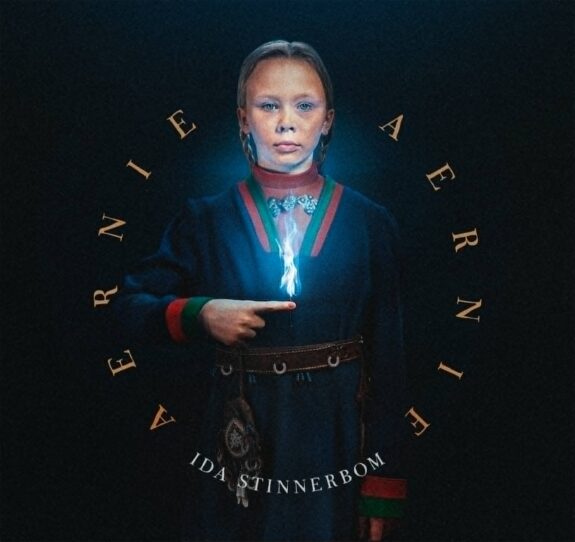
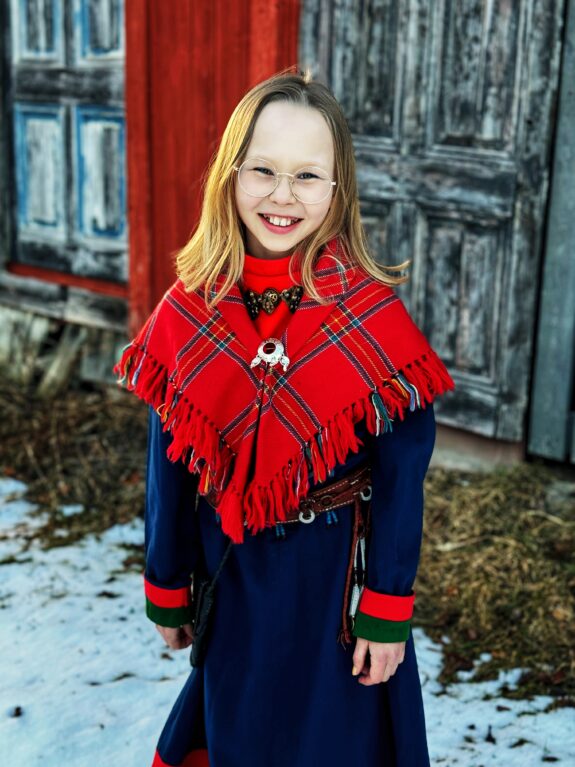
Ola and Ida Stinnerbom are Sámi artists whose work carries a living cultural heritage where yoik becomes memory, identity, landscape, and belonging. Together they represent a rare and powerful intergenerational artistic collaboration in which oral tradition is not preserved in archives or books, but kept alive through voice, presence, and performance.
Ida Stinnerbom, age 12, is one of the youngest established yoik artists in Sápmi. She made her debut at the age of seven in live radio and television broadcasts and has since released several singles and performed on stages across Sweden and Norway, including Riksscenen in Oslo. Through her performances, audiences can hear landscapes, animals, joy, sorrow, and the emotional depth carried within traditional South Sámi vuollie/yoik.She also participates in the international project We Hear You – A Climate Archive, representing both Sweden and Sápmi through yoik and storytelling centered around nature, responsibility, and the future.
Ola Stinnerbom is one of Sweden’s most experienced Sámi performing artists, with more than 40 years of work in yoik, dance, theatre, and storytelling. He is a winner of the Sami Grand Prix in Kautokeino and has represented Sámi culture internationally, including performances connected to the Swedish EU Presidency opening in Washington and Sweden’s nationally broadcast New Year at Skansen on SVT.
Together, Ola and Ida Stinnerbom embody the living transfer of intangible cultural heritage between generations. Their work reflects how oral traditions survive not by remaining unchanged, but by being carried forward, used, reshaped, and lived through new generations. In their performances, traditional South Sámi yoik meets contemporary artistic expression while remaining deeply rooted in Sámi identity, language, spirituality, and connection to the land.
Their stage presence creates an experience where yoik is not only performed — it is lived, remembered, and passed onward.
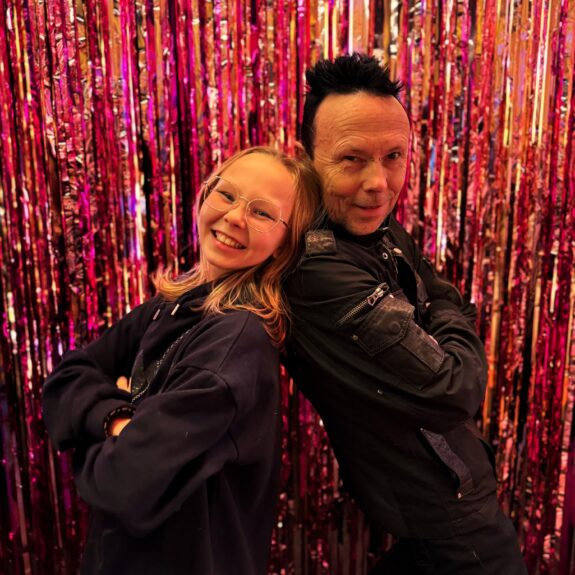
14.15-15.15 | Workshop | Guidelines for respectful cultural collaboration, Hosted by The Nordic Institute in Greenland (NAPA)
Workshop: Guidelines for respectful cultural collaboration
Wednesday, 17 June 2026, 14.15-15.15
Host: The Nordic Institute in Greenland (NAPA)
Ask, Folkets Hus
How can respectful collaboration with Indigenous arts and culture sectors be practiced in concrete ways? In this workshop, we will share experiences and discuss how collaboration across Indigenous and non-Indigenous contexts can be built on respect and reciprocity.
The workshop begins with a short introduction to the ongoing development of cultural guidelines for external collaboration with Kalaallit Nunaat’s arts and culture sector. Participants will then be divided into smaller groups to discuss key questions related to narrative sovereignty, representation, expectations, and ethical engagement in artistic and cultural collaborations. The workshop creates space for dialogue, reflection, and exchange of experiences across different Indigenous and cultural contexts. The session will conclude with a plenary discussion where groups share key insights and reflections.
Moderators: AneMarie Ottosen and Naja Amanda Lynge Møretrø
AneMarie Ottosen (Amo) is a teacher and a theater maker. She has a teaching bachelor degree from 2012, and an acting education background from the School of Acting in Greenland from 2016. She has been a board member of different cultural boards in Greenland and art funds. AneMarie has been working in the arts and cultural scene for the last twenty years and has been working and collaborating with different people across Greenland but also people from abroad. AneMarie Ottosen is going to host a panel talk and a workshop at the Arctic Arts Summit, for NAPA – the Nordic Institute in Greenland.
Naja Amanda Lynge Møretrø recently finished her master’s degree in Global and Development Studies and has a background in civil society leadership. From 2021 to 2023, she served as President of the Norwegian youth organization, Changemaker, working on issues related to global justice, sustainability, and youth engagement. Naja is currently part of a project at NAPA – the Nordic Institute in Greenland, where she contributes to the development of cultural guidelines for external collaboration with the arts and culture sector in Greenland.
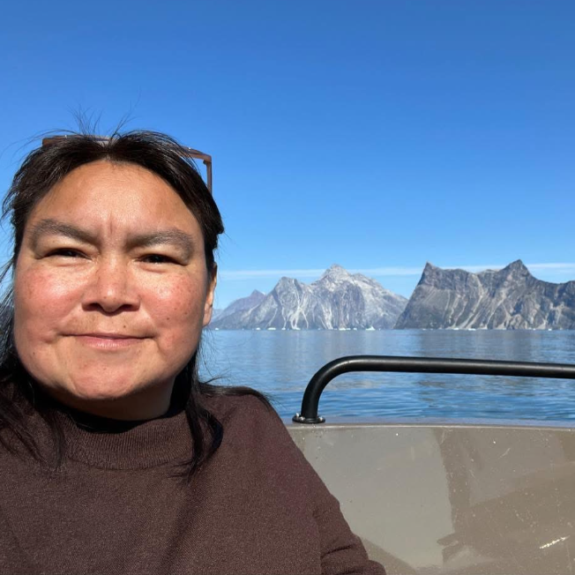
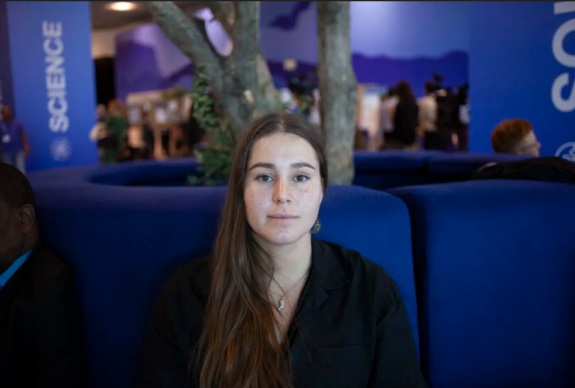
14.15–15.15 | Session 9 A | Screen Sovereignty: Funding Indigenous Screen Futures in the Arctic, Hosted by: Arctic Indigenous Film Fund
Session 9A – Screen Sovereignty: Funding Indigenous Screen Futures in the Arctic
Theme: Sovereign Stories
17 June 2026, 14.15-15.15
Tystnad
Host Arctic Indigenous Film Fund
Arctic Indigenous cinema is growing — but sustainable growth requires Indigenous-led funding systems, strong institutions, and cross-border collaboration. Bringing together the Arctic Indigenous Film Fund, the International Sámi Film Institute, the Greenland Film Institute, and Canada’s Indigenous Screen Office, this panel explores what makes film support structures truly work for Indigenous filmmakers. What models are proving effective? Where are the gaps? And what can Arctic regions learn from one another when it comes to financing, policy, talent development, and international reach? The discussion highlights both success factors and shared challenges in building a screen sector rooted in Indigenous storytelling, language, and self-determination.
Speakers
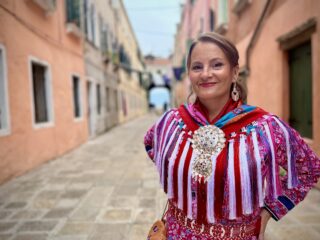
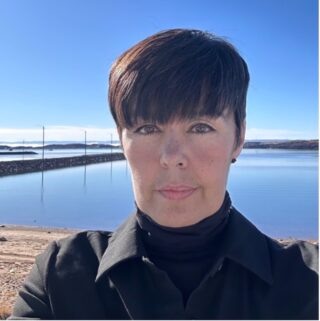
Jason Ryle is a film curator, producer, and arts consultant. He serves as an International Programmer for the Toronto International Film Festival. From 2010 to 2020, he directed imagineNATIVE, the world’s largest Indigenous screen festival, and is now CEO of the Arctic Indigenous Film Fund.
Anne Lajla Utsi has more than two decades of experience in the film sector as a director, festival manager, and producer. A co-founder of the International Sámi Film Institute and former documentary filmmaker, she now serves as CEO, building global partnerships and advancing Indigenous storytelling worldwide.
Lena Ellsworth is the Chief Executive Officer of the Nunavut Film Development Corporation (NFDC) and the first Inuk woman to lead the organization. Appointed in 2024 through a leadership mentorship initiative, she is helping guide the growth of Nunavut’s screen industry while advancing opportunities for Inuit creators and storytellers.
Inunnguaq Petrussen is the CEO of the Film Institute of Greenland. Originally a songwriter and musician, he has also worked as a political advisor for three political parties. For many years, Petrussen has dedicated his efforts to improving conditions for artists through both organizational work, radio, music magazine and political engagement. While studying at university, he focused particularly on market structures and economic aspects of the Greenlandic music industry.
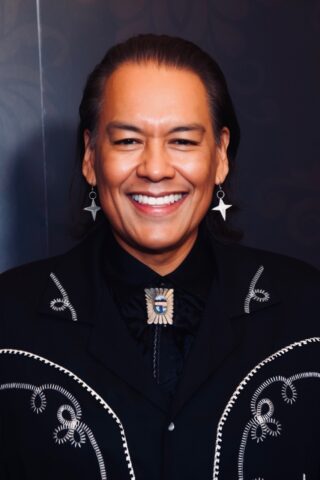
Bird Runningwater belongs to the Cheyenne and Mescalero Apache Tribal Nations and was raised on the Mescalero Apache Reservation in New Mexico. A producer and executive producer, his recent credits include Fancy Dance starring Lily Gladstone, Free Leonard Peltier, and the Norwegian documentary Phantoms of Sierra Madre (Geronimos Tapte Stamme). He previously led Sundance Institute’s Indigenous Program for two decades, supporting and mentoring generations of filmmakers through the Institute’s Labs and Sundance Film Festival.

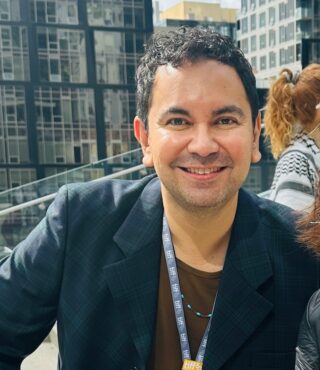
14.15–15.15 | Session 9 B | Writing the Arctic: Voices, Networks, Futures, Hosted by: Region Norbotten, Region Västerbotten, Region Västernorrland, Region Jämtland-Häjedalen, AICA Sweden
Session 9B – Writing the Arctic: Voices, Networks, Futures
Theme: Sovereign Stories
17 June 2026, 14.15-15.15
Peterson-Bergen, Folkets Hus
Host Region Norbotten, Region Västerbotten, Region Västernorrland, Region Jämtland-Häjedalen, AICA Sweden
This initiative brings together writers, magazines, and cultural institutions from northern Sweden, Norway, and Finland to explore the current conditions, challenges, and opportunities for art criticism and art writing in the Arctic. Through a panel discussion, it addresses key issues such as sustainability, funding, and the professional viability of critical practice in the region.
The aim is to strengthen cross-border exchange and identify concrete paths forward, including new forms of collaboration and support structures for art writing. The short-term goal is to build a network for art criticism in the Arctic, while the long-term ambition is to produce a publication reflecting a plurality of voices within the region’s contemporary art field.
The initiative is organized by the Visual Art Consultants of Norrbotten, Västerbotten, Västernorrland, and Jämtland Härjedalen, in collaboration with AICA Sweden.
Speakers
Carina Elisabeth Beddari (b. 1987) is an art and literary critic born in Finnmark, currently living between Finnmark, Oslo, and Mexico City. She is the co-editor of Hakapik.no and writes criticism for publications like the newspaper Morgenbladet and the literary journal Vinduet. Beddari holds an MA in literary studies from the University of Bergen.
Jonathan Bergström, journalist from Luleå living in Råneå. He is a co-founder and co-editor of the quarterly print-only magazine Lavskrikan about art and culture in Norrbotten, first released in December 2025.
Diana Berntsdotter Vallgren works as a public art curator in the municipality of Örnsköldsvik. She writes art reviews for the digital art magazine “Volym” (Region of Västernorrland) since 2018, a writer and editor for “Nya Valör”, a digital journal for academic articles, Uppsala university. She hold a MA in digital art history, Uppsala university.
Silvia Colombo is an art historian and museum specialist with a master’s degree in contemporary art and a PhD in building preservation from Politecnico di Milano, where she has also been a guest lecturer. After working at the University of Manchester, she moved to northern Sweden and is now a regional Visual art consultant in Norrbotten. As a freelance editor and art writer, she serves on the board of the Swedish Association of Art Critics (AICA Sweden) and is a member of ICOM Sweden.
Amanda Hakoköngäs is a writer and curator from Northern Finland, currently based in Tornedalen where she works as a curator at the Aine Art Museum. Hakoköngäs writes actively texts and exhibition reviews for several Nordic and international medias such as frieze and Long Play, among others. She completed her Postgraduate curatorial studies at KASK in Ghent, Belgium and holds an MA from Visual Cultures, Curating and Contemporary Art from Aalto University, Finland.
Paavo J. Heinonen (1978) is the editor of cultural magazine Kaltio since 2010. Native of Oulu, Finland, Paavo studied literature and critical theory at Stirling University (BA 2002) and Sussex University (MA 2003), returning to his home town after graduation. Among some other cultural voluntary work, Paavo co-founded writers’ association Huutomerkki (2003) and later Oulu Arts’ Night event (2008), of which he remains the artistic director. Before taking over the editing of the magazine, Paavo interned in Kaltio in 2004 and 2005–2007, and then did some writing on freelance basis. For the first half of 2026, Paavo has concentrated on E75 Art Bus project, with which he spent six weeks (9.4.–19.5.) travelling from Oulu to Crete to Finnmark and back to Oulu. In 2019, he participated in Arctic Arts Summit Rovaniemi.
Hilde Sørstrøm is an art critic, art historian and the editor-in-chief of Hakapik.no. She has a MA in art history from UiT – The arctic university of Norway and a MA in Preventive Conservation from Northumbria University in England. Sørstrøm lives and works in Tromsø (Norway) and is particularly interested in art projects that relate to the circumpolar north. Sørstrøm is also the editor of the Norwegian contemporary crafts journal Kunsthåndverk.

14.15–15.15 | Session 9 D | Envisioning a New Sámi Museum Structure - A Journey Towards Cultural Self-Determination, Hosted by: Aeijlies and Gaaltje Saemien Museum
Session 9D – Envisioning a new Sámi museum structure – a journey towards cultural self-determination
Theme: Indigenous Leadership
17 June 2026, 14.15-15.15
Studion, Folkets Hus
Host Aeijlies and Gaaltje Saemien Museume
On the Swedish side of Saepmie, we are embracing a unique opportunity to develop a Sámi museum structure grounded in Indigenous methodologies and Sámi values and perspectives. The panel will discuss fundamental rights and guiding principles and imagine a future where Sámi cultural heritage is cared for, governed and mediated by Sámi communities themselves.
Aejlies and Gaaltije Saemien Museume are two Sámi-led organisations in Sweden, grounded in long-term work with Sámi cultural heritage and the development of Sámi museum visions. Together they have formulated a letter to the Truth Commission for the Sámi People calling for a new museum structure that safeguards repatriation processes of Sámi cultural belongings and knowledge, as well as building capacity among Sámi-led institutions.
This panel conversation addresses the urgency of coming together to formulate shared visions and identify obstacles along the way, asking: What does Indigenous self-determination over cultural heritage require in practice? What institutional knowledge and capacity are necessary to enable meaningful repatriation? And how can Indigenous methodologies reshape the future structure of indigenous museums?
Speakers
Anneli Bäckman is a South Sámi curator based in Staare (Östersund), Saepmie/Sweden. She works at Gaaltije Saemien Museume, where she leads the development of a Sámi museum rooted in the South Sámi region and shaped in dialogue with Sámi communities. Her work explores how Sámi-led museums and cultural institutions can formulate new spaces for cultural heritage, language, and artistic practices. She serves on the board of the Swedish Curators’ Association. She is currently co-curating Art and Truth-Telling, a multi-part exhibition project developed with Anca Rujoiu and presented at Bildmuseet (2025) and Gaaltije Saemien Museume (2026) among other locations. The project takes the Truth Commission for the Sámi People as its point of departure and unfolds alongside its process and final report.
Jerker Bexelius is a South Sámi cultural leader and director of the Gaaltije Saemien Museume. His work focuses on strengthening Indigenous knowledge systems and ensuring Sámi perspectives are integrated into sustainable societal development. Through cultural institutions, policy dialogue, and cross-border collaboration in Sápmi, he advocates for Indigenous rights, cultural resilience, and community-driven development. Bexelius has extensive experience connecting Indigenous knowledge with contemporary governance, regional development, and cultural policy, highlighting how Indigenous worldviews can contribute to more sustainable and inclusive futures.
Nivi Christensen is an Inuk from Kalaallit Nunaat (Greenland) and has served as Museum Director at Nuuk Art Museum since 2015. She holds a Master’s degree in Art History. She specialized in art from and about Kalaallit Nunaat, and is a regular writer and commentator on art from Kalaallit Nunaat both locally and internationally.
Christensen sits on a number of boards, including the Greenlandic Museum Board, and serves as Chair of the Board of the National Theater in Kalaallit Nunaat. She has curated numerous exhibitions and acts as an advisor on major art projects in Kalaallit Nunaat and beyond. Through her work, Christensen is committed to creating stronger frameworks for Greenlandic art and to deepening connections between indigenous peoples engaged in cultural work across the Arctic.
Melissa Nenantaxnen Shaginoff is an Ahtna and Paiute person, a tribal citizen of Chickaloon Village Traditional Council and the Pyramid Lake Paiute Tribe, and a member of the Udzisyu (Caribou) clan. She is an interdisciplinary artist, language warrior, poet, and museum professional who currently serves as the Alaska Specialist for the Smithsonian’s National Museum of the American Indian.
Her artistic practice explores conversation as medium and land-based materiality as a guiding and relational reflection. In her museum work, Melissa focuses on expanding community accessibility and reimagining the future of cultural belongings within institutional collections. Melissa studied at the University of Alaska Anchorage and the Institute of American Indian Arts. She is a recipient of the Rasmuson Foundation Individual Artist Award and the inaugural Governor’s Humanities Rising Award.
She lives and works on Dena’ina lands in Dghayitnu (Anchorage, Alaska).
Oskar Östergren Njajta is the director of Aejlies, a Sámi cultural centre in Dearna (Tärnaby) that is owned and run by the local sami community. Oskar has led the development of Aejlies from the start more than 10 years ago. One the aim is to re-establish a Sami museum in Dearna, a core area for the Sami. Oskar is also a film producer, screenwriter and director. He is one of the founders of Bautafilm and serves on the board of Viermie K. He wrote the screenplay for Snödrömmar (Snow Dreams), SVT’s Christmas calendar series, which won the Kristallen Award for Best Children’s Programme in 2025. He has held leading positions within Sámi film organisations, including chair of Sámi Filbmabargiid Searvvi and in the board of International Sámi Film Institute (Internásunála Sámi Filbmainstituhtta) for many years.

14.15–15.15 | Session 9 E | More Than Territory: Culture, Coexistence and Competing Futures in the Arctic, Hosted by: Länsstyrelsen Norrbotten
Session 9E: More Than Territory – Culture, Coexistence and Competing Futures in the Arctic
Theme: Sustainable Futures
17 June 2026, 14.15-15.15
Idun, Folkets Hus
In the Arctic, land is not only a resource—it is culture, memory, and identity. For Sámi, Tornedalian, Kven, and Lantalaiset communities, relationships to land and water are foundational, yet increasingly contested. As global interest in the region intensifies—driven by climate change, resource extraction, energy transition, and geopolitics—local rights and knowledge systems face growing pressure.
This panel explores how overlapping histories and competing land uses shape relations between Indigenous peoples, national minorities, and state actors in northern Sweden. How are rights, self-determination, and cultural continuity negotiated amid rising tensions? Can cultural practices and knowledge systems open spaces for dialogue and cooperation?
Bringing together researchers, community representatives and cultural practitioners, the session examines how land, as culture, can serve both as a site of conflict and a foundation for shared futures in the Arctic.
Speakers
Ida Pelli, Länsstyrelsen Norrbotten
Josephine Ylipää, Ylipää Consulting
Judit Malmgren, Luleå University of Technology
Göran Lahti, The National Association of Swedish Tornedalians, Tornionlaaksolaiset
Magnus Antaris Tuolja, Sámi Suodji Foundation and Sámi handicrafter
Karin Keisu, Artist/Chairman Met Nuoret
Lena Ylipää, Artist
Erin Gdaadimits Ivaly Gingrich, Artist
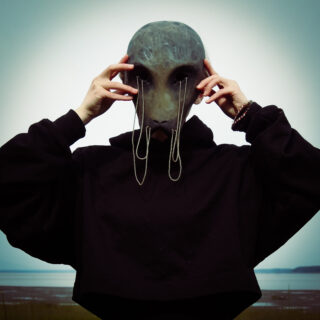
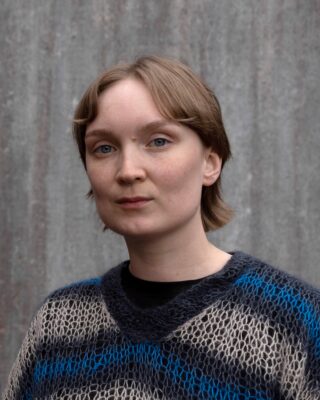
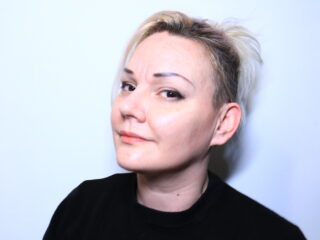
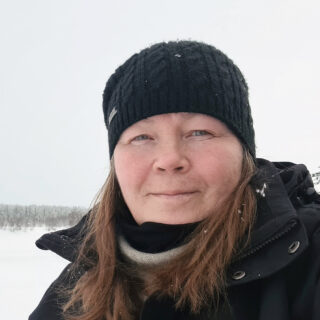
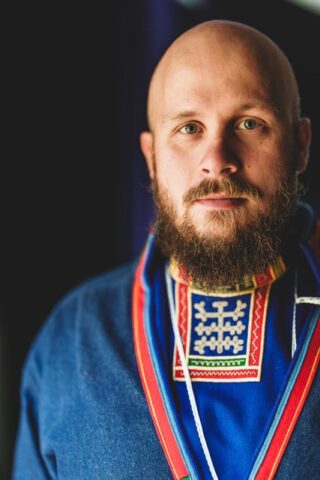
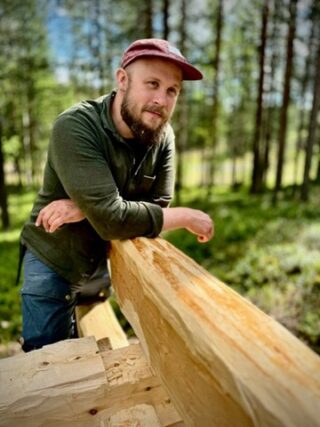
14.15–15.15 | Session 9 F | Strengthening Residency Opportunities for Craft, Hosted by: Nordic Crafts Network, Danish Art Foundation and Norwegian Crafts
Session 9 F: Strengthening Residency Opportunities for Crafts
17 June, 14:15–15:15
Place: Vävenscenen
Title: Strengthening Residency Opportunities for Crafts
Hosted by: Norwegian Crafts, Danish Art Foundation in collaboration with the Nordic Network of Crafts Associations (NNCA).
The session explores how artistic development can be strengthened through craft residencies across the Arctic region. Drawing on a presentation of key insights from the recent report Nordic Exchange – The value of exchange programmes at production sites within crafts and design (2025), representatives from arts councils, organisations, funding bodies and supportive networks across the Arctic and Nordic regions will come together for a panel discussion. The panellists will discuss how their institutions are working to strengthen residency opportunities for craft artists today – and how to further develop programmes that nurture artistic development through exchange and collaboration across these regions.
Speakers:
Annika Björkman, The Swedish Arts Grants Committee, Sweden
Dine Arnannguaq Fenger Lynge (Dáiddadállu, Sápmi) is an Inuk from Kalaallit Nunaat (Greenland) working with Sámi cultural leadership and arts management in Guovdageaidnu, Sápmi (Kautokeino, Norway). She is the CEO of the artist collective Dáiddadállu, where she has helped develop the organization – an important platform for Sámi artists – since 2018. Her work focuses on strengthening Sámi cultural sovereignty, supporting indigenous artistic collaboration, and promoting decolonial perspectives in the arts. Lynge has also contributed to international initiatives, including building networks and export structures that increase the global visibility and opportunities for Sámi art and artists.
Henri Terho, the Finnish Arts and Culture Agency, Finland
Arnajaraq Stølvbæk, Kimik – Association of Artists in Greenland, Kalaallit Nunaat
Sara Ajnnak, Aejlies Indigenous Arctic Art Residency, Sápmi, is one of the leading contemporary voices from Sápmi. An award-winning artist, composer, and cultural changemaker, she bridges traditional joik with innovative electronic and acoustic soundscapes. Through performances, international collaborations, and cultural leadership, she works to strengthen Indigenous voices and shape a more inclusive future for the arts.
Elizabeth Logue, Canada Council for the Arts, is of Algonquin /Irish decent (Kitigan Zibi Anishinabe First Nation). Over her more than 25 years as a federal public servant she has worked on building networks between Indigenous and non-Indigenous communities, governments and organizations, federal, provincial and territorial governments and working to find creative solutions and bringing ideas to life. She is Director, Creating, Knowing and Sharing- The Arts and Cultures of First Nations, Inuit and Metis Peoples. Previous to this she worked at the Canadian Department of Justice on the implementation of the United Nations Declaration on the RIghts of Indigenous Peoples. Highlights of her career include work on the establishment of the Inuit-Crown partnership Committee and work on the Advisory Committee for the permanent Arctic Gallery at the Canadian Museum of Nature. Elizabeth also has trained in theatre and has also been an Arts festival producer and performer. She lives on unceded Algonquin Anishinaabe territory with her husband Alasdair and two children Calum, 19 and Mairi, 16.
Moderator:
Cato Fossum, political adviser, The Norwegian Association for Craft Artists
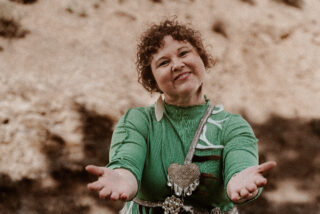
14.15-15.15 | Session 9 G | Ice, Land, Art: Drifting Towards the Arctic, Hosted by: LÓKAL Performing Arts
Session 9G – Ice, Land, Art – Drifting Towards the Arctic
Theme: Sovereign Stories
Wednesday, 17 June 2026, 10.45-11.45
Tonsalen, Fokets Hus
Host Lókal Performing Arts
Touching on folklore as traditional ecological knowledge, the ambiguities of Arctic identity and the recent nomination of a glacier for president, this panel explores Icelandic art, culture and literature. It asks how more-than-human/human relations prove vital in connecting past with future and thinking beyond the nation-state. Four Icelandic scholars and art practitioners will discuss how artists, authors and narrators offer creative responses and sociolegal innovation to address climate crisis, biodiversity loss, and geopolitical volatility from somewhat ambiguous (sub)Arctic positions.
Speakers
Dr. Angela Snæfellsjökuls Rawlings is a Canadian-Icelandic interdisciplinary artist-researcher who received their PhD in 2020 from the University of Glasgow where they researched how to perform geochronology in the Anthropocene. In 2021-22, they researched becoming-with whales in the climate crisis as a postdoctoral fellow with H.M. Queen Margrethe’s and Vigdís Finnbogadóttir’s Interdisciplinary Research Centre on Ocean, Climate, and Society. In 2022, Rawlings co-curated SPHERE Festival for the Canadian National Arts Centre’s Orchestra in partnership with the Canadian Museum of Nature, Royal Danish Library, and Nordic Bridges. In 2024, Rawlings founded Snæfellsjökul fyrir forseta (Glacier for president), Iceland’s first rights of nature movement. In 2025, Rawlings’ solo exhibition Motion to Change Colour Names to Reflect Planetary Boundary Tipping Points was opened in a decommissioned fertiliser factory in Iceland. Rawlings currently holds a second postdoctoral position researching Icelandic family eco-relations as evidenced through the last eighty years of film and literature. They teach at the Iceland University of the Arts.
Dr. Auður Aðalsteinsdóttir is a research lector and the director of the University of Iceland’s research centre in Þingeyjarsveit, which specializes in environmental humanities. Auður has a PhD in literary studies from the University of Iceland. Her PhD-thesis on Icelandic literary criticism was published under the title Þvílíkar ófreskjur (2021). Her studies on natural disasters as they appear in contemporary Icelandic fiction are summarized in her book Hamfarir (2023), exploring themes such as climate anxiety, climate change from a gender and equality perspective, posthumanism and postnature. Hamfarir was finished during her time as a postdoctoral researcher at Queen Margrethes and Vigdís Finnbogadóttir’s Interdisciplinary Research Centre on Ocean, Climate, and Society (ROCS), a collaborative project at the University of Iceland and the University of Copenhagen. Auður has taught courses in literary criticism, cultural studies and contemporary literature at the University of Iceland. She has also worked as a journalist and editor and hosted a weekly radio show on literature at the Icelandic Broadcasting Service.
Dr. Kristinn Schram is associate professor of Folkloristics/Ethnology at the University of Iceland. His field of study ranges from oral narrative to food and festival, ironic performances to media representations, in a variety of cultural spaces such as Arctic shores and city streets. He lectures on the dynamics of identity, national images and tradition, folk narrative and urban folklore. Among current research topics are the exoticism of the north, transnational performances of the ‘West-Nordic region’ and sociocultural aspects of climate change and mobility in the North Atlantic. He coleads the UArctic Thematic Network Circumpolar Archives, Folklore and Ethnography (CAFÉ) and participates in research projects such as Visitations: Polar bears out of place, concerning human/non-human relations in the context of climate change and environmental behaviour; historic, current and future.
Carrying a deep passion for contemporary art practices, with a clear focus on the importance and relevance of art and art making, Ragnheiður Skúladóttir has been an active curator and mentor of international artists and producers, initiating various public and professional outreach programs throughout her career. Originally trained within theater, educated in the U.S., Ragnheiður lived for 13 years in Boulder Colorado, Iowa City, Minneapolis and New York (1987-2000). She was founding dean of the Department of Performing Arts at the Iceland University of the Arts (2000-2011). Under her leadership at IUA, the department broadened its scope, adding a contemporary dance program and a performance making program to the existing acting line. From 2012 to 2015, Ragnheiður was the artistic director of Akureyri City Theatre and the managing director for the state-run Iceland Dance Company from 2016 before moving to Norway in 2019. Ragnheiður was a co-founder and artistic director of LÓKAL (2007-2019), Reykjavík’s first international festival for theatre, dance and performance. She has also worked as a producer, dramaturg and mentor for numerous makers of theatre and dance, locally as well as internationally. Her aim has always been to strengthen the dialogue between the art disciplines, broaden the scope of the arts and to establish and forge the bond between makers and groups on an international level. Born and raised in Reykjavík Ragnheiður Skúladóttir holds a BA in theatre and multimedia from University of Iowa and MFA from University of Minnesota. She worked and lived in New York City as a performer, performance maker, mentor and instructor. In 2000 she moved to Reykjavík after taking on the position of Dean of Department of Performing Arts at Iceland University of the Arts. Ragnheiður worked at the Academy until 2011, initiating programs in contemporary performance practices and contemporary dance. In 2008 she co-founded the LÓKAL International Theatre Festival. She was artistic director of the Akureyri City Theatre from 2012 to 2015 and manager of Iceland Dance Company 2016-2019. Ragnheiður served as the artistic director and CEO of Festspillene i Nord-Norge 2019-2025. Ragnheiður has years of experience as teacher and mentor, she has also worked with various artists/groups as a producer and as a critical friend.
15.30–17.00 | Network Session | Teaching in the Arctic, Hosted by ASAD Network and UmArts
Teaching Art in the Arctic
Alongside the Relate North Show & Tell, Umeå Academy of Fine Arts is inviting all teaching faculty at Art Academies in the Circumpolar North to discuss the challenges, responsibilities and possibilities that comes with running a teaching institution in the Arctic region. How does our geographical and geopolitical location inform what we teach, how we teach and who we teach?
In this 90-minute session, you are invited to a structured conversation where we investigate ideas like: teaching from the margin; the institution on settler colonial land; local material consciousness; the promise of an arts education; the art academy as host. The goal is to share knowledge and make connections that strengthens our commitment to the Arts and the Arctic. Hosting the session is Lisa Nyberg, artist and associate professor at Umeå Academy of Fine Arts.
If interested in participating in the conversation, email lisa.nyberg@umu.se
Image Credit: MFA Degree Show, 2026, Umeå Academy of Fine Arts, on show at Bildmuseet, Umeå University. Courtesy of the artists. Photo by Malin Grönborg
16.00–17.00 | Network Session | Introducing the Action Plan for the New Institutional Home for Joik
Introducing the Action Plan for the Institutional Home for Joik Network Session
17 June 2026, 16.00-17.00
Host:
Loke, Folkets Hus
Open to the Public
Joik/yoik is a traditional form of singing performed by the Sámi people of Sápmi in Northern Europe. The Norwegian Saami parliament has had a preliminary project in the works since 2018, on establishing an institutional home for joik, with particular attention to how Sámi intangible cultural heritage can be governed, strengthened, and sustained on Sámi terms.
Through document analysis, dialogue-based processes, and preliminary mapping, the project has identified a highly fragmented landscape of actors, archives, and practices related to joik. The findings highlight a pressing need for coordinated approaches to archival and documentation work, shared metadata standards and ethical guidelines, and mechanisms for systematic return and recontextualisation of joik materials to local communities. Furthermore, the research underscores the importance of strong regional and pan-Sámi anchoring, as well as institutional models that balance public responsibility, Sámi ownership, and artistic autonomy.
The first year of the project demonstrates that the establishment of an institutional home for joik is not primarily about creating a single new organisation, but rather about enabling long-term infrastructures that support joik as a living practice, a bearer of knowledge, and a contemporary artistic expression. These findings constitute a critical foundation for the subsequent recommendation and implementation phases of the project.
16.00–17.00 | Network Meeting | Smaller Circumpolar Arts Organizations Networking Session, Hosted by: NWT Arts Centre Initiative
Smaller Circumpolar Arts Organizations Networking Session
17 June 2026, 16.00-17.00
Host: NWT Art Centre Initiative
Balder at Folkets Hus
Open to All
Smaller arts organizations across the Circumpolar North are working in unique contexts, but we may also have a lot in common. If you are working for an arts organization located in the Circumpolar North, with a small staff who wear many hats, this gathering is for you! Please join this networking session to meet other smaller arts organizations, connect with each other, share resources, and maybe even plan some future collaborations together.